
Septic Tanks
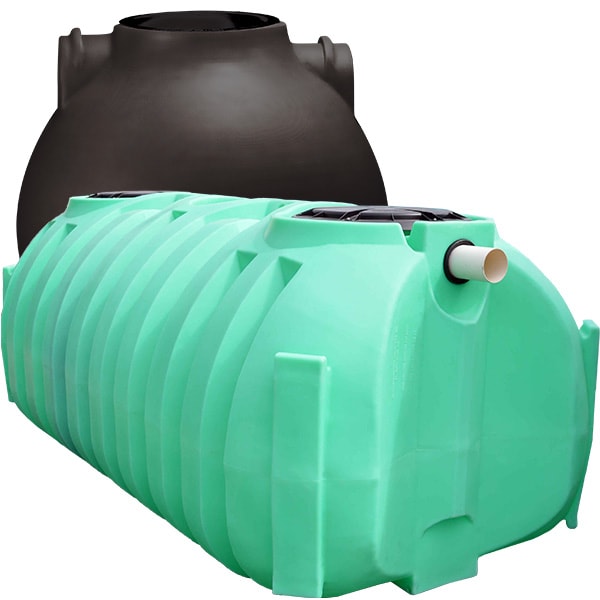
Septic tanks are below ground wastewater containers used to receive, separate, and hold sewage solids ahead of a drainfield or a scheduled pump out. Commonly known as septic tanks, sewage tanks, waste holding tanks, and blackwater tanks, they are the primary treatment or storage unit used in an onsite system without a municipal sewer connection. Polyethylene septic tanks are rotationally molded in one piece with ribs or a parabolic wall design engineered to resist external soil load.
Commonly referring to underground waste containers, it can also mean above ground septic tanks used as hold-and-pump tanks for temporary sites or those where a traditional system cannot be installed.
Choosing a septic tank depends on six working details:
- The tank's duty class and model
- The capacity required by local code or the job
- Single or two compartment requirements
- Site conditions and burial depth
- The jurisdiction's listing and approval requirements
- The plumbing, access, and accessories the installation needs
Protank offers ribbed, low profile, multi-use, pump, and holding tanks in capacities from 200 to 10,000 gallons. Above ground septic tank sizes range from 105 to 1,000 gallons.
How to Choose a Septic Tank
1. Duty Class and Tank Model
Septic tanks are categorized by duty class and capacity. Tank duty class determines application eligibility before volume is considered. Class examples include continuous fill septic models and pump out holding tanks. Tank color follows use case: yellow for ribbed septic tanks, green for low profile septic tanks, light blue for multi-use tanks, black or green for pump tanks, and natural white for large holding tanks.
Ribbed septic tanks
Ribbed tanks are the standard for below ground primary treatment tanks. They are made from one piece rotomolded polyethylene, are rib-reinforced, and available in single or two compartments ranging from 500 to 1,500 gallons. Ribbed septic tanks are yellow or grey in color. Tanks 750 gallons and larger ship with PVC tees and gaskets supplied loose for onsite installation, and the adapters accept 4" Schedule 40 or SDR 35 pipe. The 500 gallon models ship without tees.
Ribbed septic operate full and are not rated for pump, dosing, or holding service as an empty tank left underground can collapse. Tanks pumped during normal maintenance are refilled immediately. Installation includes two model-specific requirements: sand and gravel backfill, not native soil, and the tank must be filled with water during backfilling to keep internal-external pressure balanced.
Common uses: Conventional residential and light commercial septic systems on domestic waste strength; gravity fed drainfield sites; replacing a failed concrete or steel septic tank in an existing system; new constructions for permitted, conventional designs.
Ribbed septic tanks are the right choice when the tank serves a gravity drainfield and stays full during normal operation.
Low profile septic tanks
Low profile tanks have a reduced height to minimize total excavation depth. The tanks range from 42 to 51 inches tall, 48 to 69 inches wide, and 97 to 157 inches long. Low profile septic tanks carry a 6 to 36 inch burial cover rating and may require no specialized backfill. Models above 500 gallons may be used as holding or pump tanks where local codes permit, and are not to be left empty for extended periods. 750 gallon tanks and larger ship standard with two 20 inch gasketed manways. The 500 gallon model is an exception and is not rated for pump tank or non-potable water service.
Common uses: Install sites with shallow rock layers requiring shallow excavation; seasonal high water table locations with counter-buoyancy; retrofits with limited vertical clearance; installations where excavator or excavation cost is a primary constraint.
Low profile septic tanks are the right choice for shallow bedrock, high water tables, shallow gravity drop lines, and tight property bounds where deep trenching is physically limited.
Multi-use tanks
Multi-use tanks are rated for septic, holding tank, and pump chamber use and come in 1,000, 1,250, and 1,500 gallon capacities. The ribbed body design allows backfill with suitable quality native soil, which can eliminate imported aggregate and help offset installation costs on sites with high haul rates on sand and gravel. They can also be left empty during backfilling. Their internal design accepts standard 4 inch effluent filters. Single compartment models are molded from FDA compliant resins and suitable for potable water use. Installed multi-use tanks must be kept at least one quarter full for ballast control and structural support.
Common uses: Remote installs and those with difficult access; sites where imported backfill is impractical or costly; systems where one tank needs to serve two uses; installations where application may change.
Multi-use tanks are the right choice when site logistics or undetermined long term use make single purpose tanks a risk or financially impractical.
Septic pump tanks
Pump tanks are dosing chambers used to hold effluent between cycles and discharge it on demand to a drainfield, mound system, or downstream treatment unit. The tank fills and empties on a calculated drawdown cycle between high and low float levels rather than holding a static volume for settling. Pump dosing tanks range from 200 to 525 gallons with a spherical body roughly equal in proportion. The shape provides clearance for pump hardware, float switches, and fluid drawdown. Molded-in fitting flats provide install locations for inlet and outlet penetrations to match specific pump packages and pipe configurations. A 500 gallon reclaimed resin model is available for lower cost jobs where virgin resin is not required.
Common uses: Low pressure distribution drainfields; elevated mound systems; uphill effluent lift; advanced treatment units; effluent transfer to a downstream treatment unit (ATUs, sand filters, etc.).
A pump tank is the right choice when effluent has to be pressure dosed or lifted higher elevation rather than flow by gravity.
Underground holding tanks
Underground holding tanks have capacities over 1,500 up to 5,025 gallon models. They feature internal cone-shaped columns for structural reinforcement due to their large size. Holding tanks are used to collect and store waste until scheduled pump-out service. They are not intended for use in downstream drainfield discharge systems. The 2,650 and 5,025 gallon models feature molded riser extensions to raise tank access for built-in at-grade access or deeper burial cover. All accept inlet connections up to 4 inch plumbing.
Sand and gravel mixture is preferred backfill for underground holding tanks, but they can be backfilled with acceptable native soil. They are natural white in color, indicating cistern grade resin and construction to handle freshwater use and repeat pump-out service.
Common uses: Sites with no drainfield capacity; campgrounds and RV parks; commercial wastewater collection; seasonal facilities on scheduled pump-outs; temporary systems ahead of sewer construction.
A holding tank is the right choice when there is no drainfield, below grade installation is necessary or ideal, and pump-out service is available on a predictable interval.
Above ground holding tanks
Above ground septic tanks are used strictly as holding tanks that rely on scheduled pump-out service. They are not suitable for internal treatment or gravity discharge applications. These tanks have low profile rectangular capacities from 105 to 1,000 gallons that measure 10.5 to 25 inches tall to fit beneath job shacks, trailers, and mobile office units. Tanks accept recessed port clamps and rubber couplers for connecting field plumbing. Many have molded handholds to allow two person handling and positioning when empty. Job shack models at 250 and 350 gallons are built for temporary construction site service.
Below ground septic, cistern, and multi-use tank units are designed for underground use only and cannot be substituted for above ground applications as they require load support from surrounding soil to maintain structural integrity.
Common uses: Construction trailers and job shacks; RV and camper service; seasonal cabins; temporary event and site facilities; any location without a drainfield and excavation is impractical or unsuitable.
Above ground is the right choice when the installation is temporary, portable, or cannot be excavated. Full product range and details at Above Ground Septic Tanks.
2. Required Capacity and Code Sizing
Septic tank size and minimum capacity is governed by state and county health codes. These sizes are typically based on bedroom count for residential and expected wastewater volumes for commercial or industrial, and the volumetric requirements can vary by jurisdiction. Dimensional limits for internal tank length, minimum liquid depth, and headspace volume can also be mandated by local code and influence whether a tank is suitable alongside size. In the U.S., local health or environmental departments generally establish site specific minimums and system requirements. Many of our products come with technical drawings and exact dimensions to assist in verifying project suitability. If you need this for a specific product, contact us.
Product sizes:
- Underground septic tanks: 500 to 1,500 gallons
- Holding tanks: 2,000 to 5,025 gallons
- Pump tanks: 200 to 525 gallons
- Above ground holding tanks: 105 to 1,000 gallons
- High Capacity Multi-Use Tanks: 10,000 gallons
3. Single or Two Compartment Septic Tanks
Underground septic tanks come in one compartment and two compartment models. Single compartment tanks have a full width chamber for wastewater collection, storage, and treatment activities. Two compartment septic tanks split internal volume into a 2/3 primary settling chamber and a 1/3 secondary polishing chamber before the discharge outlet. Compartment design can vary by model to meet state or local requirements. Prior to selection, verify the design type needed to meet code.
Dual chamber septic tanks are required in some jurisdictions while optional in others. A two compartment tank system is not a universal upgrade, and specifying it when local code permits single compartment units for the job increases installation cost without changing baseline system performance.
4. Excavation Depth and Site Conditions
Low profile and standard ribbed septic tanks vary in total height measurements across identical capacities. Low profile models maintain a 51" height from 750 to 1,500 gallons. Standard ribbed models at the same capacity measure 62" to 70" tall. The gap widens as tank capacity increases, ranging up to five inches at 500 gallons, twelve at 750 and 1,000, and nineteen inches at 1,250 and 1,500 gallons.
Overall excavation depth includes bedding thickness plus tank height plus cover. Bedding runs a 6" minimum in soil terrain and 12" minimum in rock. Cover depth is set by the tank type, and generally range: standard ribbed, multi-use, and pump tanks 6" to 30", low profile tanks 6" to 36", and holding tanks 6" to 24". The hole also carries an 18" to 24" allowance on both sides and both ends, which puts the excavation footprint well beyond the tank's own dimensions on a constrained lot.
The shorter height on low profile tanks can help accommodate four distinct site constraints:
- Shallow rock or hardpan: Shorter body helps required capacity to be reached in areas with shallow rock layers without bedrock blasting or mechanical hammering.
- Seasonal high groundwater: Shallower excavations can stay above seasonally elevated water tables, where taller tanks could require dewatering and a saturated trench.
- Limited elevation drop: Compact vertical height can help preserve gravity flow between incoming pipe inlets and downstream drainfields.
- Existing hole retrofits: Reduced overall depth can help replacement vessels fit into the footprint left by the failed tank.
Groundwater is where the two septic tank lines differ. The low profile line has a manufacturer specified installation path for saturated soil and seasonal high water tables through published counter buoyancy tables and anchoring. The standard ribbed tank's installation instructions prohibit installation in a high water table with no equivalent provision.
On sites without depth limitations, standard ribbed and low profile tanks provide equivalent service, making selection based on compartment count and state agency approval.
More details regarding excavation bedding, dewatering, and anti-flotation can be found with our Underground Septic Tanks.
5. Jurisdictional Listing and Approval
Septic tank approvals apply to specific model numbers and individual state jurisdictions. State agencies reference and enforce different compliance standards, including IAPMO/ANSI Z1000 listing, CSA B66 certification, or Florida DEP structural proof testing. Listed models have undergone approval review and sometimes qualification testing. Certified tanks carry dedicated part numbers and ship from designated production facilities. A single 1,250 gallon septic tank design can be available under multiple model numbers to match different location's code requirements: e.g., one for Illinois, the Carolinas, side inlet and outlet design, or one with IAPMO listing to meet local health code plumbing rules.
Florida approved septic tanks require mandatory state specific structural proof testing for polyethylene onsite sewage tanks. This means standalone product part numbers rather than standard models with an add-on certification. Our FL approved low profile septic tanks include 900, 1,050, 1,250, and 1,500 gallon capacities. Florida approved pump tanks include 225, 300, and 525 gallon models.
Give us the installation state or ZIP code on the quote and we can help confirm which listed models are available for your location.
6. Plumbing, Access, and Accessories
Septic tanks need various plumbing, components, or accessories for access and operation. These can include gasketed tee assemblies, manway extensions (risers), drainfield chambers, and in the case of pump tanks, float level sensors, a level gauge, and a pump.
Septic Tank Specifications
| Capacity | Dimensions (L × W × H) | Model | Empty weight | Rep. Part # |
|---|---|---|---|---|
| 500 gal | 97" × 48" × 42" | Low Profile | 179 lbs | LSN500 |
| 500 gal | 101" × 51" × 47" | Ribbed | 169 lbs | SEN500-1 |
| 500 gal | 88" × 48" × 43" | Ribbed (Snyder) | 187 lbs | SES500 |
| 750 gal | 92" × 60" × 51" | Low Profile | 262 lbs | LSN750 |
| 750 gal | 96" × 52" × 62" | Ribbed | 241 lbs | SEN750-1 |
| 750 gal | 96" × 48" × 63" | Ribbed | 245 lbs | SEN750-2 |
| 900 gal | 117" × 60" × 51" | Low Profile (FL) | 291 lbs | LSN900-FL |
| 1,000 gal | 127" × 60" × 51" | Low Profile | 352 lbs | LSN1000 |
| 1,000 gal | 102" × 60" × 63" | Ribbed | 328 lbs | SEN1000-2 |
| 1,000 gal | 102" × 60" × 63" | Multi-use | 403 lbs | BRN1000-2 |
| 1,000 gal | 101" × 52" × 71" | Multi-use | 379 lbs | PT-BRNO1000 |
| 1,050 gal | 127" × 60" × 51" | Low Profile (FL) | 370 lbs | LSN1050-FL |
| 1,250 gal | 157" × 60" × 51" | Low Profile | 581 lbs | LSN1250 |
| 1,250 gal | 157" × 60" × 51" | Low Profile (FL) | 581 lbs | LSN1250-FL |
| 1,250 gal | 116" × 55" × 70" | Ribbed | 355 lbs | SEN1250-2 |
| 1,250 gal | 116" × 55" × 70" | Multi-use | 443 lbs | BRN1250 |
| 1,500 gal | 157" × 69" × 51" | Low Profile | 574 lbs | LSN1500 |
| 1,500 gal | 157" × 69" × 51" | Low Profile (FL) | 549 lbs | LSN1500-FL |
| 1,500 gal | 135" × 55" × 70" | Ribbed | 474 lbs | SEN1500-2 |
| 1,500 gal | 140" × 64" × 62" | Ribbed (Snyder) | 439 lbs | SES1500 / SES1500-P |
| 1,500 gal | 135" × 55" × 70" | Multi-use | 555 lbs | BRN1500 |
| 2,000 gal | 126" × 98" × 51" | Holding | 704 lbs | SEN2000 |
| 2,500 gal | 159" × 99" × 51" | Holding | 929 lbs | SEN2500 |
| 2,600 gal | 155" × 99" × 51" | Holding | 1054 lbs | SEN2600 |
| 2,650 gal | 155" × 99" × 81" | Holding | 1104 lbs | SEN2650 |
| 3,525 gal | 211" × 102" × 51" | Holding | 1304 lbs | SEN3525 |
| 5,025 gal | 211" × 102" × 96" | Holding | 1900 lbs | SEN5025 |
| 10,000 gal | 356" × 101" × 107" | Multi-Use | 3215 lbs | SEN10000 |
| Capacity | Dimensions (L × W × H) | Empty weight | Rep. Part # |
|---|---|---|---|
| 200 gal | 47" × 47" × 56" | 79 lbs | PUN200 |
| 225 gal | 47" × 47" × 56" | 79 lbs | PUN225-FL |
| 300 gal | 48.5" × 48.5" × 53" | 113 lbs | PUS300 |
| 300 gal | 54" × 54" × 54" | 119 lbs | PUN300 / PUN300-FL |
| 500 gal | 60" × 60" × 63" | 182 lbs | PUS500 |
| 500 gal | 64" × 64" × 67" | 174 lbs | PUN500 |
| 500 gal (reclaimed resin) | 63" × 63" × 74" | 197 lbs | SEA500-1R |
| 525 gal | 64" × 64" × 67" | 174 lbs | PUN525-FL |
| Model | Capacities | Manufacturer | Color | Duty rating | Selection details |
|---|---|---|---|---|---|
| Ribbed septic | 500–1,500 gal | Norwesco | Yellow | Septic only; kept full | Sand / gravel backfill; water-fill during backfilling; 6"-30" |
| Ribbed septic | 500 gal, 1,500 gal | Snyder | Grey | Septic only; kept full | Parabolic load design; fused divider on dual compartment |
| Reclaimed resin | 500 gal | Ace Roto-Mold | Black | Pump tank | Lower unit cost when virgin resin not required |
| Low profile septic | 500–1,500 gal | Norwesco | Green | Septic or pump (except 500 gal); pump-dry OK | Shallow excavation; 6"-36" cover |
| Low profile (FL) | 900–1,500 gal | Norwesco | Green | Septic | Florida structural proof testing; FL-only capacities |
| Multi-use | 1,000–1,500 gal | Norwesco | Light blue | Septic, holding, or pump; 1/4 full min.; potable in single compartment | Native backfill; no water-fill; undetermined or dual duty |
| Pump tanks | 200–525 gal | Norwesco, Snyder | Black / green | Dosing; cycles wet to dry; may be left empty | Dose volume and drawdown; may ship without tees |
| Underground holding | 2,000–5,025 gal | Norwesco | Natural white | Holding; repeat pump-out cycles | No drainfield; scheduled pump-out; cistern grade construction |
| Above ground holding | 105–1,000 gal | Norwesco, Ace, Snyder, Quadel | Black / grey | Holding; above ground only | Portability; profile height; no excavation |
| Model | Cover | Backfill | Water during backfill | Fill state | FDA resin |
|---|---|---|---|---|---|
| Ribbed septic | 6"–30" | Sand/gravel required | Required | Kept full | No |
| Low profile | 6"–36" | Native soil OK | Not required | Not left empty long-term; 500 refill immediately | No |
| Multi-use | 6"–30" | Native soil OK | Not required | ¼ full minimum | Yes, single compartment |
| Spherical pump | 6"–30" | Sand/gravel | Not stated | May be left empty | No |
| Holding 2,000–5,025 | 6"–24/30" | Sand/gravel preferred | Not stated | Not stated | Yes |
| 10,000 gal | 6"–24" | ¾-minus only | 2,000 gal, kept 12" above backfill | Settle before pumping dry | Yes |
Every below ground tank used for water storage and pump driven distribution must be vented. Venting is done at installation and failure to include will void the manufacturer warranty. Vent hardware must be supplied by the installer.
None of these tanks are traffic rated. Installation under a driveway, parking area, or any path used by vehicles or heavy equipment will void the warranty.
None are rated for installation in water saturated clay. Where groundwater rises above the base of the tank, buoyancy governs rather than cover depth: an empty tank in saturated soil lifts, and the tank can collapse or separate from its plumbing.
Septic Tank Materials, Standards & Compliance
Polyethylene Construction and Wall Design
Septic tanks are rotationally molded from high density linear polyethylene. Polyethylene is unaffected by the chemicals and gases present in soil and sewage and does not rust or corrode. Resin is UV stabilized for the interval between production, delivery, and burial.
A buried septic tank carries load from outside, and poly septic tanks feature specific engineering designed to distribute that weight and resist deformation. Three wall structures exist: a rib design with pressure distribution placement; a trapezoidal deep rib profile, and; a parabolic body that transfers top load into the sidewalls and bottom. Pump tanks feature a spherical wall design for uniform and minimal point-loading.
Maximum storage temperature is 120°F. Liquids above 120°F can weaken a poly tank's structural integrity that can lead to deformation, damage, or even tank failure. This temperature threshold is potentially relevant in waste holding, industrial, commercial, and cleaning applications.
Listing, Certification, and State Approval
Listed septic tanks are certified individually for each independent model. A tank carries a state approval listing or certification if its design meets regulatory requirements or passed standard testing. Listings do not extend to entire class types, the material, or the manufacturer.
Common septic tank standards and approvals:
- IAPMO/ANSI Z1000: structural performance is verified through design calculations from a licensed professional engineer, under the North American consensus standard for prefabricated septic tanks.
- CSA B66: the Canadian standard, first in North America written specifically for polyethylene septic tanks; several U.S. states reference it directly.
- Florida DEP, Rule 62-6.013: vacuum testing followed by a water leakproofness test, required for polyethylene and fiberglass septic tanks.
Septic tanks with IAPMO certification and FL approval are available on some models. Whether a listed tank satisfies a given system depends on the jurisdiction, the design, and the reviewing health department or engineer.
Potable Water and Resin Compliance
These are wastewater tanks and are not manufactured or certified for potable water use. Blue multi-use ribbed tanks and white holding tanks are exceptions and made from FDA compliant resins suitable for freshwater applications in new, never used condition; single compartment models only. For potable and non-potable water storage, request our NSF certified tank Underground Water Tanks.
Septic Tank Features → Applications
One Piece Seamless Construction
Our rotomolded polyethylene septic tanks create a single closed vessel without seams, joints, or assembled panels. They are free of joints that can open as soil settles, coatings that may need maintained against sewage gas damage, and materials that can initiate corrosion. The same construction is what makes the tank light enough to place without heavy lifting equipment.
Ideal for: replacing failed concrete or old steel tanks; high acidity, low pH soils; sites with high groundwater where joint leakage is a concern and potential failure mode.
De-risk: a damaged polyethylene wall cannot be patched back to original structural condition. Inspect the tank for any damage that may have occurred during handling before it goes in the hole, not at backfill.
Rib and Wall Design for External Load
The rib profile, placement, and body curvature are the structural strength and integrity system on an underground septic tank. This engineering distributes soil pressure across the wall and resists the deformation that tanks without these designs would experience. Ribbing also influences how the tank must be backfilled and is why these tanks have set bedding and backfill specifications.
Ideal for: standard burial depths in stable soils; installations backfilled to the manufacturer specification.
De-risk: internal liquids inside a buried tank support the walls against soil pressure; ribbed septic tanks must be kept full and multi-use tanks at least a quarter full; dry-pumping one of these tanks can cause collapse.
Low Profile for Shallow Excavations
Low profile tanks distribute the same capacity in a wider, shorter body capable of installing in a hole too shallow for an equally sized ribbed tank. For sites on rock, hardpan, or with an elevated water table, total septic tank excavation can make the difference in whether the hole stays above the constraint or not, which in turn, can help offset costs.
Ideal for: shallow bedrock and hardpan; sites where deeper excavations would reach water table; limited vertical clearance; retrofits into existing excavation footprints.
De-risk: shallow cover reduces excavation depth but brings the tank closer to surface for reduced soil ballast against a rising water column; when seasonal water tables exceed tank base, check and confirm buoyancy-mitigation tables at actual depths.
Compartment Division
Two compartment septic tanks divide the vessel into a 2/3 primary chamber that holds settling volume and a 1/3 secondary chamber for additional settling and clarification prior to effluent discharge through the outlet and to the drainfield. Most dual compartment septic tanks feature rigid dividers inserted into the tank with headspace and a pass-through partition. The two compartment models come with two manways for maintenance access to each chamber.
Ideal for: jurisdictions that require dual compartment septic tanks; higher concentration waste streams; systems where effluent quality to the drainfield must be of certain quality and maintained.
De-risk: compartment count is specified by regional code; confirm its requirement before paying for the second chamber.
Manway Access and Riser-to-Grade
An underground septic tank sits under one to three feet of soil, and when the system needs attention over its service life, the tank is reached through the manway, which means digging to reach the tank. Risers are used to extend the tank opening up to finished grade, so pump-outs, effluent filter cleaning, and inspections can be performed at the surface. Tanks come with 20 inch gasketed manways, and risers are available in various heights and can be joined together to match the final cover depth.
Ideal for: tanks on a pump-out schedule; systems with an effluent filter; installations subject to routine inspection; any tank where a service truck will be required.
De-risk: septic tank risers bring openings up to ground level, where people walk; lids at grade have to be secured; the method required is typically set by local code.
Gasketed Tee Plumbing
Many models come with 4 inch gasketed PVC tee assemblies and adapters that connect standard 4 inch Schedule 40 or SDR 35 pipe to the polyethylene septic tank. Because polyethylene cannot be solvent welded to PVC, these elastomeric adapters are necessary to form watertight, pass-through seals. The assemblies are used to establish inlet and outlet invert elevations while keeping scum and sludge layers out of the discharge stream. Gasketed joint connections also help absorb minor soil movement as backfill settles and work to prevent pipe shearing at the tank penetration. Most tanks ship with tee hardware supplied loose for field installation.
Ideal for: state specific plumbing configurations; jobsite standardization to reduce extra purchases and field labor.
De-risk: verify internal tee extension length meets local code and regulations before installation. Maintain flexible gasketed joints at the vessel penetrations.
Handling and Site Access
Polyethylene septic tanks can be transported on standard pickup beds or light utility trailers, which eliminates the heavy crane and boom truck access required for concrete septic tanks. Compact sizes 500 gallons and below often weigh under 200 pounds and are light enough to move without a crane. Units 750 gallons and larger exceed 250 to 300 pounds and typically require mechanical rigging or excavator lift-handling for placement.
Ideal for: remote and rural sites; constrained urban lots; installations where crane or boom truck access is impractical or does not exist.
De-risk: the same low weight means an empty tank can potentially float. Water table and counter-buoyancy mitigation should always be evaluated for plastic septic tanks.
| Application | Typical service | What drives selection |
|---|---|---|
| Residential septic system | Primary treatment, gravity drainfield | Code capacity by bedroom count; required tank compartments; state listing |
| Shallow or rocky site | Primary treatment | Tank height at required capacity; bedding depth for rocky site; model specific cover range |
| Mound or pressure system | Dosing to elevated drainfield | Dose volume and drawdown; pump package; tank capacity |
| Remote or difficult access install | Septic, holding, or pump | Per-model backfill material required; handling weight; delivery route |
| No drainfield available | Holding, scheduled pump-out | Capacity alignment with service interval; truck access |
| RV park, campground, seasonal facility | Holding | Peak season volume; pump-out logistics; risers for access |
| Construction site, job shack, trailer | Above ground holding | Tank height; portability; plumbing setup and connections |
| Commercial buildings on domestic waste | Primary treatment or holding | Expected wastewater volumes; jurisdiction; system design engineering |
| Florida installation | Any | Current state approval; Florida specific model and capacity |
The applications above are commonly observed services and should not be taken as approval or recommendation of suitability. These tanks are manufactured for domestic strength wastewater; other service can void the manufacturer's warranty. System design, tank selection, and code compliance are determined by the permitting authority and the system designer for each installation.
Septic Tank Risers, Lids and Accessories
A septic tank is only one part of a complete, working system. The components used alongside it and that attach to it help the system perform optimally, allow servicing once buried, or increase general safety.
Manway extensions and risers. Septic tank access openings accept manhole extensions, double wall corrugated pipe, and ribbed PVC pipe to bring manways to finished grade. Burial cover depth determines required riser height during field installation.
Lids and securing. Tanks come with fitted lids, gaskets, and securing hardware. Some models use non-metallic fasteners to eliminate the corrosion concerns that metal hardware can create in sewage environments. Access at or near surface grade typically requires child-proof security measures set by local code.
Effluent filters. Outlet mounted effluent filters are used to trap suspended solids ahead of downstream drainfields and benefit from vertical risers for routine maintenance access. Multi-use tank lines accept standard 4 inch effluent filters.
Tees, adapters, and fittings. Four inch gasketed PVC tee assemblies, septic adapters, and state compliant inlet and outlet setups come loose for field fitting with some models shipping pre-plumbed. Some customization options are available for select products and above ground tanks.
Level sensors and alarms. Holding tanks that run on a regular pump-out schedule and pump tanks with float-driven dosing both benefit from or require level monitoring.
Septic Tank Freight & Delivery Logistics
Septic tanks ship from the warehouse or factory that holds the specific product model required and that is nearest to your delivery location. Manufacturing facilities span national regional locations, so shipping origin, health code listing, and delivery lead time vary directly with the part number.
Septic tank regional shipping availability narrows as capacity increases. Standard low profile and multi-use septic tanks are made and shipped from most regional plants, while high capacity 2,000 gallon holding tanks and larger are molded at only three or four regional plants, which can lengthen overall transit and lead time.
All septic tanks are shipped via less-than-truckload (LTL) freight carriers. Liftgate service is typically unavailable on freight exceeding 83 inches in any single dimension, so plan on having equipment or manpower for offloading. Inspect tanks at delivery and note damage on the delivery receipt before the driver leaves.
Frequently Asked Questions About Septic Tanks
A septic tank is used as a part of a functional sewage treatment system. In traditional, gravity fed drainfield systems: solids settle and separate, anaerobic bacteria work on wastes, mildly broken down effluent leaves through the outlet to a leach field where it slowly filters into the soil, and the tank stays full continuously. A holding tank is used to store wastewater, where nothing leaves until it's time to be pumped out by truck, and the tank is emptied repeatedly over its service life. Tank construction is made to match the service. Holding tanks have additional engineering to handle regular pump-out service. The tanks have distinct colors to indicate the construction and use differences: yellow and green for septic, blue or natural white for holding.
The size of a septic tank a system requires is regulated by local codes, often overseen by the regional health or environmental protection department. The local code sets the minimum septic size, which is usually based on bedroom count for residential systems. Size requirements can vary widely by state and by jurisdiction because the underground geology and local environment can vary widely. Regulations can also differ in minimum liquid depth, minimum inside length, or required volume above the liquid level, which can affect proper tank type and size. Always confirm requirements with the local authority having jurisdiction, then match it with a state-approved septic tank.
Underground septic tank sizes for traditional systems range between 500 to 1,500 gallons, pump tanks from 200 to 525 gallons, and holding tanks from 2,000 to 5,025 gallons. For high volume commercial, multi-family, or light industrial sites, Protank also offers a 10,000 gallon underground multi-use tank that can be used for septic, water, or holding applications.
The materials each have distinct benefits, install considerations, and fail differently. A rotationally molded plastic septic tank is made in one piece, meaning no lid joint to seal, no coating to maintain, and nothing common to sewage or soil that will attack the plastic. Many concrete tanks arrive in sections with a sealed joint at the lid, and the headspace above the liquid line is where hydrogen sulfide gas from sewage can convert to an acid that attacks the cement over its service life. Concrete septic tanks have some advantages at installation: its own mass resists flotation, so it can tolerate a marginal backfill or seasonally high water tables. Polyethylene septic tanks require the install to be done right: proper backfill materials, depth vs groundwater levels, anti-flotation measures, and, on some models, water-fill during backfill. Improper installation is a leading cause of plastic septic tank failure. Handling typically benefits poly septic tanks as they are lighter and easier to maneuver compared to concrete tanks. Approval is per model and per jurisdiction for both.
No, poly septic tanks are engineered in such a way that uses the external soil load as a kind of counterbalance for the liquid stored within the tank; above ground without this, the tank deforms. Above ground holding tanks are a distinct product model with a flat rectangular profile engineered to handle the internal liquid load. See our Above Ground Septic Tanks.
Standard polyethylene septic tanks come with a 3 year warranty from the date of manufacture and low profile models have a 5 year warranty. Warranty covers material and workmanship defects, provided the tank has been installed according to manufacturer specifications. Improper installation or unapproved use, such as dry-pumping a ribbed tank, will void the warranty. To process any claim, you must provide the tank's unique serial number. Septic tank serial numbers are typically embossed at the outlet end near the manway edge. As this number is inaccessible once buried, we recommend photographing it for your records before backfilling.
Related Products
| Name | Length | Width | Height | Size | Compartments | Part |
|---|---|---|---|---|---|---|
| 36" Septic Chamber | 56" | 34" | 12" | 56 L 34 W 12 H |
No | SCP36C |
| 36" High Capacity Septic Chamber Endcap | 16.5" | 29" | 16" | 16.5 L 29 W 16 H |
No | SCP36HCE |
| 36" Septic Chamber Endcap | 16" | 29" | 12" | 16 L 29 W 12 H |
No | SCP36E |
| 24" Septic Chamber | 55" | 22" | 12" | 55 L 22 W 12 H |
No | SCP24C |
| 36" High Capacity Septic Chamber | 56" | 34" | 16" | 56 L 34 W 16 H |
No | SCP36HCC |
| 36" Low Profile Septic Chamber Endcap | 15" | 16" | 8.6" | 15 L 16 W 8.6 H |
No | SCP36LPE |
| 24" Septic Chamber Endcap | 16" | 20" | 12" | 16 L 20 W 12 H |
No | SCP24E |
| 36" Low Profile Septic Chamber | 54" | 34" | 8" | 54 L 34 W 8 H |
No | SCP36LPC |
| 105 Gallon Above Ground Septic Holding Tank | 48" | 48" | 10.5" | 48 L 48 W 10.5 H |
No | AGN105 |
| 200 Gallon Above Ground Septic Holding Tank | 77" | 46" | 15" | 77 L 46 W 15 H |
No | AGN200 |
| 200 Gallon Plastic Septic Pump Tank | 47" | 47" | 56" | 47 L 47 W 56 H |
1 | PUN200 |
| 225 Gallon Florida Approved Septic Pump Tank | 47" | 47" | 56" | 47 L 47 W 56 H |
1 | PUN225-FL |
| 225 Gallon Above Ground Septic Holding Tank | 90" | 33" | 20" | 90 L 33 W 20 H |
No | AGN225 |
| 250 Gallon Above Ground Job Shack Holding Tank | 84" | 40" | 19" | 84 L 40 W 19 H |
No | AGQ250 |
| 250 Gallon Above Ground Septic Holding Tank | 68" | 48" | 19" | 68 L 48 W 19 H |
No | AGN250 |
| 300 Gallon Plastic Septic Pump Tank | 54" | 54" | 54" | 54 L 54 W 54 H |
1 | PUN300 |
| 300 Gallon Plastic Septic Pump Tank | 48.5" | 48.5" | 53" | 48.5 L 48.5 W 53 H |
1 | PUS300 |
| 300 Gallon Plastic Septic Pump Tank | 48.5" | 48.5" | 53" | 48.5 L 48.5 W 53 H |
1 | PUS300 |
| 300 Gallon Above Ground Septic Holding Tank | 94" | 56" | 16" | 94 L 56 W 16 H |
No | AGN300 |
| 300 Gallon Above Ground Septic Holding Tank | 95" | 55" | 17" | 95 L 55 W 17 H |
No | AGN300 |
| 300 Gallon Above Ground Septic Holding Tank | 95" | 56" | 16" | 95 L 56 W 16 H |
No | AGA300 |
| 300 Gallon Above Ground Septic Holding Tank | 95" | 56" | 16" | 95 L 56 W 16 H |
No | AGN300 |
| 300 Gallon Above Ground Septic Holding Tank | 95" | 56" | 16" | 95 L 56 W 16 H |
No | AGS300 |
| 300 Gallon Florida Approved Septic Pump Tank | 54" | 54" | 54" | 54 L 54 W 54 H |
1 | PUN300-FL |
| 350 Gallon Above Ground Job Shack Holding Tank | 89" | 44" | 25" | 89 L 44 W 25 H |
No | AGQ350 |
| 440 Gallon Above Ground Septic Holding Tank | 91" | 72" | 16" | 91 L 72 W 16 H |
No | 440GB |
| 500 Gallon Reclaimed Plastic Septic Tank | 63" | 63" | 74" | 63 L 63 W 74 H |
1 | SEA500-1R |
| 500 Gallon Above Ground Septic Holding Tank | 95" | 92" | 18" | 95 L 92 W 18 H |
No | AGA500 |
| 500 Gallon Above Ground Septic Holding Tank | 97" | 90" | 17" | 97 L 90 W 17 H |
No | AGN500 |
| 500 Gallon Ribbed Plastic Septic Tank | 88" | 48" | 43" | 88 L 48 W 43 H |
1 | SES500 |
| 500 Gallon Plastic Septic Pump Tank | 60" | 60" | 63" | 60 L 60 W 63 H |
1 | PUS500 |
| 500 Gallon Plastic Septic Pump Tank | 60" | 60" | 63" | 60 L 60 W 63 H |
1 | PUS500 |
| 500 Gallon Low Profile Plastic Septic Tank | 97" | 48" | 42" | 97 L 48 W 42 H |
1 | LSN500 |
| 500 Gallon Plastic Septic Pump Tank | 64" | 64" | 67" | 64 L 64 W 67 H |
1 | PUN500 |
| 500 Gallon Plastic Septic Tank | 101" | 51" | 47" | 101 L 51 W 47 H |
1 | SEN500-1 |
| 500 Gallon Above Ground Septic Holding Tank | 130" | 52" | 22" | 130 L 52 W 22 H |
No | AGN500 |
| 525 Gallon Florida Approved Septic Pump Tank | 64" | 64" | 67" | 64 L 64 W 67 H |
1 | PUN525-FL |
| 750 Gallon Plastic Septic Tank | 96" | 52" | 62" | 96 L 52 W 62 H |
1 | SEN750-1 |
| 750 Gallon Plastic Septic Tank | 96" | 48" | 63" | 96 L 48 W 63 H |
1 | SEN750-2 |
| 750 Gallon Low Profile Plastic Septic Tank | 92" | 60" | 51" | 92 L 60 W 51 H |
No | LSN750 |
| 900 Gallon Florida Approved Low Profile Septic Tank | 117" | 60" | 51" | 117 L 60 W 51 H |
2 | LSN900-FL |
| 1000 Gallon Plastic Septic Tank | 102" | 60" | 63" | 102 L 60 W 63 H |
1 | SEN1000-2 |
| 1000 Gallon Plastic Septic Tank | 102" | 60" | 63" | 102 L 60 W 63 H |
2 | SEN1000-2 |
| 1000 Gallon Above Ground Septic Holding Tank | 136" | 91" | 20" | 136 L 91 W 20 H |
No | AGS1000 |
| 1000 Gallon Underground Holding Tank | 101" | 52" | 71" | 101 L 52 W 71 H |
No | PT-BRNO1000 |
| 1000 Gallon Plastic Septic Tank | 102" | 60" | 63" | 102 L 60 W 63 H |
2 | SEN1000-2 |
| 1000 Gallon Underground Holding Tank | 102" | 60" | 63" | 102 L 60 W 63 H |
No | BRN1000-2 |
| 1000 Gallon Low Profile Plastic Septic Tank | 127" | 60" | 51" | 127 L 60 W 51 H |
No | LSN1000 |
| 1000 Gallon Above Ground Septic Holding Tank | 136" | 91" | 20" | 136 L 91 W 20 H |
No | AGN1000 |
| 1000 Gallon Plastic Septic Tank | 102" | 60" | 63" | 102 L 60 W 63 H |
No | SEN1000-2 |
| 1050 Gallon Florida Approved Low Profile Septic Tank | 127" | 60" | 51" | 127 L 60 W 51 H |
2 | LSN1050-FL |
| 1250 Gallon Florida Approved Low Profile Septic Tank | 157" | 60" | 51" | 157 L 60 W 51 H |
2 | LSN1250-FL |
| 1250 Gallon Underground Holding Tank | 116" | 55" | 70" | 116 L 55 W 70 H |
2 | BRN1250 |
| 1250 Gallon Underground Holding Tank | 116" | 55" | 70" | 116 L 55 W 70 H |
No | BRN1250 |
| 1250 Gallon Underground Holding Tank | 116" | 55" | 70" | 116 L 55 W 70 H |
1 | BRN1250 |
| 1250 Gallon Plastic Septic Tank | 116" | 55" | 70" | 116 L 55 W 70 H |
No | SEN1250-2 |
| 1250 Gallon Low Profile Plastic Septic Tank | 157" | 60" | 51" | 157 L 60 W 51 H |
No | LSN1250 |
| 1500 Gallon Low Profile Plastic Septic Tank | 157" | 69" | 51" | 157 L 69 W 51 H |
No | LSN1500 |
| 1500 Gallon Florida Approved Low Profile Septic Tank | 157" | 69" | 51" | 157 L 69 W 51 H |
2 | LSN1500-FL |
| 1500 Gallon Pre-Plumbed Ribbed Plastic Septic Tank | 140" | 64" | 62" | 140 L 64 W 62 H |
No | SES1500-P |
| 1500 Gallon Underground Holding Tank | 135" | 55" | 70" | 135 L 55 W 70 H |
No | BRN1500 |
| 1500 Gallon Ribbed Plastic Septic Tank | 140" | 64" | 62" | 140 L 64 W 62 H |
No | SES1500 |
| 1500 Gallon Plastic Septic Tank | 135" | 55" | 70" | 135 L 55 W 70 H |
No | SEN1500-2 |
| 2000 Gallon Plastic Septic Tank | 126" | 98" | 51" | 126 L 98 W 51 H |
1 | SEN2000 |
| 2000 Gallon Plastic Septic Tank | 126" | 98" | 51" | 126 L 98 W 51 H |
1 | SEN2000 |
| 2500 Gallon Plastic Septic Tank | 159" | 99" | 51" | 159 L 99 W 51 H |
1 | SEN2500 |
| 2600 Gallon Plastic Septic Tank | 155" | 99" | 51" | 155 L 99 W 51 H |
1 | SEN2600 |
| 2650 Gallon Plastic Septic Tank | 155" | 99" | 81" | 155 L 99 W 81 H |
1 | SEN2650 |
| 3525 Gallon Plastic Septic Tank | 211" | 102" | 51" | 211 L 102 W 51 H |
1 | SEN3525 |
| 5025 Gallon Plastic Septic Tank | 211" | 102" | 96" | 211 L 102 W 96 H |
1 | SEN5025 |
| 10000 Gallon Plastic Septic Tank | 356" | 101" | 107" | 356 L 101 W 107 H |
2 | SEN10000 |