
Your browser is not supported. For the best experience, you should upgrade to a modern browser with improved speed and security.

Above Ground Septic Tanks
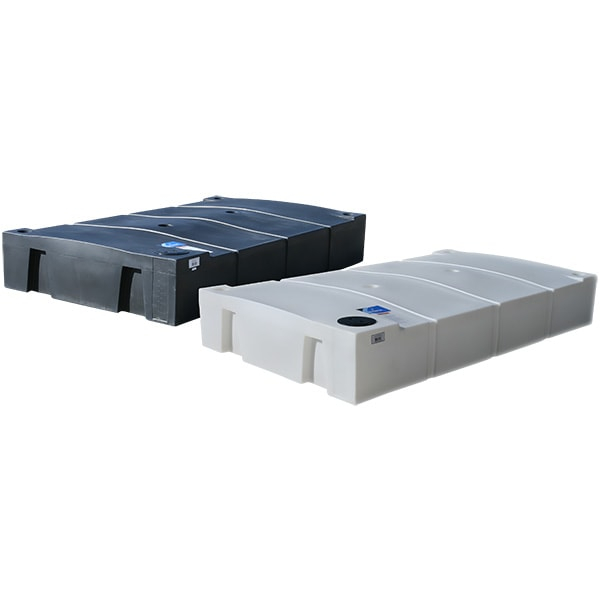
Protank Above Ground Septic Tanks

Above ground septic tanks are low profile polyethylene containers used to collect and store wastewater at grade for vacuum truck emptying. Commonly known as above ground holding tanks, job shack tanks, waste holding tanks, temporary septic tanks, remote wastewater tanks, and blackwater tanks, each product here is a holding tank and does not feature baffles, multiple compartments, a drainfield outlet, or treatment stage. These are one piece, rotationally molded tanks with a flat, self-supporting base and flat surfaces for adding fittings. Many models feature a threaded lid and multiple, preset inlet ports.

Below ground septic, holding, and multi-use tanks are separate products and cannot be used as a substitute. Above ground tanks cannot be buried underground and will collapse under soil weight. They are engineered to carry internal liquid loads, not external soil loads.

Choosing an above ground septic tank depends on five working details:

  1. The tank model and profile type
  2. The site-allowed clearance height and footprint
  3. The capacity set by daily flow expectations and pump-out interval
  4. The tank port configuration
  5. Any jurisdictional permit term and site conditions

Protank offers low profile rectangular and job shack holding tanks for sale in capacities from 105 to 1,000 gallons, in heights from 10.5 to 25 inches tall.

How to Choose an Above Ground Septic Tank

1. Tank Model and Profile Type

Above ground holding tanks are grouped into two model types by build, dimension constraints, and intended use case.

Low profile holding tanks

Low profile models are wide, flat rectangular tanks built to occupy horizontal space while minimizing total height. They range from 105 to 1,000 gallons and 10.5 to 22 inches tall, with footprints from 48 × 48 inches to 136 × 91 inches. The 105 gallon at 10.5 inches is the shortest plastic holding tank available in our catalog, while the 1,000 gallon is the largest above ground septic tank available. Four models ship with inlet ports but without lids. The rest ship with a 6 or 8 inch lid and inlet ports.

Common uses: Mobile offices and sales trailers; guard shacks; shower and restroom trailers; food service trailers; seasonal cabins; general sites that need to collect waste from a fixed structure on a regular pump-out schedule.

A low profile holding tank is the right choice when floor area is available and overhead clearance is the primary constraint.

Job shack tanks

Job shack tank models are narrower and taller, sized to slide beneath a construction trailer and be pumped from an exposed corner. Job shack tanks include the 250 gallon at 84 × 40 × 19 inches and the 350 gallon at 89 × 44 × 25 inches, the tallest holding tank we offer. These tanks can be connected in series to increase total volume to add capacity without additional height. A factory installed outlet port can be added on request.

Common uses: Construction trailer septic tanks and job shacks; temporary jobsite sanitation with plumbed fixtures; short term facilities; event and festival service.

A job shack tank is the right choice when needing blackwater storage for a construction trailer or event structure with a set project term and limited floor area beneath the unit.

2. Clearance Height and Footprint

Available install height decides whether an above ground septic tank fits. Tank footprint decides whether the placement area and pump-out access work. For these tanks, dimensions vary to match different application needs and do not correlate directly with total storage capacity; e.g., the 440 gallon is 16 inches tall while the 350 gallon is 25 inches tall, and the two 500 gallon models measure 130 × 52 inches and 95 × 92 inches to provide the same volume in a long narrow tank and a nearly square tank.

When placing a selected tank, the vacuum hose used in emptying has to reach. Job shack tanks are frequently pumped from an exposed corner. A poly holding tank set fully beneath a trailer and enclosed by skirting has no service access.

Measure the height clearance under the trailer frame or deck and the install area available, then choose an above ground septic tank with the capacity that fits both.

3. Capacity and Pump-Out Interval

An aboveground holding tank's needed storage capacity is determined by the daily wastewater flow, known or estimated, multiplied by the number of days between pump-out services. Construction trailer and jobsite applications are commonly sized based on a per-worker daily volume while residential and cabin uses are sized per-bedroom or per-occupant.

Some jurisdictions have specific guidelines and size portable and stationary tanks for construction sites, remote locations, and special events by flow adjusted proportionally to pump-out frequency. Others set minimum holding tank capacities regardless of job specifics and may require plumbing multiple units together.

Pumping intervals are frequently not set by the buyer. For example, Florida requires a contract with a permitted septage disposal company, stating tank capacity and pumping frequency, as part of the permit application. Some counties additionally set a minimum pumping frequency rather than leaving it to a hauler's schedule. The pumping schedule sets the timeframe, and this interval influences compatible tanks. In such scenarios, the hauler's details and availability should be determined before choosing an above ground holding tank.

4. Port Configuration

Most above ground septic tanks ship as a closed shell, with or without a lid, and with one or multiple inlet fittings. Low profile holding tanks in 200, 300, 500, and 1,000 gallons come with one 8 inch fill opening. Other models feature one or more 3 inch grommeted or threaded inlets. The tanks are made from polyethylene and can be modified to accept recessed port clamps, rubber couplers, grommets, and bulkhead fittings on flat tank surfaces. This nearly blank tank design allows inlets, vents, and outlets to be matched to existing plumbing setups and pump-out access rather than forcing a rebuild around the tank.

Protank provides some customization and port configuration for an additional cost. Specify the inlet and outlet size and type, placement locations, and any vent or pump-out connections at quote. Rigid piping is not recommended for direct connections to liquid-bearing tank fittings due to mechanical stress and thermal fluctuations. Flexible couplings are recommended to transition from rigid plumbing to the tank bulkhead hookup.

Jurisdictions that require an 18 inch access manhole can not be serviced by any model as shipped and will require an alternative product or modification.

5. Permit Term and Site Conditions

An above ground holding tank permit is legally different from septic tank approvals and may or may not be required. Many jurisdictions impose term limits to installation and use and have specifications for minimum capacity, alarm settings, access opening size, setbacks, and pumping frequency.

For example:

  • Indiana treats a temporary holding tank as an alternative wastewater handling method that requires written department approval and restricts it as a primary means of disposal.
  • Utah places a one year cap on temporary use, and names construction sites, labor camps, and mass gatherings as requiring an annual operating permit explicitly for above ground holding tanks.
  • Southern Nevada provides one year permits for standalone sales and construction trailer tanks.
  • Florida requires a DEP construction permit before a stationary holding tank can be placed or installed for permanent use.

Aboveground septic tanks may have permit conditions that require additional purchases for compliance and approval. Some jurisdictions mandate a high water alarm while others require an 18 inch manhole. Verify operating conditions with the local governing department before choosing a tank to ensure suitability.

Some jurisdictions require a secondary containment structure rated to at least 110% of the tank's total waste capacity if certain setback conditions are met. Holding tank permits with containment requirements are satisfied with a separate basin or pad structure, not by the tank. Consider our Custom Containment Tanks for large, high volume holding tanks if your jurisdiction requires containment.

Above Ground Septic Tank Specifications


Above Ground Holding Tank Dimensions
Capacity Dimensions (L × W × H) Empty weight Features Rep. Part #
105 gal 48″ × 48″ × 10.5″ 55 lbs Two 3″ inlets AGN105
200 gal 77″ × 46″ × 15″ 80 lbs Two 3″ inlets AGN200
225 gal 90″ × 33″ × 20″ 80 lbs Two 3″ inlets AGN225
250 gal 68″ × 48″ × 19″ 115 lbs 8″ lid, three 3″ side ports AGN250
250 gal 84″ × 40″ × 19″ 83 lbs 8″ lid, two 3″ inlets, two 3″ side ports AGQ250 (job shack)
300 gal 95″ × 55″ × 17″ 150 lbs 8″ lid, three 3″ inlets AGN300
300 gal 95″ × 56″ × 16″ 130 lbs 8″ lid, three 3″ inlets AGS300
300 gal 94″ × 56″ × 16″ 100 lbs Two 3″ inlets AGN300
300 gal 95″ × 56″ × 16″ 132 lbs 6″ lid, three 3″ inlets AGA300
350 gal 89″ × 44″ × 25″ 100 lbs 8″ lid, two 3″ inlets, two 3″ side ports AGQ350 (job shack)
440 gal 91″ × 72″ × 16″ 137 lbs Two 3″ inlets 440GB
500 gal 95″ × 92″ × 18″ 248 lbs 6″ lid, three 3″ inlets AGA500
500 gal 130″ × 52″ × 22″ 200 lbs 8″ lid, two 3″ inlets AGN500
1,000 gal 136″ × 91″ × 20″ 390 lbs 8″ lid, three 3″ inlets AGN1000 / AGS1000


Above Ground Septic Tank Materials, Standards & Compliance

Polyethylene Construction and Wall Design

Above ground septic tanks are rotationally molded from either high density linear polyethylene (HDLPE) or medium density polyethylene (MDPE). Rotational molding produces a one piece tank free from seams, welds, and joints at wall to wall transitions. Polyethylene as a material is naturally resistant to the gases and liquids present in sewage and will not rust or corrode from water or weather exposure. The resin used in manufacturing is UV stabilized to slow degradation as these tanks are intended for outdoor placement. Crazing, i.e., fine surface cracking, is the field indicator that a tank is aging.

Continuous service temperature for these tanks is 120°F. Sustained service above 120°F reduces tank wall stiffness and stress-crack resistance.

Specific Gravity Rating

Above ground temporary holding tanks are rated to 1.5, 1.7, or 1.9 specific gravity, suitable for handling 12.5, 14.1, and 15.8 pounds per gallon liquid density at 73°F. A plastic tank's specific gravity rating indicates the liquid weight the tank wall is built to carry. Sanitary waste and gray water are near the density of water, ~1.0 SG, and every tank grade we offer is more than sufficient for these use cases. Poly holding tank service suitability decreases as liquid temperatures increase. Consistent high temperature waste streams above 100°F but below 120°F should be carefully evaluated and regularly monitored during use.

Petroleum and Chemical Service

Aboveground septic tanks are manufactured and warranted for domestic strength wastewater. Other service can void the manufacturer's warranty regardless of tank performance and suitability.

Septage haulers are permitted to accept sanitary waste. Any waste containing petroleum, solvent, or work process contamination reclassifies the load, meaning the hauler on the permit cannot legally pump and empty the tank. Used oil storage typically carries its own federal requirements for labeling, condition, and leak response that a waste holding tank is not designed to meet.

Polyethylene has different hydrocarbon interactions depending on the specific fluid, concentration, and temperature: light aromatic and chlorinated solvents can absorb into the polymer, reducing wall stiffness and stress-crack resistance, while heavier lubricating oils tend to be far less aggressive. This is why compatibility is confirmed per tank and per fluid rather than by material alone. For petroleum containing waste streams, consider our Used Oil Tanks or Double Wall Tanks, and tell us the fluid on the quote so we can help match it to the right tank.

Standards

No third party or regulatory manufacturing standard governs above ground septic tanks. They are engineered to the design and performance capabilities that accommodate the intended use case specifications and conditions, tested and signed off on by company engineers. These stationary holding tanks are built in the USA and produced by North America's leading poly tank manufacturers on the same rotational molding lines and from the same polyethylene resins used for standards-qualified and NSF certified product lines, and carry manufacturer's warranty against defects in material and workmanship.

Common plastic tank standards that are frequently referenced but do not apply here:

  • ASTM D1998: covers upright, flat bottom, atmospheric, one piece rotomolded tanks 500 gallons in size and larger. Above ground holding tanks are horizontal, low profile containers and fall outside the standard by design. Any listing claiming a job shack tank is built to D1998 is incorrect. See our Engineered ASTM D1998 Upright Storage Tanks if the job requires this specification.
  • IAPMO/ANSI Z1000: standards apply to prefabricated septic tanks. These are waste holding tanks without burial, standardized plumbing connections, or treatment function. See our Underground Septic Tanks for approved septic system tanks.
  • NSF/ANSI 61: governs materials in contact with drinking water and drinking water systems; is not relevant to waste holding applications. See our poly water tanks and underground cisterns for NSF 61 certified products.

Above Ground Septic Tank Features → Applications

Low Profile Flat Bottom Geometry

Above ground holding tanks feature a wide, shallow rectangular build that measures between 10.5 and 25 inches tall. This low profile design displaces volume across floor area and allows placement beneath trailer frames, decks, or mobile offices where a vertical tank of equal capacity would not fit.

Ideal for: installations beneath job shacks, construction trailers, and mobile office units; sites with fixed overhead clearance; locations where excavation is impractical or not permitted.

De-risk: ensure clearance and service access match site specifications. Confirm the vacuum hose will reach a fill or pump-out point with the tank in final position.

Full Bottom Bearing

An above ground holding tank has a wide, flat bottom base and is self-supporting under load. These tanks are thinnest at the floor to accommodate flexure during fill and emptying and need continuous, level ground across the entire bottom. A void or high spot under a filled tank creates concentrated point stress outside the wall's designed carry load. Acceptable install surfaces include concrete pads, flat blacktops, packed sand, or pea gravel. Support must stay uniform through use and against erosion.

Ideal for: prepared pads, compacted parking surfaces, and sites where installation areas can be leveled or prepared before delivery.

De-risk: free-flowing pad material, sand or pea gravel, needs edge-containment to fight erosion; pads with uneven water drainage can lose level over time.

Molded Flats and Field Configured Porting

Above ground septic tanks have many flat surfaces and are made from linear polyethylene, both features allow the tanks to be readily modified with additional fittings and connections as needed. These tanks are intentionally designed so connections can be customized and attached to the molded flat areas rather than arriving as a fixed factory arrangement that has to be worked around. Recessed port clamps, rubber couplers, grommets, and bulkhead fittings are common attachments for above ground holding tanks.

Ideal for: installers matching a fixed trailer drain height; non-standard inlet sizes; series connected multi-tank setups with low vertical clearance.

De-risk: rigid piping is not recommended for direct connection to poly tank fittings as polyethylene expands, contracts, and flexes as it fills and empties; overtightened bulkheads can pinch gaskets and cause leaks; follow the fitting manufacturer's torque spec.

Atmospheric Pressure Only

These are polyethylene plastic waste holding tanks designed to operate at atmospheric pressure and cannot be pressurized. The vented lid on the 500 and 1,000 gallon models help maintain internal pressure balance but alone may not be fully sufficient during regular operation. Holding tanks that receive wastewater from plumbed fixtures or emptied by vacuum pump truck hookup are to have adequate structural, passive venting.

Ideal for: gravity fed inlets from plumbed trailer drains; vacuum truck service on a set interval schedule.

De-risk: confirm the vent or tank lid is open and unobstructed before the hauler begins pumping to prevent vacuum collapse; confirm venting and access requirements with local health department rules as applicable before tank selection.

Portability and Handling

These tanks weigh 55 to 390 lbs empty, and many are suitable for two to four person handling and include molded handholds for easier grip. The 1,000 gallon holding tank at 390 lbs and 136 inches long should be handled with a forklift or telehandler.

Only load and transport empty holding tanks. If liquid bearing or full, the holding tank should be emptied prior to transit.

Ideal for: sites without handling equipment; limited or difficult access; temporary placements that will be relocated; deliveries without liftgate service.

De-risk: the same low weight means an empty tank can be unstable during vehicle transport; tanks feature grooves across their tops that can be used as band recesses for tie-down straps.

Freeze Behavior and Fitting Replacement

Above ground holding tanks have no published minimum temperature rating and cold exposure alone does not damage the container. As a material, polyethylene loses impact resistance as temperature falls. Poly tanks in subfreezing temperatures are more susceptible to force-driven cracking than the same tank in warm weather, making winter offload and placement a concern in handling, not in dry storage. When liquids in the tank freeze, the expansion is relieved through container flexibility, any available headroom, and attached fittings, such as a bulkhead or lid, which typically reach their limit first. These components are the most likely to be damaged during a freeze event, and are field replaceable.

Ideal for: unheated outdoor placement in freezing climates; seasonal facilities; sites emptied on a schedule through winter.

De-risk: avoid full tanks during a hard freeze; ensure expansion room; plan for shortened pump-out intervals in winters with extended duration below freezing; handle and position tanks carefully and keep equipment traffic clear of a tank during cold weather. When heated, temperature stable, or freeze protected service is required, consider our Heat Traced and Insulated Tanks.

Above Ground Septic Tank Applications
Application Typical service What drives selection
Construction trailer, job shack Blackwater Clearance under the trailer; crew size; project duration and permit term
Mobile office, sales trailer Blackwater Permit term; alarm requirement; pump-out access
Shower and restroom trailer Blackwater, warm gray water Variable flow rates; max liquid temperature; increase in size or increased pump interval
Food service trailer Gray water Grease input and hauler acceptance; individual state requirements
Seasonal cabin, off-grid dwelling Blackwater, warm gray water Freeze exposure; winter hauler access; jurisdiction approval of holding tank use
RV and camper service Blackwater Port height matched to dump connection; portability when empty
Event and festival service Blackwater, gray water Peak day flow; series connected tanks for surge capacity; short duration permit
Emergency and disaster housing Blackwater, warm gray water Speed of deployment; code approval in some states
Interim service during system replacement Blackwater, warm gray water Duration cap during failed system replacement; written health department approval
Remote work camp, labor housing Blackwater Haul distance and interval; alarm requirement; multiple tanks in series

The applications above are commonly observed services and should not be taken to mean approval or as a recommendation of suitability as working specifics vary. Above ground holding tanks are manufactured for domestic strength wastewater only; other uses can void manufacturer warranty. System design and code compliance are determined by the permitting authority.

Construction site requirements

Construction site use cases may have a separate requirement for above ground septic tanks. OSHA 29 CFR 1926.51 sets minimum toilet facilities by headcount and whether the crew is stationary or mobile. The total number of facilities and expected wastewater volumes will influence the capacity and total units needed.


Above Ground Septic Tank Freight & Delivery Logistics

Above ground holding tanks ship from the warehouse or factory with the selected model and nearest to the delivery location. Shipping origin and lead time can vary directly by part number, and two tanks on the same quote can ship from different states. When multiple models fit the same clearance and size requirements, FOB origin point becomes a factor in cost and selection.

All above ground tanks ship via less-than-truckload (LTL) freight. Liftgate decks vary by carrier, and most cannot handle freight beyond seven feet in any single dimension. Three models in this category, 105, 200, and 250 gallons (part: AGN250), clear a typical deck. All other models must be hand lifted or unloaded using equipment. Plan for an offload crew rather than liftgate service.

These tanks are generally considered light but are large in size, so they exceed freight classes by dimensions rather than weight. Freight classes for these tanks run 250 to 300, which increases freight costs. Ordering two tanks to reach a total capacity target will usually cost more in freight than ordering a single larger tank.

Ready to Purchase an Above Ground Septic Tank?Request a quote or talk with one of our septic tank specialists. Tell us the installation location, available clearance height beneath the structure, expected daily flow or the number of people served, your pump-out interval or hauler schedule, and the inlet and outlet configuration the setup needs. We can help match an available model to the site and confirm expected freight times.


Frequently Asked Questions About Above Ground Septic Tanks

Yes, every above ground tank sold for septic service is a poly holding tank with a single chamber to store waste until it is emptied by a vacuum truck. These tanks operate without a treatment stage, baffles, compartments, or outlet to a drainfield. A conventional septic tank is made to separate solids and discharge clarified effluent to a drainfield. They are designed to operate full and need pumping every 3 to 5 years on average. A holding tank doesn't discharge liquids, so its capacity is slowly filled depending on use and has to be emptied on a schedule.

No, tanks designed for above ground use are engineered to withstand internal content load, not external soil pressure. Burying one can cause the surrounding earth to collapse the walls, failing the tank. Burial requires a tank built for it; consider our Underground Septic Tanks or Underground Water Tanks.

In many cases, yes, an above ground septic tank will require a permit due to health, safety, and disposal requirements. Holding tanks permits are provided as septic tank alternatives and often have a limited term length. Some jurisdictions also require a high water alarm, a minimum size for the access opening, or a signed pump-out contract on file. Confirm requirements with the local health department before ordering.

No, not without requesting it on quote. Here, outlets are typically used to connect multiple tanks together in series to expand total storage volume or for surge protection. Most above ground septic tanks come with a lid and at least one inlet. In many cases, the lid is simply removed to permit pumping. The tanks are made from polyethylene and feature large, flat areas, which make them easy to modify with additional fittings and ports as needed.

In most cases, yes, wastewater holding tanks will need a vent, especially if filled through closed-pipe fixtures or emptied by pump truck through direct-hookup hoses. Plastic holding tank venting is needed for fixture filling to allow air release during displacement from wastewater influx. If not performed through the tank's lid or if the lid is not opened, venting is needed during pump truck evacuation to prevent tank collapse.

As often as required by the daily flow volume and the tank's storage capacity. A holding tank fills at the rate of entering wastewater, so how often it will need to be pumped can be found by dividing the tank's capacity by the daily flow volume, adjusting to schedule service before the tank is completely full. In practice, however, the interval may be set by regional regulations or local code. For example, Florida county health departments require an active contract with a permitted septage hauler as part of the permit application, and the hauler may have a set schedule that determines pumping frequency and the holding tank capacity needed. Some locations restrict tank fill from exceeding a set percentage of total storage, e.g., 75% max full, and require pumping to be scheduled accordingly.

Size a construction trailer holding tank on average daily flow times the number of days between pump-outs, not on crew size alone. Start from the fixtures in the trailer or trailers and the shifts worked, then work back from the hauler's service interval. OSHA 29 CFR 1926.51 governs how many toilet facilities a site needs, one at 20 workers or fewer, one toilet seat and one urinal per 40 workers above that. The tank is sized by the volume those fixtures drain and how often the truck comes.

Yes, plastic tanks in general, including underground and above ground septic tanks, can be plumbed together in sequence to expand the total available storage capacity. The main qualifier is that the process of installing an additional bulkhead fitting is done properly, with enough distance from edges or other fittings, and securely to prevent shearing or leaks. For series connected poly holding tanks, unifying plumbing should be of sufficient size to prevent clogs and is recommended for bottom installation so tanks fill concurrently.

A portable toilet is a self-contained unit with an integrated waste tank typically rented from a provider who handles maintenance and removal. An above ground holding tank receives waste from plumbed fixtures such as toilets, sinks, and showers inside a trailer or job shack and stores it in the container. The above ground holding tank is purchased and owned with pump-out maintenance scheduled with a contracted service provider.

No, job site waste holding tanks should only be vehicle transported when empty. Transporting a holding tank when containing liquids can cause dangerous kinetic sloshing and stress to the tank's flat bottom, flat wall design that could lead to tank failure or unpredictable vehicle movement.


Related Products