
On a pretreatment line, the phosphate tank stage is one that determines whether everything downstream holds. The conversion coating it lays down is the anchor for paint or powder bonding. So when the bath drifts from specification or picks up contamination from a tank that’s breaking down, the failure doesn’t surface at the tank but months later as blistered finishes, underlying corrosion, and part returns.
This puts the tank to a specific demand: hold a hot, acidic phosphate bath at temperature, run after run, without softening, crazing, or shedding anything into solution. An iron phosphate bath at 140°F and a manganese phosphate bath near 200°F are not the same service and run in different tanks. We build each industry tank to the phosphate solution and its working temperature, in PP-H, CPVC, or PVDF as the service requires.
Send us your tank needs and we’ll build it.
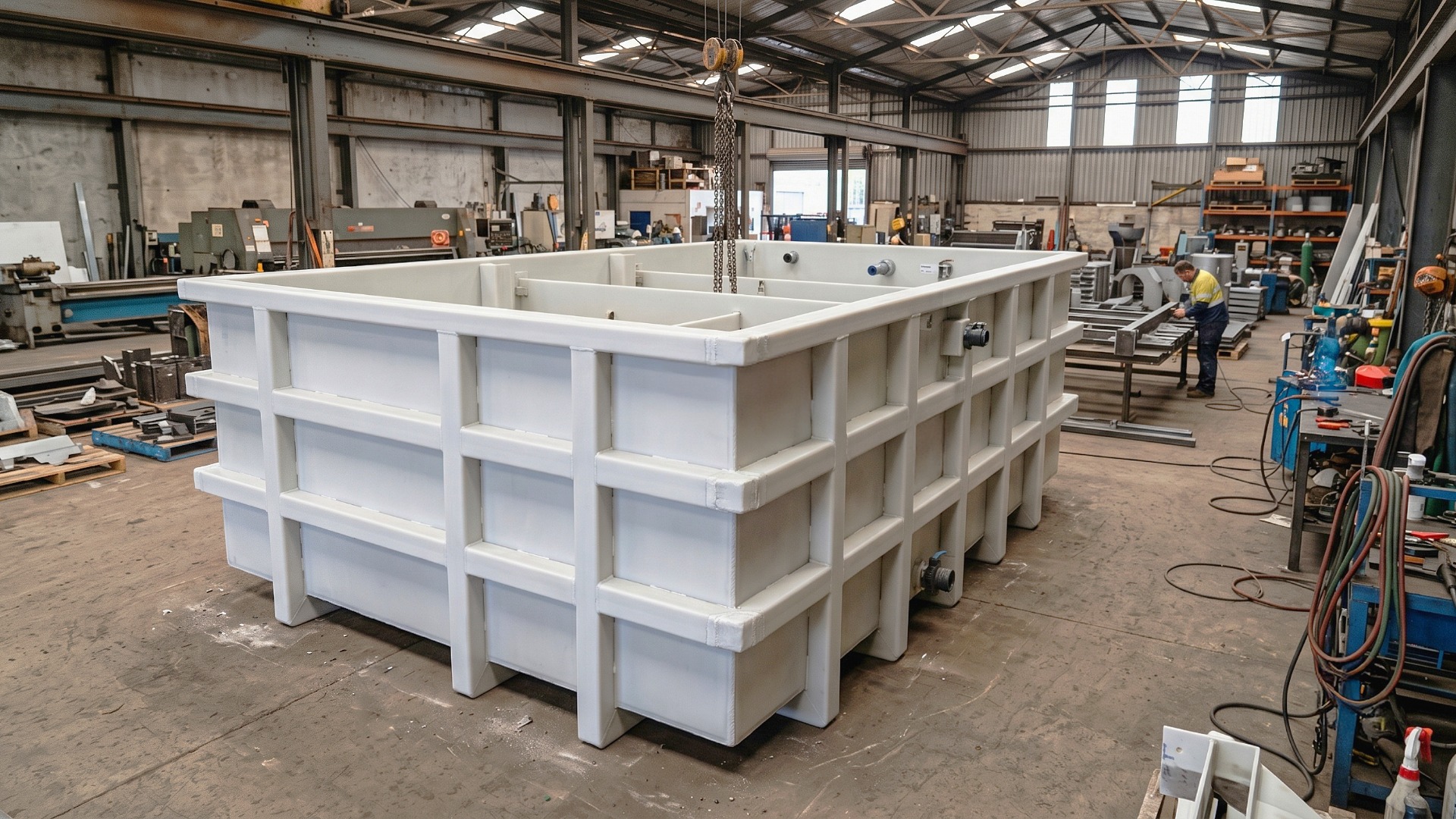
Three coatings, three different baths
Phosphating covers three processes that share a chemical family and almost nothing else where the tank is concerned. What you’re coating and how hot the bath runs during operation is what determines the tank.
Iron phosphate
Zinc phosphate
Manganese phosphate
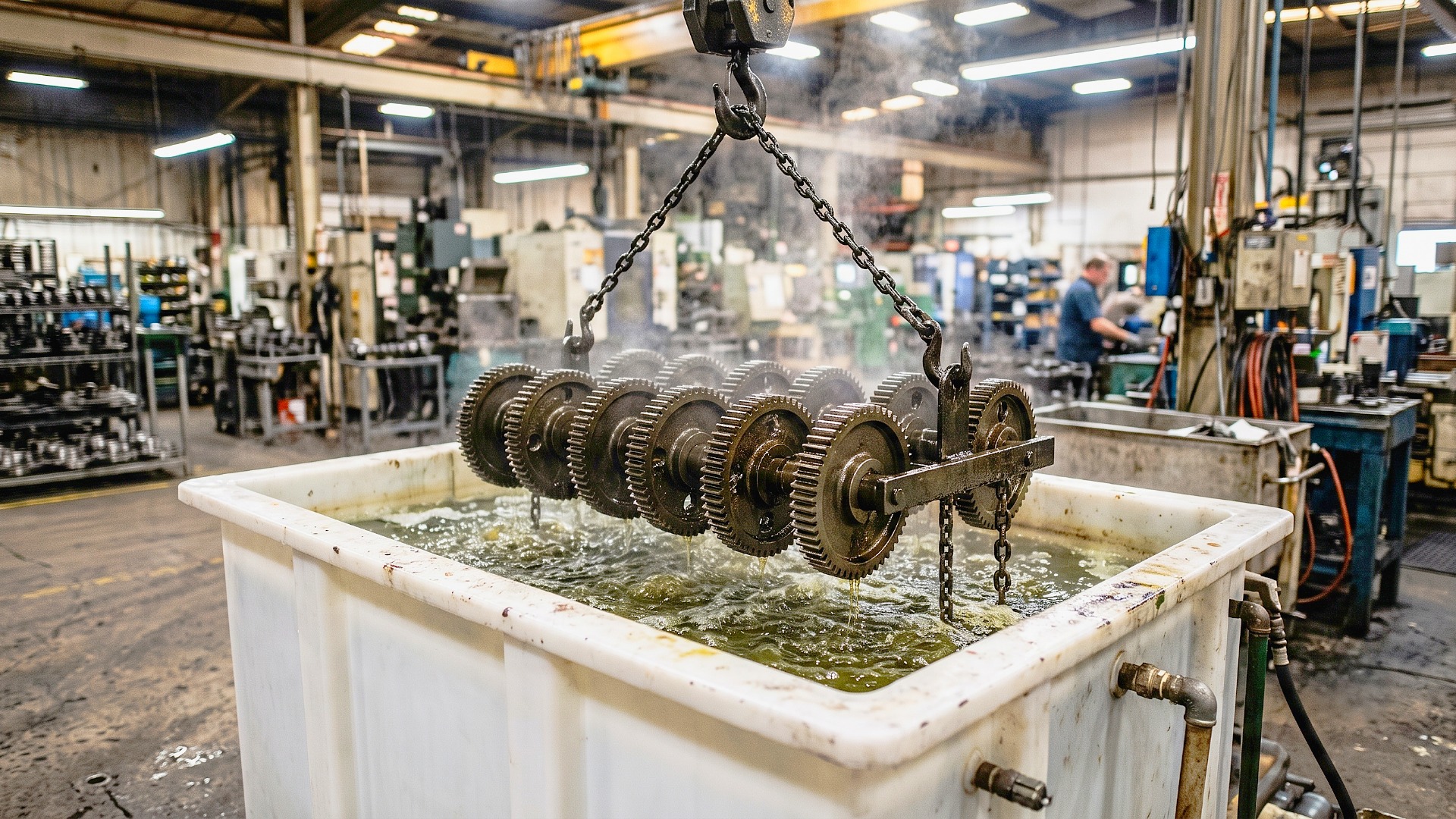
All three commonly used solutions are heated, phosphoric acid type baths. The accelerators added to drive the reactions, nitrite or chlorate, are present in small enough concentration that the overall solution can be considered non-oxidizing for material-selection purposes. Heat is the main selection criterion as well as the capacity to handle phosphate sludge that settles out as jobs run. For phosphating applications, the tank must be able to resist a hot acidic solution year after year, stay dimensionally stable at temperature, and never shed/release any contaminants into the bath.
The bath temperature picks the material
Since chemical compatibility with non-oxidizing phosphoric acid is satisfied across all three baths by the PP, CPVC, PVDF family, material selection can be narrowed down to one variable: continuous operating temperature. We build phosphating tanks in three thermoplastics to accommodate where your process line sits on the running-temp scale.
This is typical Protank guidance. Proper selection depends on bath chemistry, concentration, and operating conditions.
Products should be explicitly matched to the service for lasting reliability and optimization through not only performance, but cost. No material defaults and hoping the service matches; our tanks are made-to-order and backed by decades of experience and industry-material data. No overbuilding a warm iron phosphate bath line from premium resin. No underbuilding a near boiling manganese phosphate bath that won’t hold up under years of service. You tell us the coating solution and running temperatures, and we build the tank from the best fit thermoplastic.
Built to Your Specs
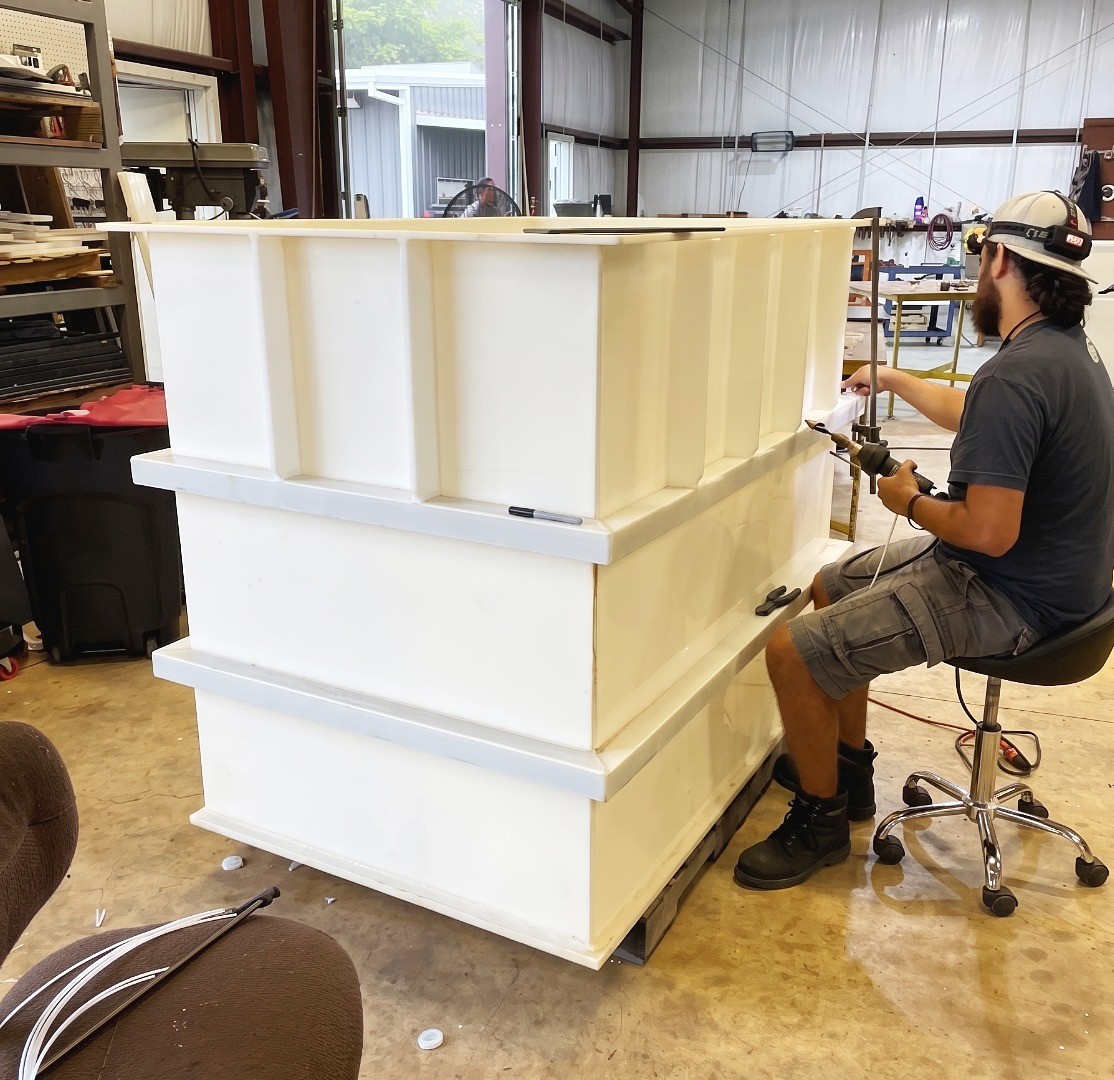
Custom phosphating tanks are fabricated, not molded; cut from sheet stock and welded to the project dimensions, with the material matched to the application parameters. We can build a compact iron phosphate dip tank, a heavy manganese-phosphate vessel, and those in between. All to the same standard, and each with the right materials and configurations.
This list below isn’t exhaustive. If you need an option or service not listed below, contact us. We can likely accommodate your request or help find an alternative.
Materials & Build
Tank materials
PP-H, CPVC, and PVDF cover phosphating temperature range and chemical compatibility. All are weldable sheet thermoplastics. Part of our broader fabrication menu that includes PP-C, PVC, and HDPE for adjacent tanks on the line.
Fittings
Various fittings, bulkheads, drains, valves, manifolds, circulatory lines, and more can be added to tanks in the location, material, type, and size the project needs. Fitting material options include PVC, CPVC, PP, and PVDF.
Seals
For fittings and connections that need leakproof seals, gaskets are available in EPDM, Viton (FKM), and PTFE, with EPDM the standard choice.
Sheet thickness
3/16″ to 1″ to match tank size, bath volume, and wall loading stress.
Welding
Hand/bead welding for detail work, fittings, corners, and connections, and extrusion welding for thicker sections and structural joints.
Structural Reinforcement & Configuration
For large dip line tanks, external reinforcement, support ribs, steel box-sections or I-beams encased in plastic, can be added per your specifications.
Built to your part sizes and line layout, single phosphate baths or matched tanks for multi-stage lines.
The connections built into the tank
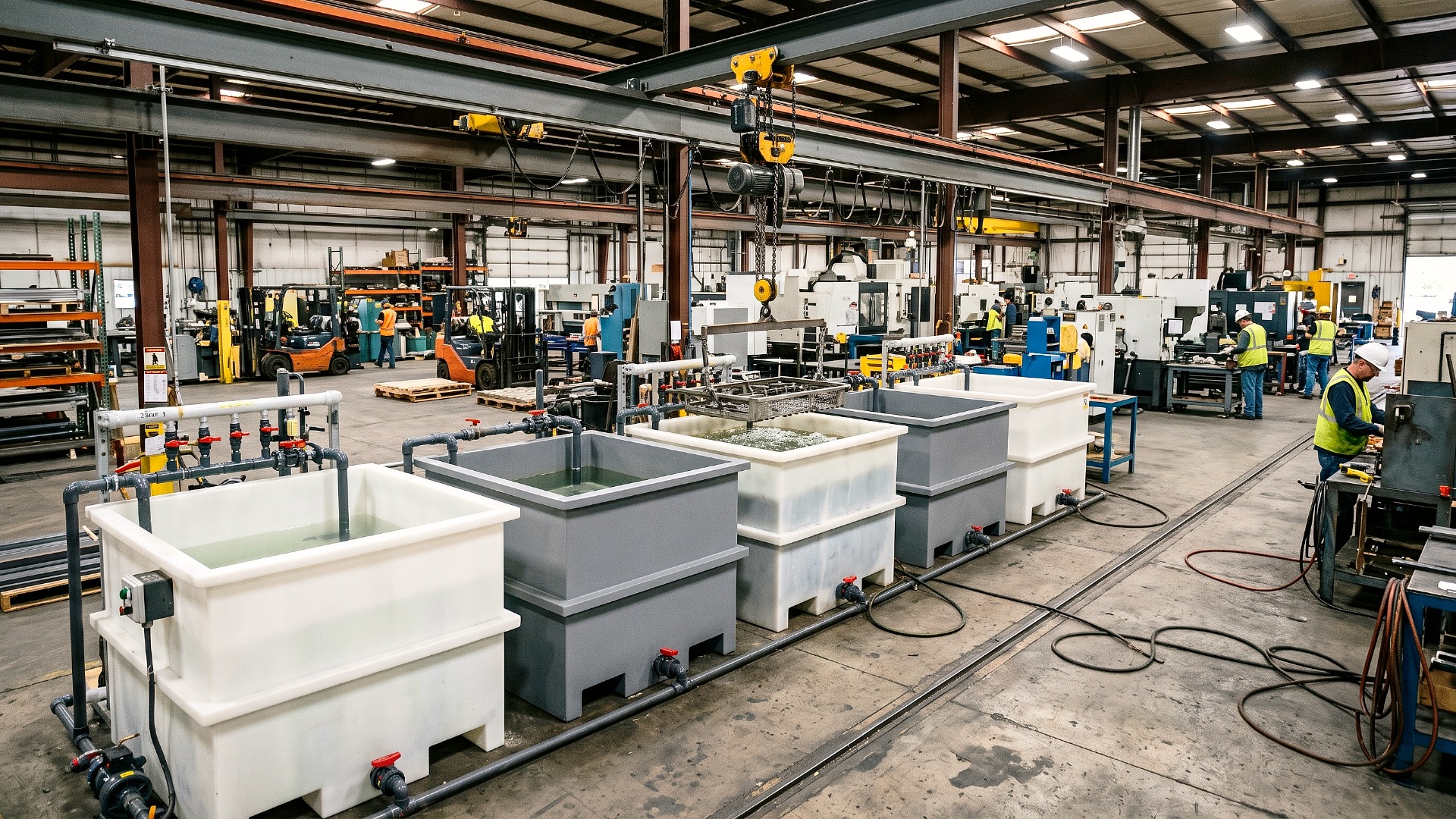
Phosphating tanks are commonly heated, monitored, drained, and tied into the rest of a business’s production line. We can add various connections, ports, and accessory equipment into the tank during fabrication so vessels arrive ready to integrate, rather than modify.
Heating & insulation
Rinse & overflow provisions
Instrumentation & access
Sludge management
One stage in a line we can build end to end
Phosphate tanks are often part of a sequence that spans from clean, rinse, coat, rinse, to seal. Parts move through this in order, and the phosphate stage only performs if the stages around it do their jobs properly. A typical iron phosphate line runs five stages: an alkaline clean, a rinse, the phosphate coat, another rinse, and a final seal or DI rinse. Heavier zinc and manganese work add stages, (cleaning, activation, and sealing), that can run to seven tanks or more.
For details on accompanying tanks, see: Custom Alkaline Wash Tanks for cleaning ahead of the coat, Custom Overflow & Rinse Tanks for between stages, and Custom Process Tanks & Multi-Tank Systems that covers building a full line as one coordinated set.
Where phosphating tanks Get Specified
Powder coating job shops
Iron · PP-HAutomotive OEM suppliers
Zinc · PP-H / CPVCAppliance & white-goods manufacturing
High volumeDefense & firearms
Manganese · CPVC / PVDFAgricultural & construction equipment
Large tanksGeneral metal fabrication
Iron & zincBuilt to support the standards your process runs to
Phosphating applications sit inside regulated workflows: coatings under finishing specifications; wastewater under federal effluent rules. Protank builds tanks to support the conditions you’re operating to. Common regulations include:
When your line needs the discharge side handled, our Custom Wastewater Treatment Tanks and Custom Containment Tanks have you covered.
What you get building with us
Welded fabrication, built to your line’s dimensions
These tanks are cut from sheet and welded to size which means the tank is built to your part sizes, line specifics, and footprint rather than forced to fit a stock size.
Built in, not cut in later
Heating and insulation, sludge drains, rinse weirs, sensor taps, and bulkhead fittings positioned and added during fabrication, so the connections your line needs is part of the tank from the start.
The whole line, not just a stage
We fabricate immersion tanks across finishing lines, each built to its own service, so materials and costs optimally match the application.
Sheet range and reinforcement
From compact dip tanks to large heavy equipment baths, we fabricate in 3/16″ to 1″ sheet, with external structural reinforcement built according to your specifications.
Nationwide delivery
We ship complete custom tanks across the continental US from our Gulf Coast facilities, with support from spec through delivery.
A real business on the other end
With 20+ years experience, send us your specs, drawings, and job info and you get a tank that meets your business’s detailed needs; not a stock catalog and a part number.
Tell us the bath. We’ll build the tank.
Every phosphating tank we build starts with the coating solution being run, the temperature the bath holds, and the line it has to fit. Give us these specs and we’ll build the tank and configuration to match.
Whether it’s a single iron phosphate dip tank or a full multi-stage line from clean through seal, send us the details and we’ll get back with you within one to three business days.
The more detail you bring to the first call or submit to us, the faster we can return an accurate quote. Drawings, sketches, and engineering specifications are encouraged and, in some cases, required.