
Every process line that moves parts or liquids through multiple stages depends on rinse and overflow tanks that are correctly sized and positioned. Undersize the tanks, position them wrong, or build them without the right weir setup and the consequences can show up downstream in finish quality, solution purity, or exceeding discharge rates.
Need to replace an aging system or steel? Protank regularly does this and can build custom replacement tanks to match your exact design and process specifications.
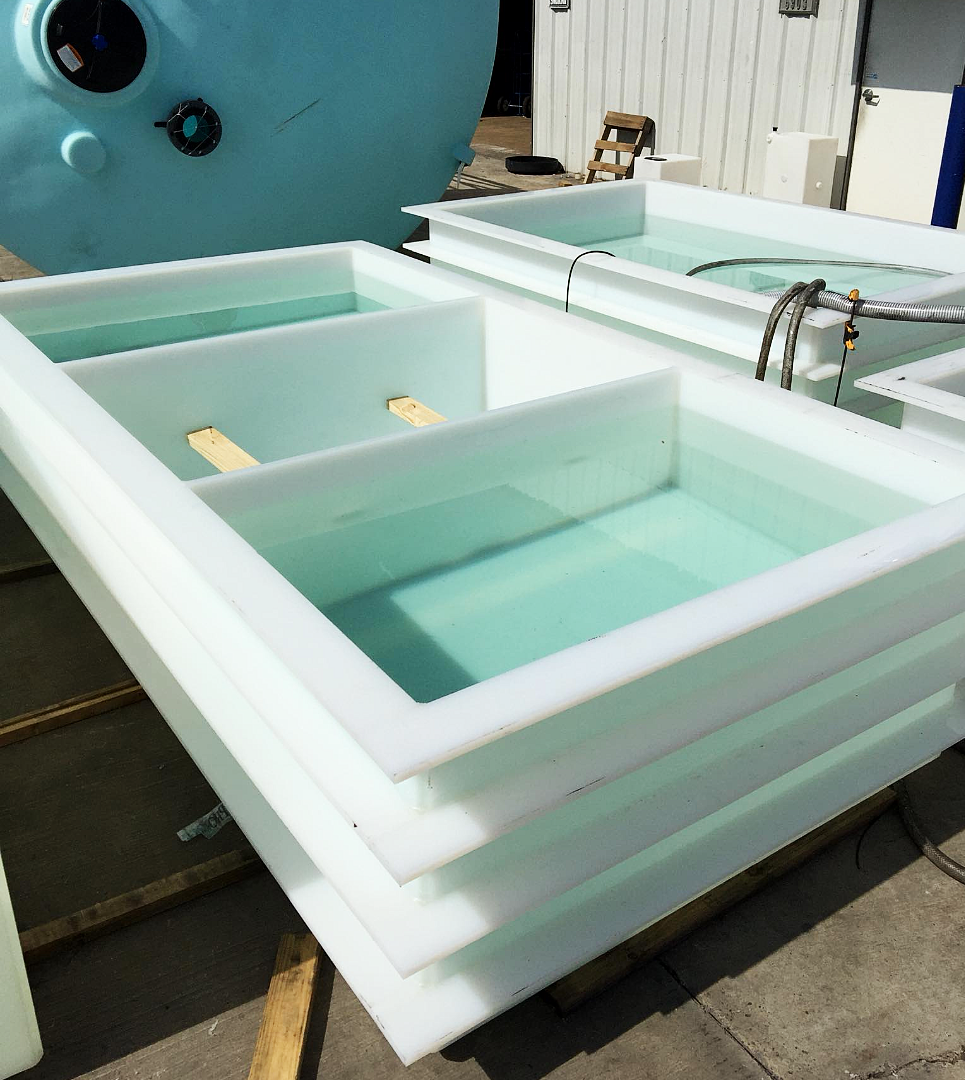
Built for Your Process and Line Layout
Overflow and rinse tanks dilute and capture process chemicals, prevent contamination from moving between stages, remove residues from parts, and manage discharges to keep waste within regulatory limits. The tank design, including weir setup, stage count, sizing, and materials, is determined by your specific application.
Overflow and rinse tanks are designed to handle applications that require washing, removal, or the capture of liquid that may be spent, left over, or flow out of the tank as overflow during use. The tanks are frequently used in contaminant removal, chemical handling, and surface preparation. Protank's custom built tanks can be made as needed to easily integrate into operational setups to support workflow optimization and deliver consistent results.
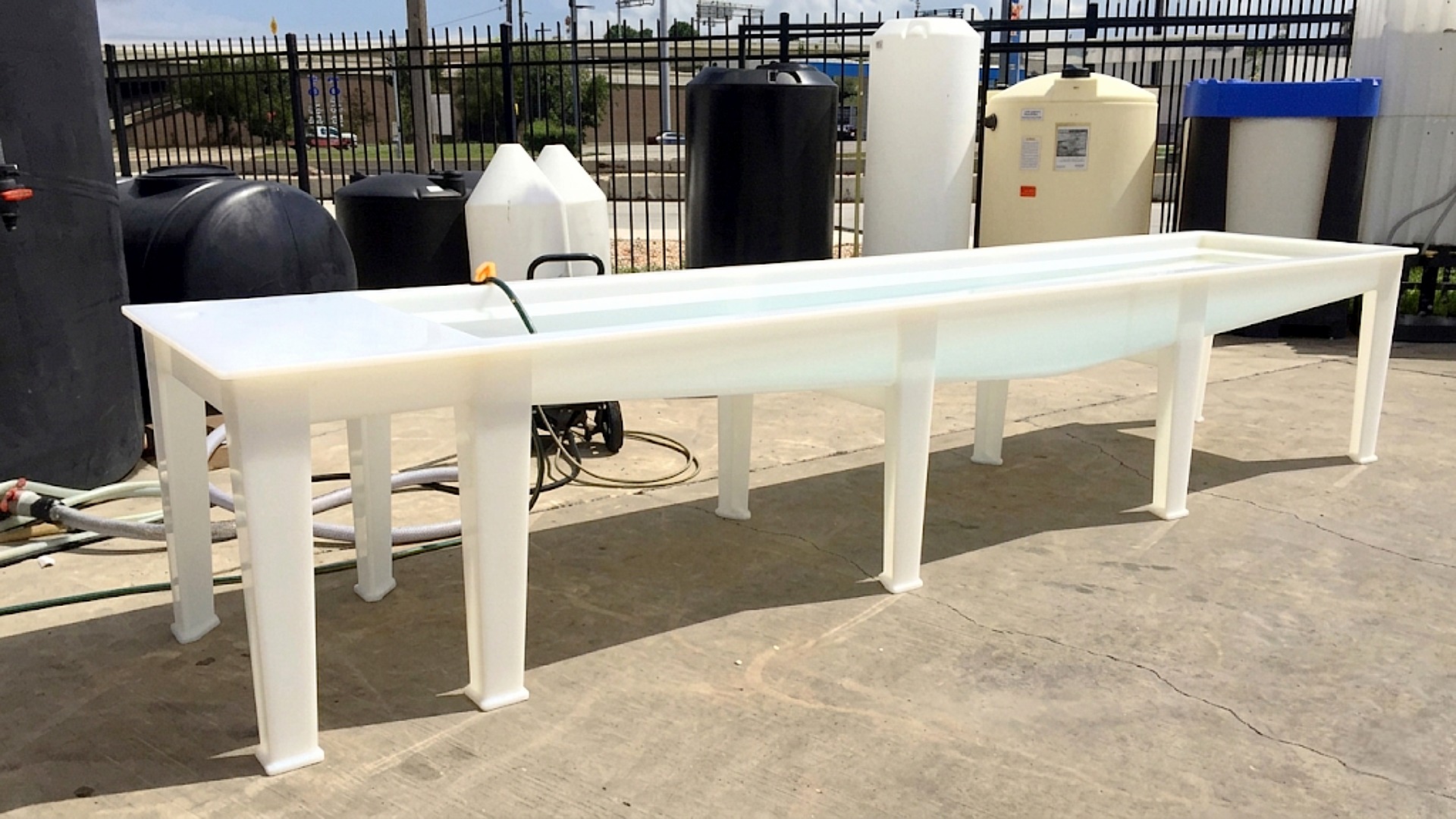
Protank builds custom overflow and rinse tanks made for the specific chemical solutions, dragout loads, flow rates, and line layout of each application. We can include overflow weir systems, cascade and countercurrent designs, and multi-stage setups. Protank also builds alkaline wash, alodine treatment, aluminum deoxidizer, and electropolishing tanks that these rinse stages work alongside for a single source complete process line
Overflow Weir Systems
Multi-Stage Rinse Systems
Cascade & Countercurrent Rinsing
Dragout Capture and Reduction
Chemical Neutralization Support
What Protank Builds
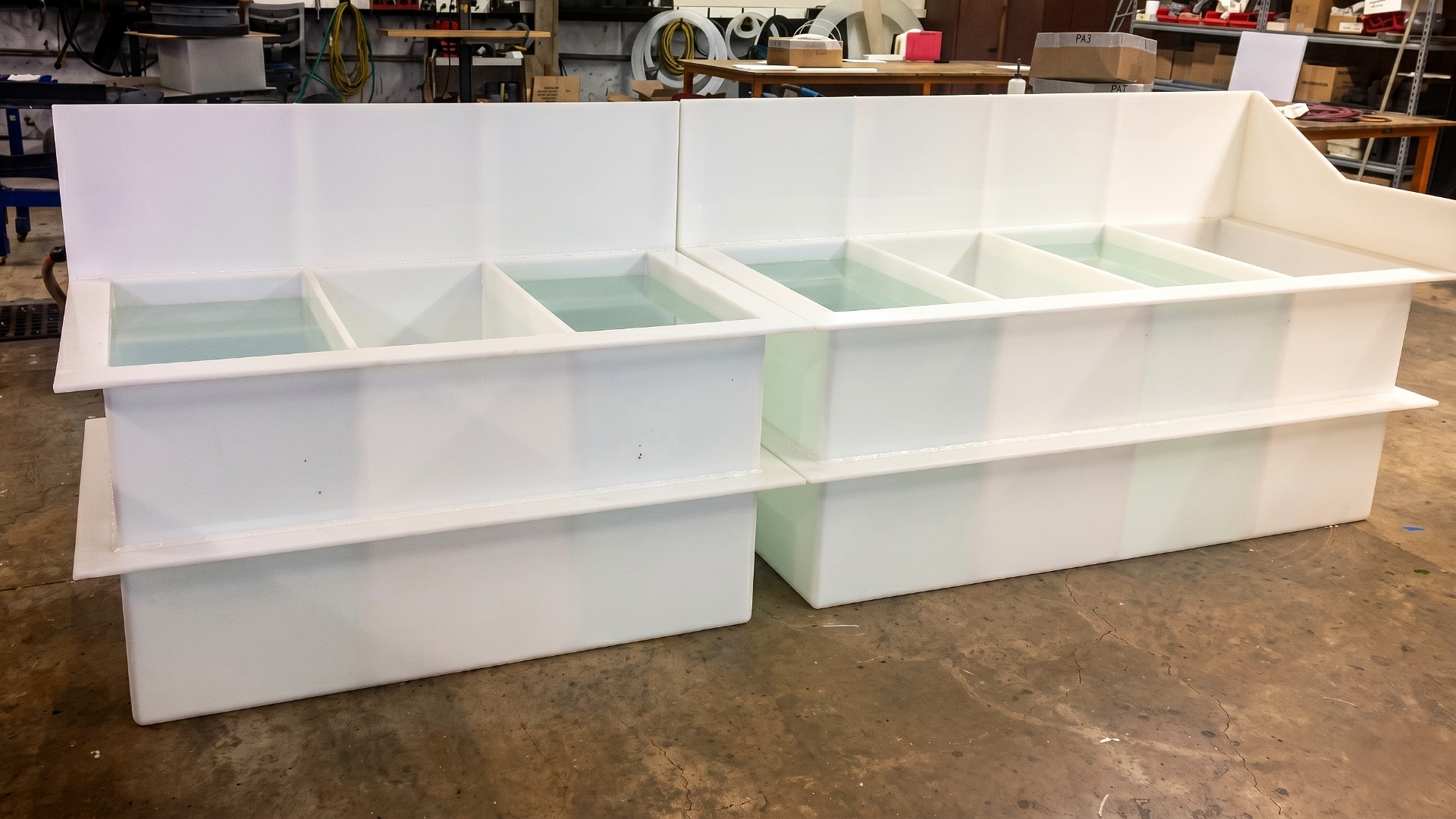
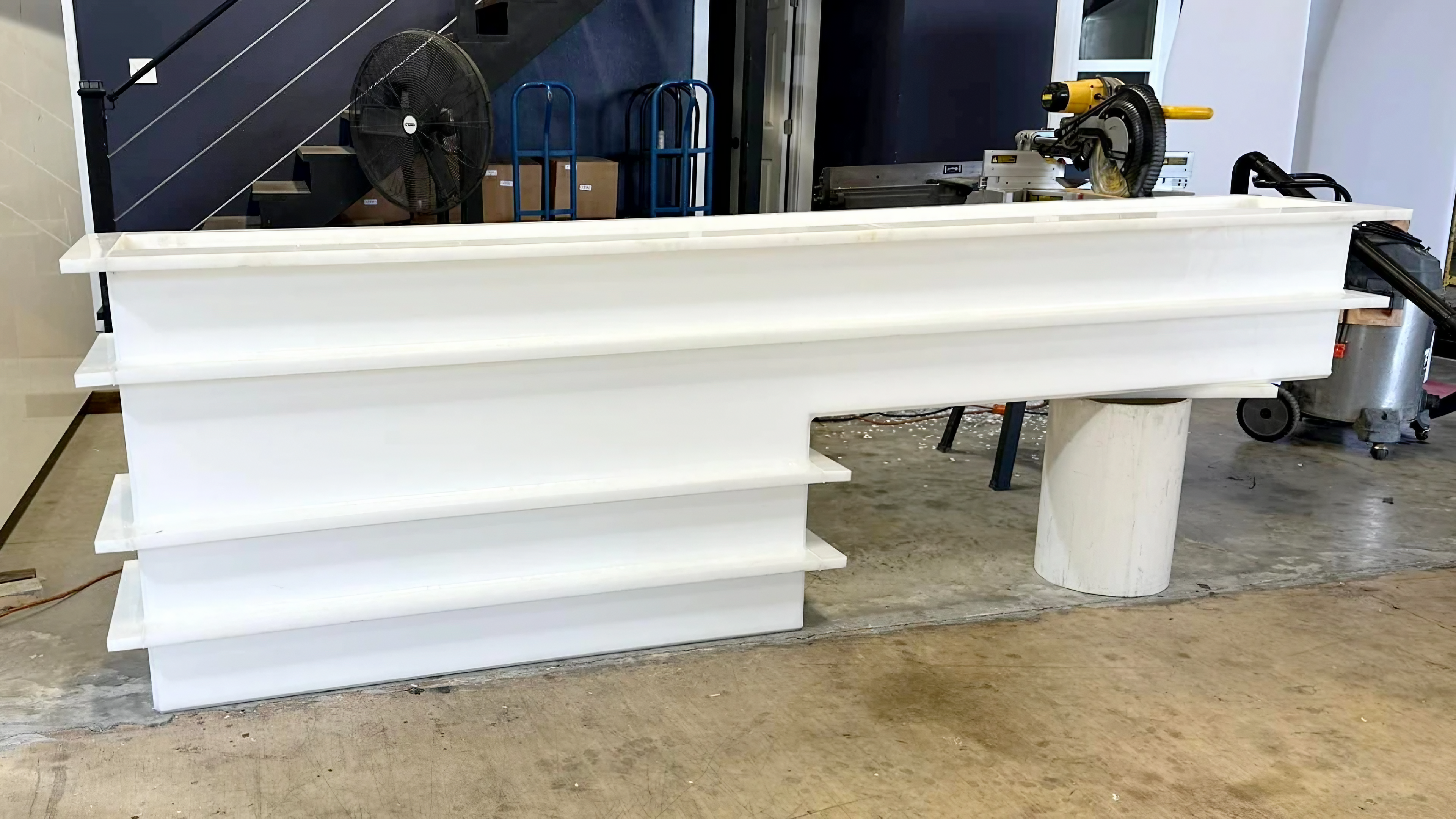
These are the most common overflow and rinse tank configurations Protank fabricates. Each stage is sized and configured to your design specifications for your overall process line, not adapted from a generic template.
Overflow Weir Configurations
Weirs can be internal or external, single or multiple, and positioned to direct flow to drain, collection, or the next rinse stage. Weir height, width, and placement are added to match your specs, flow rate, and tank shape. Weirs are part of a design setup where, as fresh rinse enters, contaminated liquid continuously overflows so working surfaces always present the cleanest rinse to the part being processed.
- Internal or external weir placement
- Single or multiple weirs per tank
- Weir height, width, and overflow direction
- Flow directed to drain, collection, or next stage
Multi-Stage Rinse Systems
Protank builds tanks for primary, secondary, and final rinse stages that may involve different liquids, flow rates, or design requirements at each step. Multi-stage systems are standard in surface finishing, plating, and precision cleaning lines where more than a single rinse is needed to reach required cleanliness or preparation levels.
- Primary, secondary, and final rinse stages
- Per-stage drain flanges and fittings
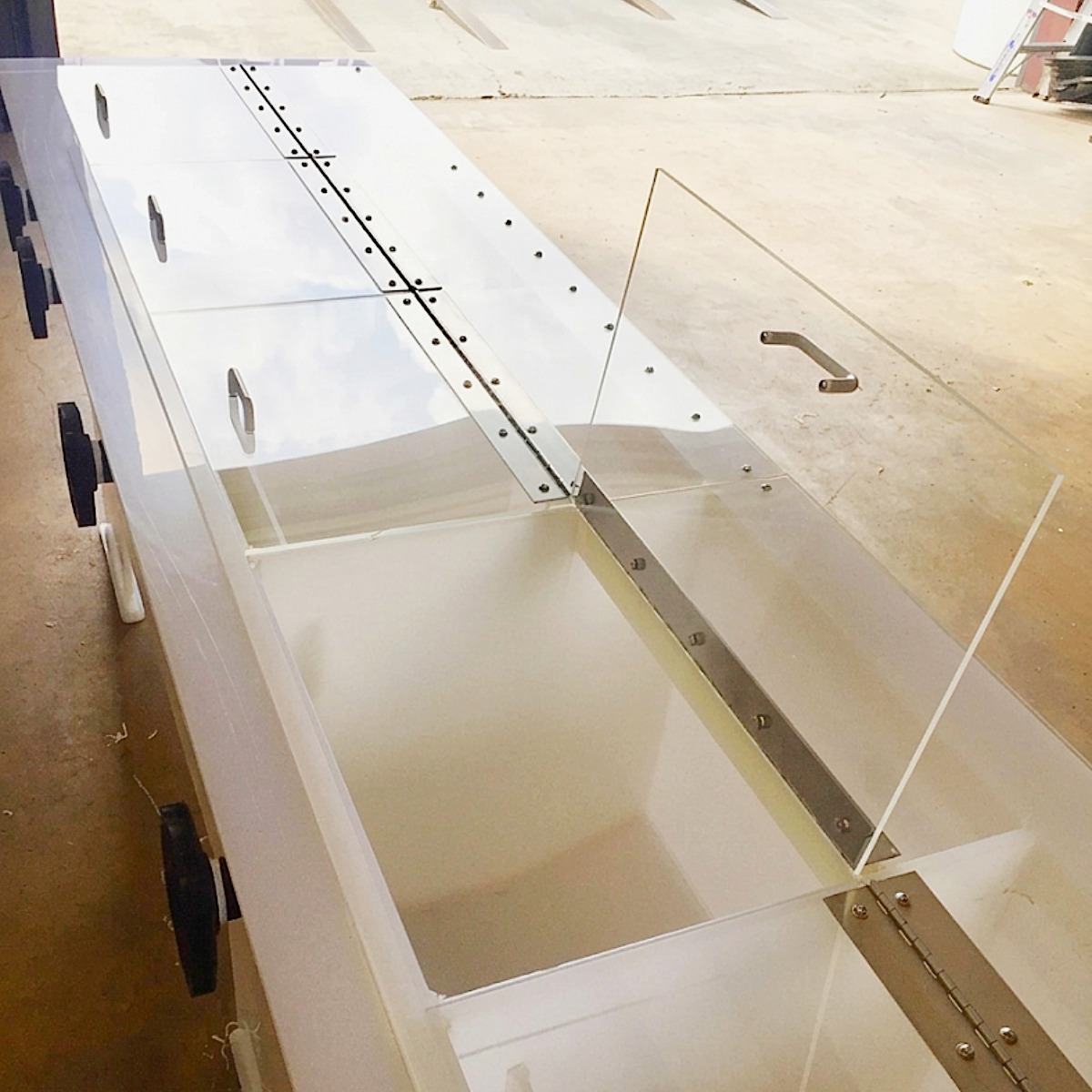
- Hinged or removable lids per section
- Modular, scalable to additional stages
Cascade & Countercurrent Systems
Fresh water enters at the final rinse stage and flows backward through earlier stages. Each stage becomes progressively more contaminated as it approaches the drain. Water consumption is reduced without losing rinse effectiveness. This is a standard design choice for electroplating, anodizing, and chemical film lines where water use and discharge costs are significant operational concerns.
- Electroplating and anodizing lines
- Chemical film (alodine/chromate) lines
- High volume or continuous operations
- Facilities managing discharge volume and cost
Recycling and Reuse Systems
For operations looking to reduce water and chemical consumption, overflow rinse tanks can be designed to integrate into closed loop systems that collect and recycle rinse water or application chemicals. The goal: resource conservation, lower environmental footprint, and reduced discharge volumes with direct benefit for applications under discharge permit limits and constraints.
- Collection sumps and return piping
- Pump connections for recirculation
- Conductivity monitoring integration
- Sized to match recycling system flow rates
Dragout reduction by design. Rinse tanks positioned immediately after process tanks, such as plating, anodizing, alodine treatment, alkaline wash tanks, capture and dilute residual, leftover chemicals carried out on parts. Rinse tanks work to capture and dilute this dragout. The result: reduced chemical use, protection for following stages, and discharge kept within environmental limits. Tank positioning, weirs, and rinse volume can all be built around your specific dragout load.
Discuss your line →Where Overflow & Rinse Tanks Get Specified
The industries below rely on rinse and overflow tanks to control contamination, hold solution purity, and stay within discharge limits.
Electronics
IPC-A-610 · MIL-PRF-31032Metal Finishing
Chemical Processing
Pharmaceuticals
ECV · 21 CFRFood & Beverage
NSF · CIPAutomotive
Surface Preparation
Water & Wastewater
General Manufacturing
Built to Spec
The following are common customization options for Protank's overflow and rinse tanks. This list is not exhaustive. If you need an option or service not listed, please contact us. We can likely accommodate your request or help find an alternative solution.
Material Options
Polypropylene (PP) is our standard and primary fabrication material. Excellent chemical resistance, durability, hygienic properties, and high temperature rating. Compatible with deionized water, many acids, alkalis, and solutions used in surface finishing and precision cleaning. Protank can fabricate tanks from either PP-H (homopolymer) or PP-C (copolymer) sheets in thicknesses from 3/16" to 1".
- Polypropylene (PP-H or PP-C): standard fab
- PVC: general corrosion service within op range
- CPVC: hot non-oxidizing service outside PP/PVC range
- PVDF: strong oxidizers, aggressive acids, high temp, high purity
- HDPE: specialized chemical compatibility, natural/white or black
For Service Outside PP Range
Rinse stages downstream of chromic acid anodizing, hexavalent chromate (Alodine), or nitric/HF pickling often carry over oxidizers or chemical concentrations beyond polypropylene's range of performance. PVDF (Kynar) is specified, for full tank construction or as a liner, when strengths and temperature require. For hot, non-oxidizing rinse services beyond PP/PVC compatibility, CPVC is recommended.
Fittings & Lid Options
Lids can be fabricated from polypropylene or clear polycarbonate. Hinged, removable, or sliding options with stainless steel or PP hardware are available. Lids can provide easy access while helping to reduce chemical vapor escape and maintain bath temperature between cycles. Polycarbonate lids allow visual inspection of the bath without opening the tank.
System Design Options
- Overflow weir configurations: Weirs can be internal or external, single or multiple, and positioned to direct flow to drain, collection, or the next rinse stage. Weir height, width, and placement are built to your specified flow rate and tank shape.
- Modular configurations: Single tank or multi tank modular setups for direct integration into existing or custom workflows, with preset connections for scalability and future work growth or modification.
- Cascade and countercurrent systems: Multi stage cascade layouts with countercurrent flow for water efficient rinsing in electroplating, anodizing, and surface finishing lines.
- Automated rinse systems: Automated rinse systems with pumps and dedicated piping for precision liquid movement and distribution control to reduce manual intervention and process variability.
- Part hangers, rack support bars, and submersion guides: To accommodate specific workpiece setups, full coverage, and consistent rinse contact during jobs.
Custom Dimensions
- Capacity: From a few gallons for compact detailed operations to several thousands of gallons for large scale industrial rinse systems.
- Shape: Cylindrical, rectangular, or custom shapes to fit available space, part dimensions, and line layouts.
- Top Configuration: Closed top, open top, or open top with hinged or fully removable lids depending on vapor management and access requirements.
- Wall Thickness: Sheet thickness ranges to match liquid weight, corrosive load, and operating temperature (3/16″–1″).
Fabrication and Reinforcement
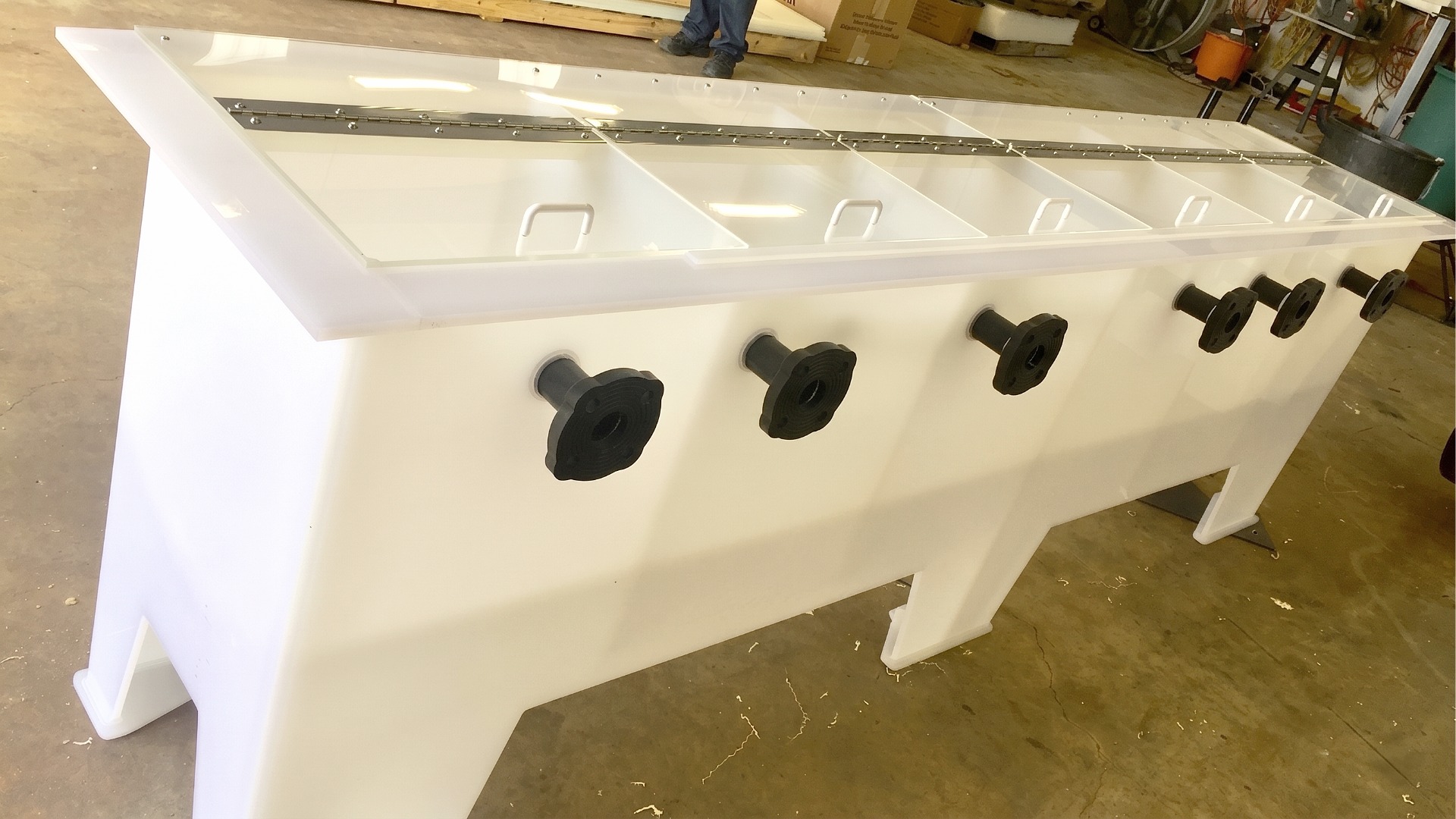
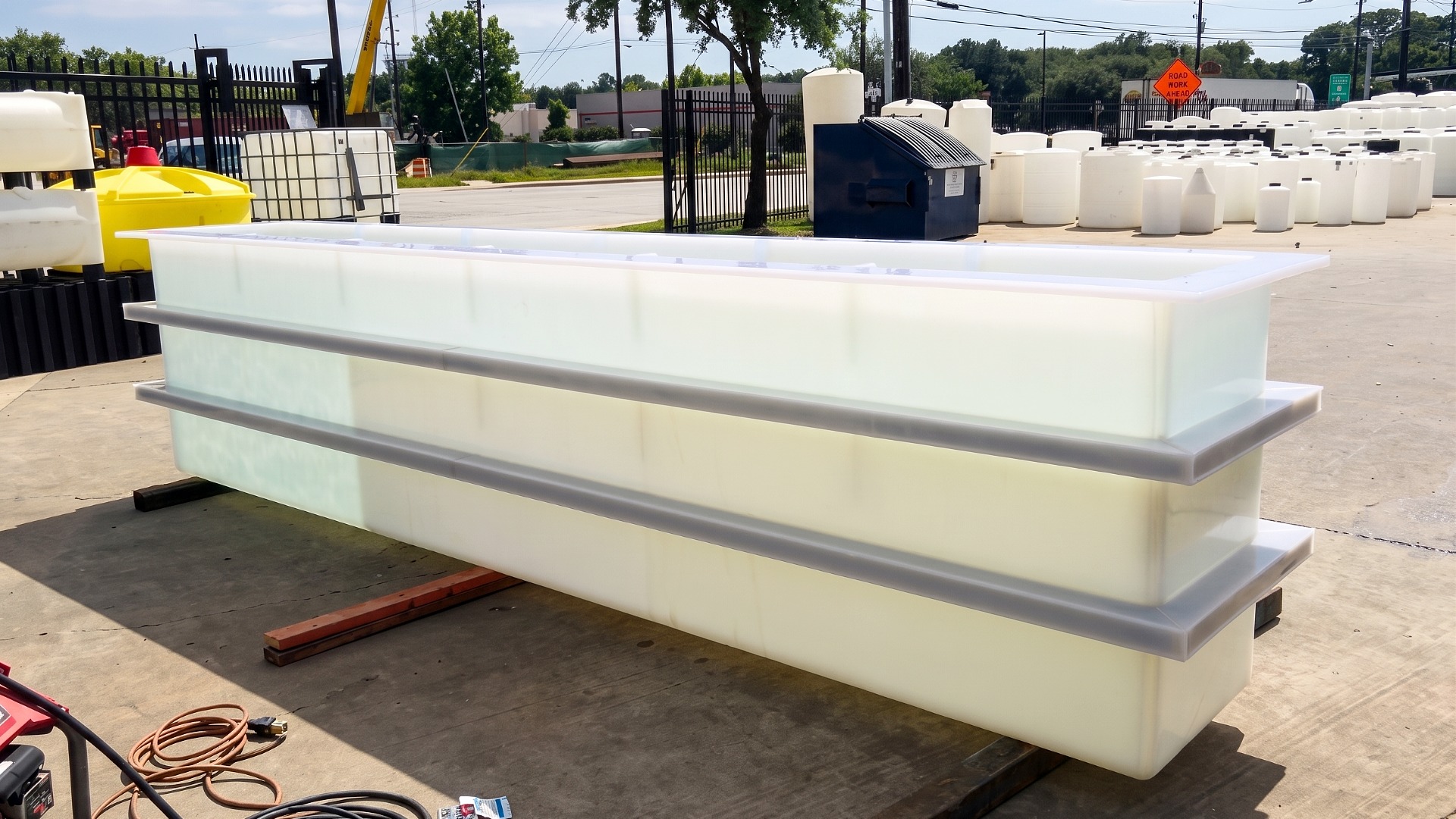
Welds and structure: Tanks are joined by hot gas bead welding, often for fittings, corners, and detail work and/or extrusion welding, often for thicker structural seams. For large, tall, or liquid heavy troughs and tanks, external structural reinforcement, including girth bands, steel box sections, or PP-encased I-beams can be added to meet your specified load requirements. Reinforcement is built to client-provided requirements; structural load calculations and engineering are not a Protank service.
Add-on Capabilities
Standard tank fittings and structural options are suitable for most rinse applications. Tank add-ons and process improvements are available when the job specifications or regulatory oversight demand.
Programmable Temperature Control
Maintain optimal thermal conditions with integrated heat tracing systems and programmable controllers. Manage and adjust liquid temperature for applications that require heated solutions to drive proper and consistent cleaning performance.
Tank Level Sensors
Real time monitoring of liquid levels with tank level sensors in ultrasonic, submersible, and radar models. Used to prevent overflows and provide alerts when it's time to restock or refresh and helps keep work running without interruption. Ideal for operations where liquid stock is continuously expended.
Safety Systems
Leak detection sensors and audible/visual alarms provide immediate alert if a situation arises, so operations are safeguarded, personnel and equipment protected, and compliance with safety standards met.
Conductivity Sensor Ports
In-line conductivity probe access points for real time contamination monitoring. Required in equipment cleaning validation (ECV) procedures and useful when bath purity must be verified and documented before parts are okayed for downstream stages.
Spray Foam Insulation
Tank insulation and weatherproof coating to reduce heat loss in temperature sensitive rinse applications where bath conditions must be maintained between cycles. Particularly relevant for heated final rinse stages in precision cleaning and validated workflows.
Fume Scrubber Connections
For rinse applications handling volatile or regulated chemicals, fume scrubber connections can be installed for vapor control and OSHA compliance, often a standard requirement in surface finishing where the chemicals used generate regulated air emissions. We can also build fume scrubber systems for businesses who have the engineering build-out specified.
Environmental & Regulatory Compliance
Overflow and rinse tanks support compliance with environmental and workplace safety regulations by managing rinse solutions and hazardous chemicals. They help facilities meet discharge standards, minimize environmental impact, and maintain permits to keep operations operational.
Built right, the first time.
In-house fabrication
Every tank is built at Protank's own facility by our experienced fabrication team, not outsourced. This means direct quality control, consistent workmanship, and faster lead times on every project.
Full process line capability
Protank custom builds overflow and rinse tanks to integrate directly with our custom alkaline wash, alodine treatment, aluminum deoxidizer, acid neutralization, plating, anodizing, and electropolishing tanks. The result: a single source complete process line, sized and matched as a system.
Process driven design
Protank can build tanks to match your specific process solutions, dragout load, rinse purity requirements, and line layout. Overflow weir placement, stage sizing, and material selection are determined through your specs.
Pre-build compatibility review
Before fabrication, Protank reviews your specs to confirm the tank material, fittings, and weld method suit the service and ensure the right results are delivered.
Nationwide delivery
Protank ships custom fabricated tanks across the continental US, from our facilities to both coasts, with end-to-end support from consult through delivery.
20+ years of expertise
Over two decades of custom tank fabrication and providing precision solutions for businesses across industries, nationwide.
Let's Build Your Overflow or Rinse Tank
Every overflow and rinse tank Protank builds is engineered specifically for your application chemicals, your parts, and your line layout. Send us your specs, and we'll get back to you in one to three business days.
Looking for a custom overflow or rinse tank built by experts to your exact requirements? Contact Protank today.
Response within 1-3 business days. Every inquiry. All quotes are confidential.
Need a tank sooner? Protank also offers a full line of stock open top and industrial poly tanks available for immediate order →