
Electropolishing depends on precise electrochemical conditions, including the right electrolyte chemistry, bath temperature control, correct current settings, and properly positioned anode and cathode bars. If any one of those parameters varies outside spec, the result is inconsistent material removal, surface finish failures, or parts that don’t meet standards.
In regulated businesses, that means documentation problems and rework. In production lines, it means scrap and fulfillment delays. Protank builds custom polypropylene electropolishing tanks built to your exact specifications, including your process metals, part sizes, electrolyte solutions, and other parameters such as anode and cathode bar setups, temperature control, and vapor management built in from the start.
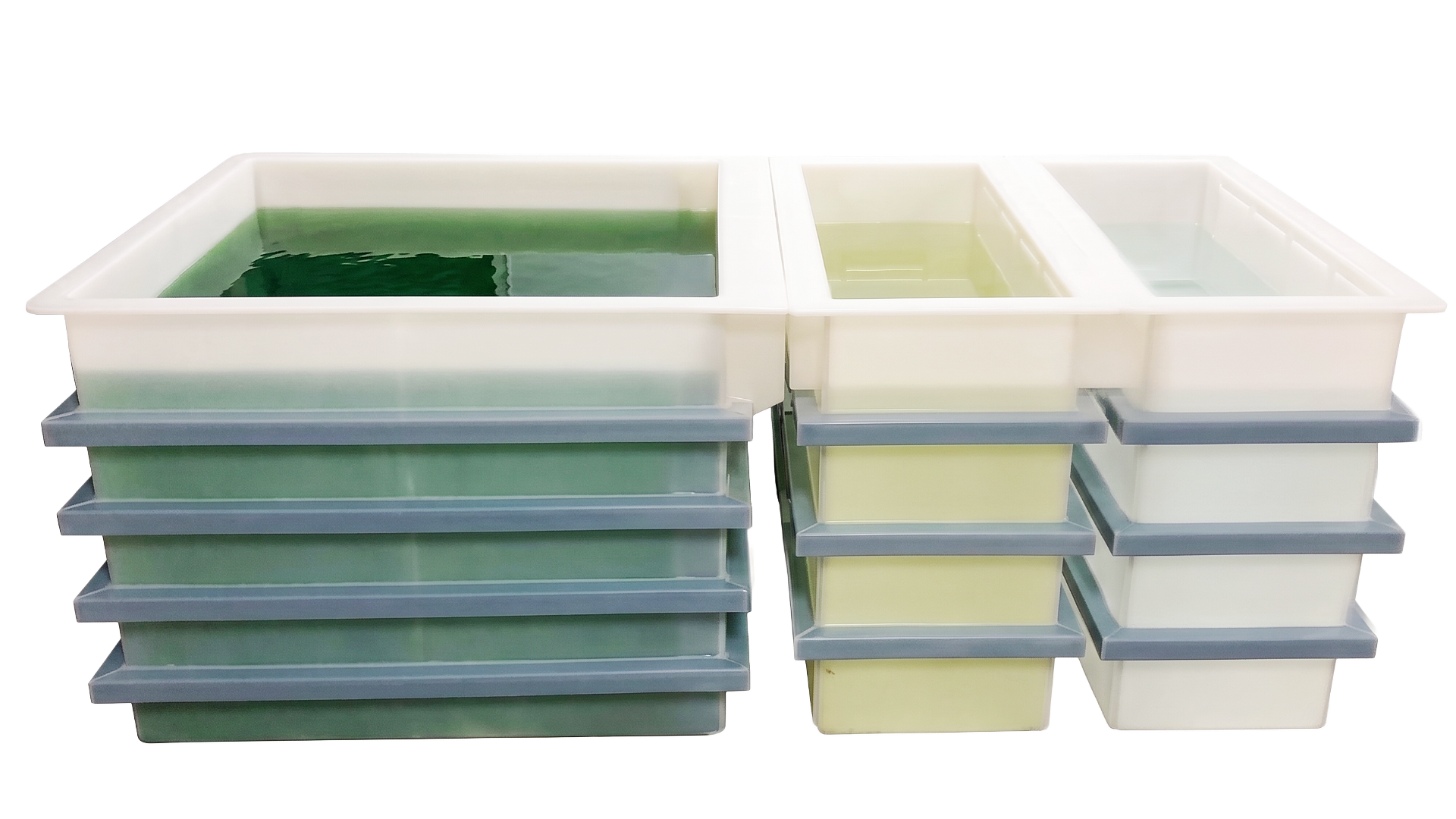
Electropolishing Outcomes and Chemicals
Electropolishing bath solutions differ significantly depending on the metal being processed. Stainless steel typically uses phosphoric/sulfuric acid mixtures, while aluminum electropolishing uses different electrolyte formulations including modified phosphoric/sulfuric solutions. Protank's custom electropolishing tanks are built to match the specific chemical, metal type, and working requirements of each application.
Corrosion Resistance
- Phosphoric Acid: A primary component in most electropolishing solutions used to aid surface leveling and passivation while removing impurities and contaminants.
- Sulfuric Acid: Combined with phosphoric acid in many stainless steel and other electropolishing baths to improve conductivity and dissolution rate.
- Citric Acid: Used as a post-electropolishing passivation treatment for stainless steel and increasingly common alternative to nitric acid due to EPA and OSHA pressure.
Improved Surface Quality
- Phosphoric Acid–Sulfuric Acid Mixtures: Standard electropolishing bath for stainless steel and many other metals as it produces highly polished surfaces through uniform dissolving of micro-peaks and surface imperfections.
- Brightening Additives: Used in decorative and high finish applications to enhance the reflectivity and visual polish quality of surfaces.
Precision Finishing
- Phosphoric Acid: Used to control material removal for exact specifications in tight tolerance finishing.
- Sulfuric Acid: Used for consistent, uniform etching in highly detailed, dimension specific applications.
- Specialized Electrolyte Solutions: Matched to specific metals (stainless steel, aluminum, titanium) to achieve the required results and current density.
Preparation for Coating or Plating
- Phosphoric Acid: Removes contaminants and creates a smooth base for better coating or plating adhesion.
- Sulfuric Acid: Ensures a clean, oxide-free surface for ideal bonding in following activities and layers.
- Deionized Water: Used in rinsing stages to remove residual chemicals and prevent contamination before coating or plating. (See also: Custom Rinse Tanks.)
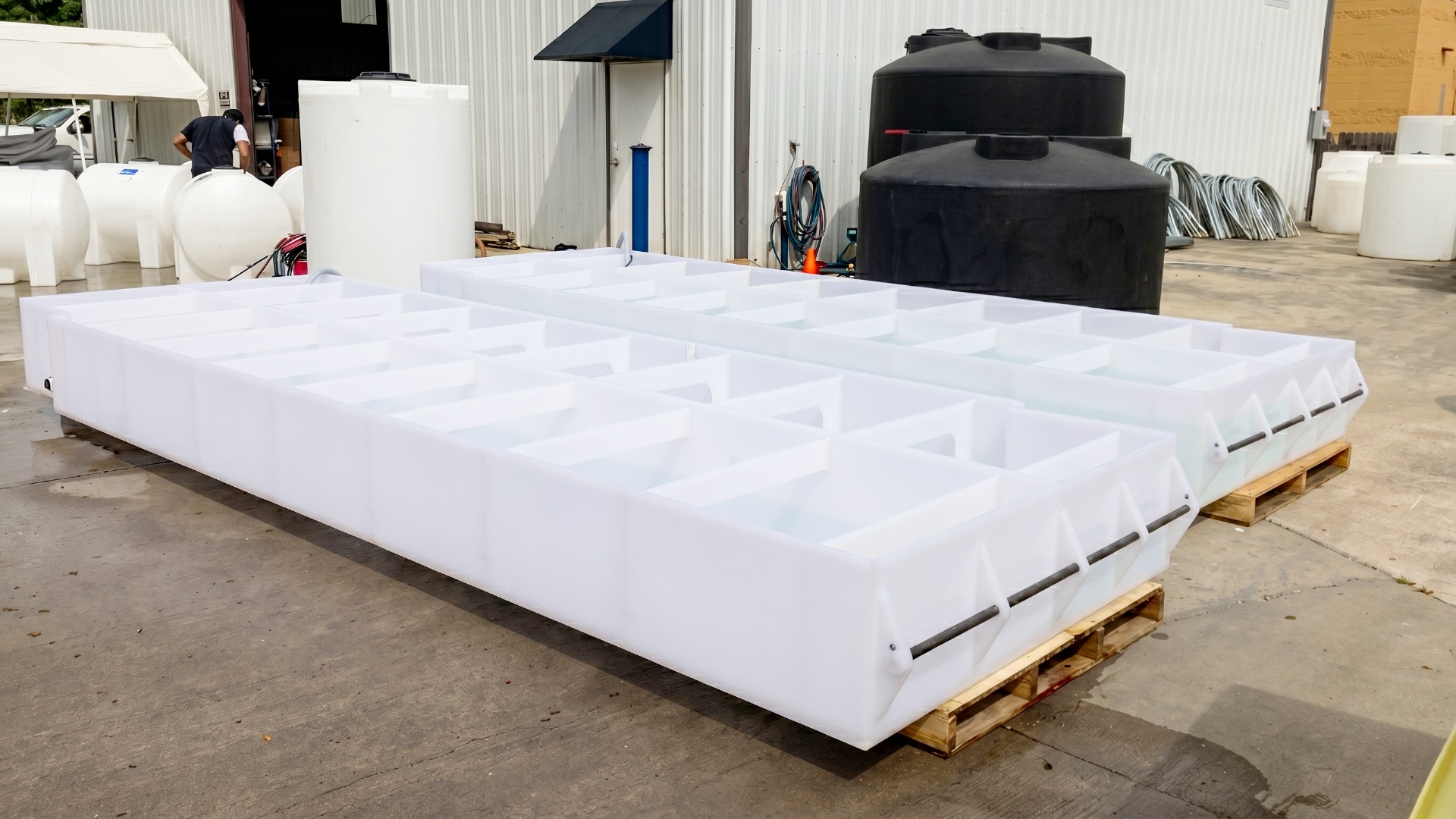
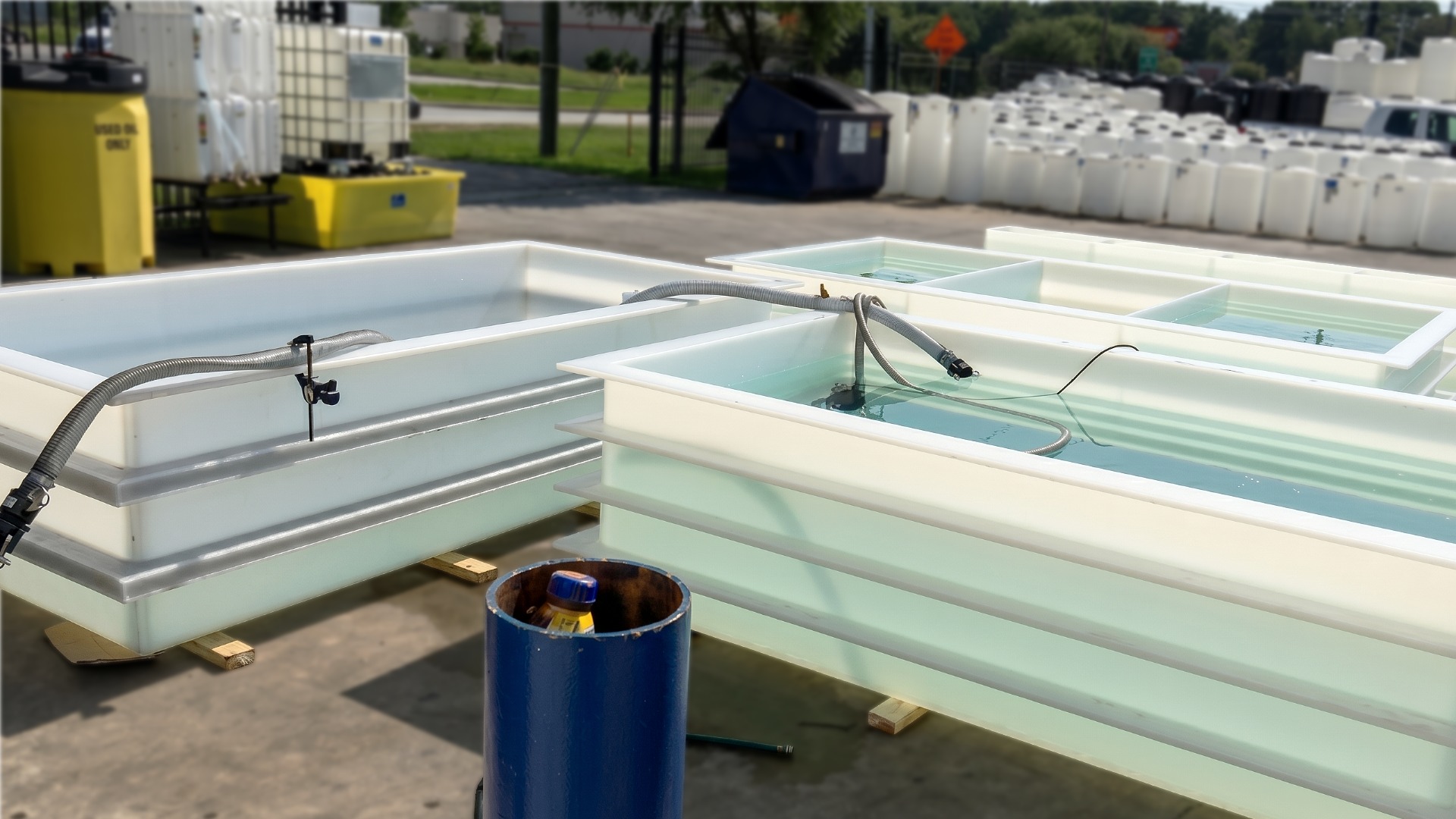
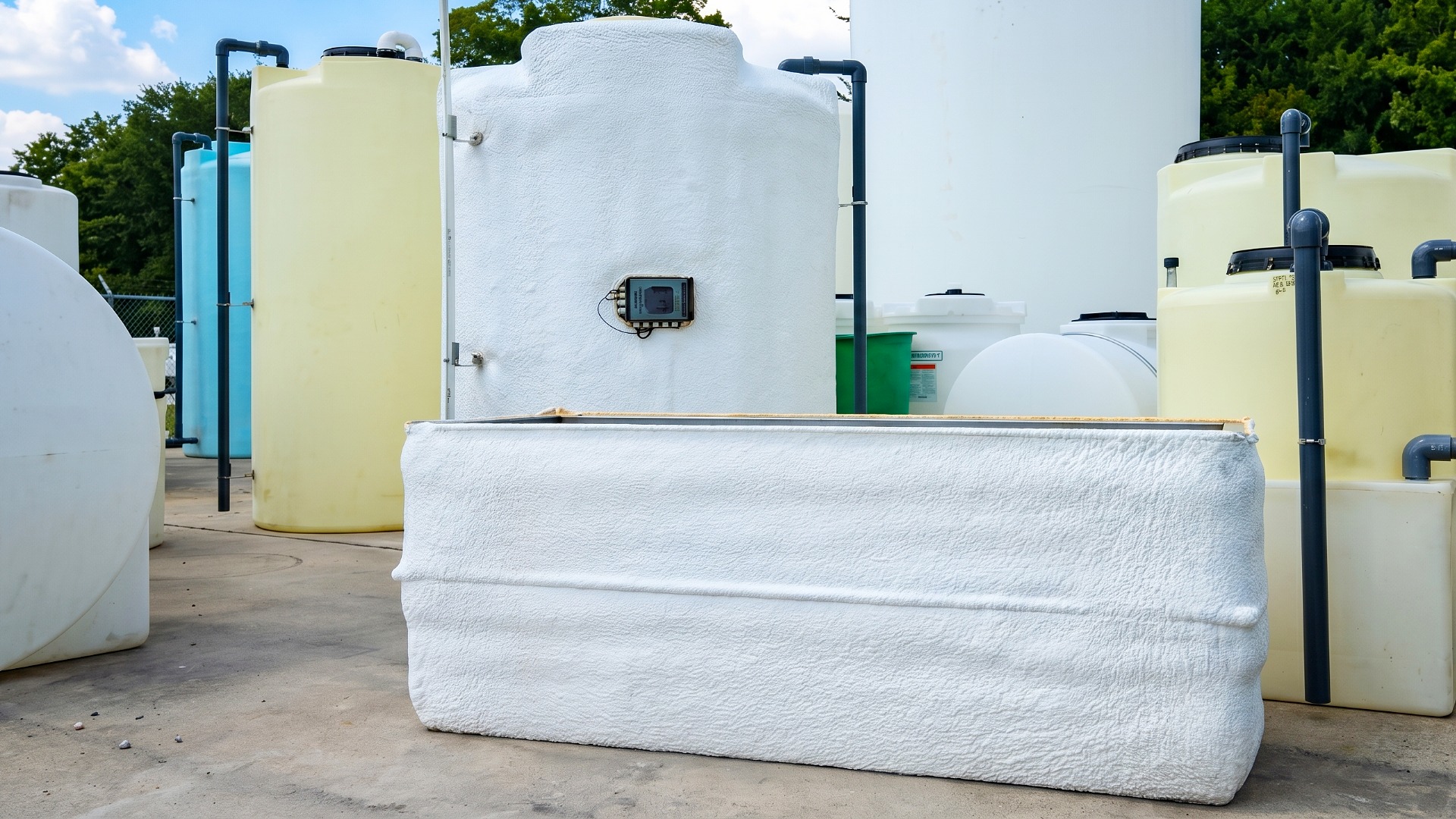
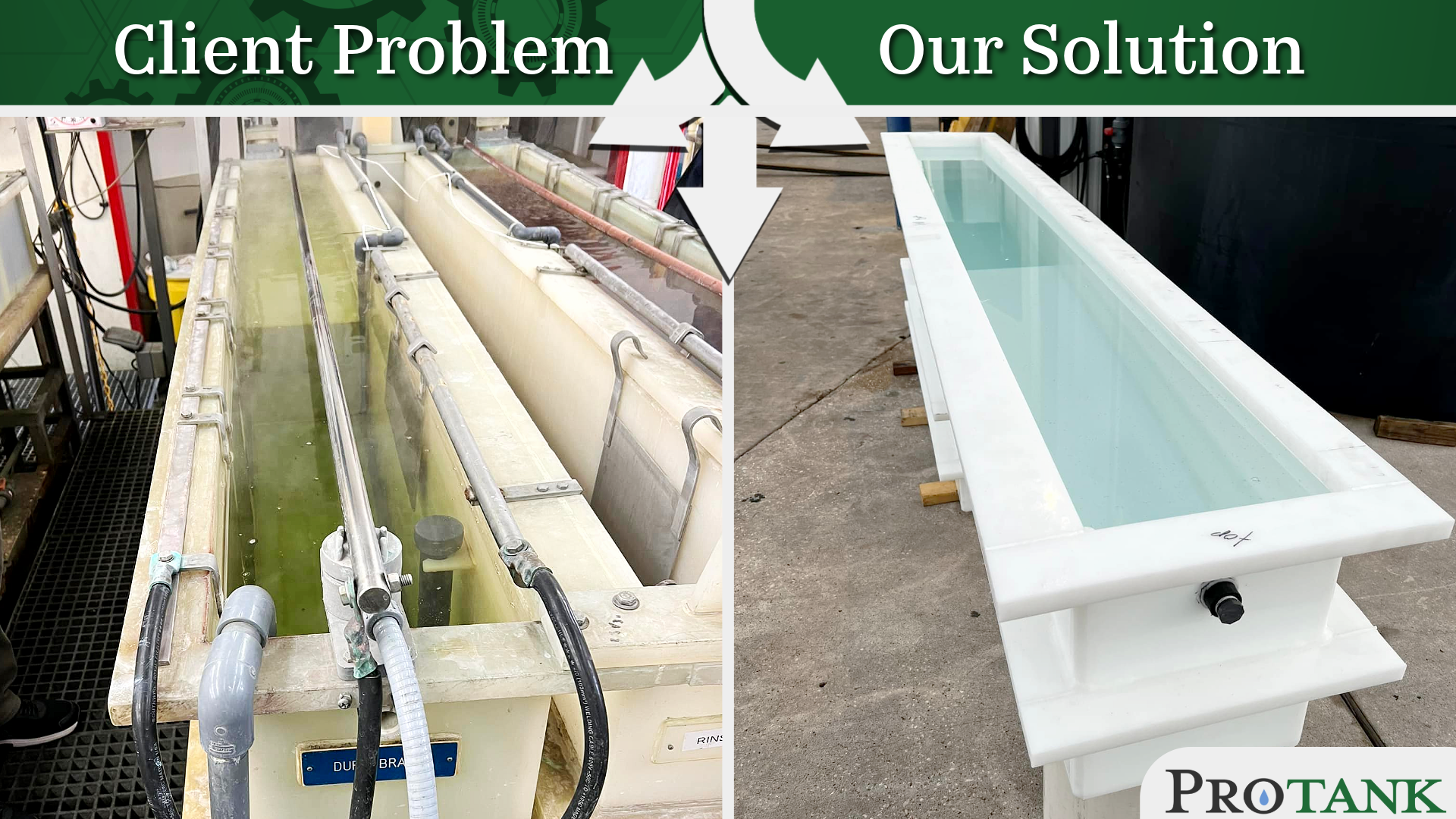
Need to Replace Steel or Aging Infrastructure
Protank serves clients who need a drop-in replacement for aging, damaged, or corroded electropolishing tanks with a per-spec, made-to-order, custom-fit tank with the shape, size, and fitting ports their application needs.
Discuss Your LineIndustries That Require Precision Surface Results
Protank's custom tanks are made to serve the industries that require the precision surface results of electropolishing applications. Each tank is built to match business specifications and compliance requirements.
Medical Devices
21 CFR Part 820 · cGMPAerospace
ASTM B912Pharmaceutical
ASME BPE · cGMPDefense & Military
MIL-SPECSemiconductor & Microelectronics
High-Purity ProcessFood Processing
3-A Sanitary · FDA · USDAElectronics
RF · IPC · High-ReliabilityAutomotive
Production & SpecialtyCustomization Options
Protank's custom electropolishing tanks are highly configurable. We build each tank to your exact specifications to reach optimal performance and reliability. We can include the electrochemical provisions that set apart a made-to-order electropolishing tank from a generic process tank.
Material Options
- Polypropylene (PP): Most common and ideal for general electropolishing chemicals, including phosphoric and sulfuric acid baths. Available in both homopolymer (PP-H) and copolymer (PP-C). Excellent chemical resistance, physical strength, and temperature tolerance up to 180°F continuous.
- PVDF (Kynar): For harsh electropolishing chemicals running at high concentration, elevated temperature, or high purity processes outside PP's range. PVDF is available as a liner over a fabricated tank or for full wetted surface construction.
- FRP (Fiber Reinforced Plastic): For aggressive or highly specific chemical environments requiring structural strength or chemical resistance beyond PP’s range.
- HDPE: Suitable for ambient temperature electropolishing applications only; HDPE’s lower continuous temperature rating (~120°F) makes it unsuitable for heated electropolishing baths.
Fitting Materials & Liners
Available fitting materials: PVC, CPVC, PVDF, EPDM, Viton, PTFE, Buna-N, Neoprene, Silicone or stainless steel to match the application. Specialized liners and coatings available for particularly aggressive or specialized electrolyte solutions, or for extending tank service life.
Anode and Cathode Bars
Electropolishing uses a workpiece (anode) and counter electrode (cathode) suspended in electrolyte. These often must be set at specific positions, distances, and orientations determined by the part being processed, the current density required, and rectifier specification. Protank can build anode and cathode bar supports directly into the tank structure as a standard design element rather than a post-market add-ons. Bar materials (titanium, stainless steel, copper) are available based on your application’s electrolyte and current density. Position, spacing, and bar count are based on your process engineer’s specifications.
Rectifier Connections
Tanks can be built to accommodate bus bar mounting, rectifier cable entry points, and electrical isolation features as required by your process design and safety needs.
Temperature Control
Electropolishing bath temperature is a process-critical variable. Phosphoric/sulfuric acid baths for stainless steel are typically run between 120°F and 160°F. Consistent bath temperatures directly affect results: polish quality, material removal rate, and finish uniformity. Protank can integrate heat tracing systems and programmable temperature controllers into the tank design to maintain target bath temperatures automatically and as a non-contact alternative to submersible heating equipment.
System Designs
- Modular configurations: Single or multi-tank setups to accommodate different workflows or future line expansion without full system replacement.
- Multi-stage systems: Electropolishing tank paired with pre-clean, rinse, and passivation stages for a complete, coordinated system from a single fabricator. (See also: Custom Overflow & Rinse Tanks.)
- Agitation systems: Air sparging, pump circulation, or mechanical agitation for even chemical distribution and consistent polishing results across part surfaces. Protank can add these setups or provide attachment points for onsite equipment.
- Connections and equipment: Plumbing connections, vapor handling, pumps, valves, draw tubes, baffles, vents, heat tracing, insulation, sensors in the type and locations required by your process design.
Lid Options
- Open top: Standard for part access during processing; open top electropolishing tanks require fume capture or local exhaust ventilation for acid vapor management per OSHA requirements.
- Hinged or removable lids: Polypropylene or clear polycarbonate panels with stainless steel hardware for applications requiring vapor reduction or temperature retention between cycles.
Custom Dimensions
- Capacity: Volumes for precision small part applications to large scale industrial electropolishing systems.
- Part-driven sizing: Tank dimensions are typically driven by the largest part being processed; Protank builds the tank around your workpiece and rack setup.
- Shape: Rectangular, cylindrical, or custom configurations to fit your floor plan and equipment layout.
- Wall thickness: Sheets available from 3/16" to 1" thick. Minimum thickness based on expected load stress, with reinforcement available for heavy part loads or aggressive chemicals.
Safety & Containment
- Secondary containment: Spill basins and double wall construction for chemical release prevention. Applicable to facilities subject to EPA SPCC requirements under 40 CFR Part 112 and RCRA containment standards for regulated hazardous chemicals.
- Vapor handling: Fume scrubber or vapor handling integration for volatile and hazardous electrolytes. (See also: Custom Fume Scrubber Systems.)
- Level sensors: Ultrasonic, radar, or submersible level sensors for application matching and real time monitoring of current tank volumes
- Leak detection sensors: For immediate alert on containment breach with continuous in-solution, out-of-solution monitoring
- Visual and audible alarms: High profile alert integrated with leak detection sensors for fast response times.
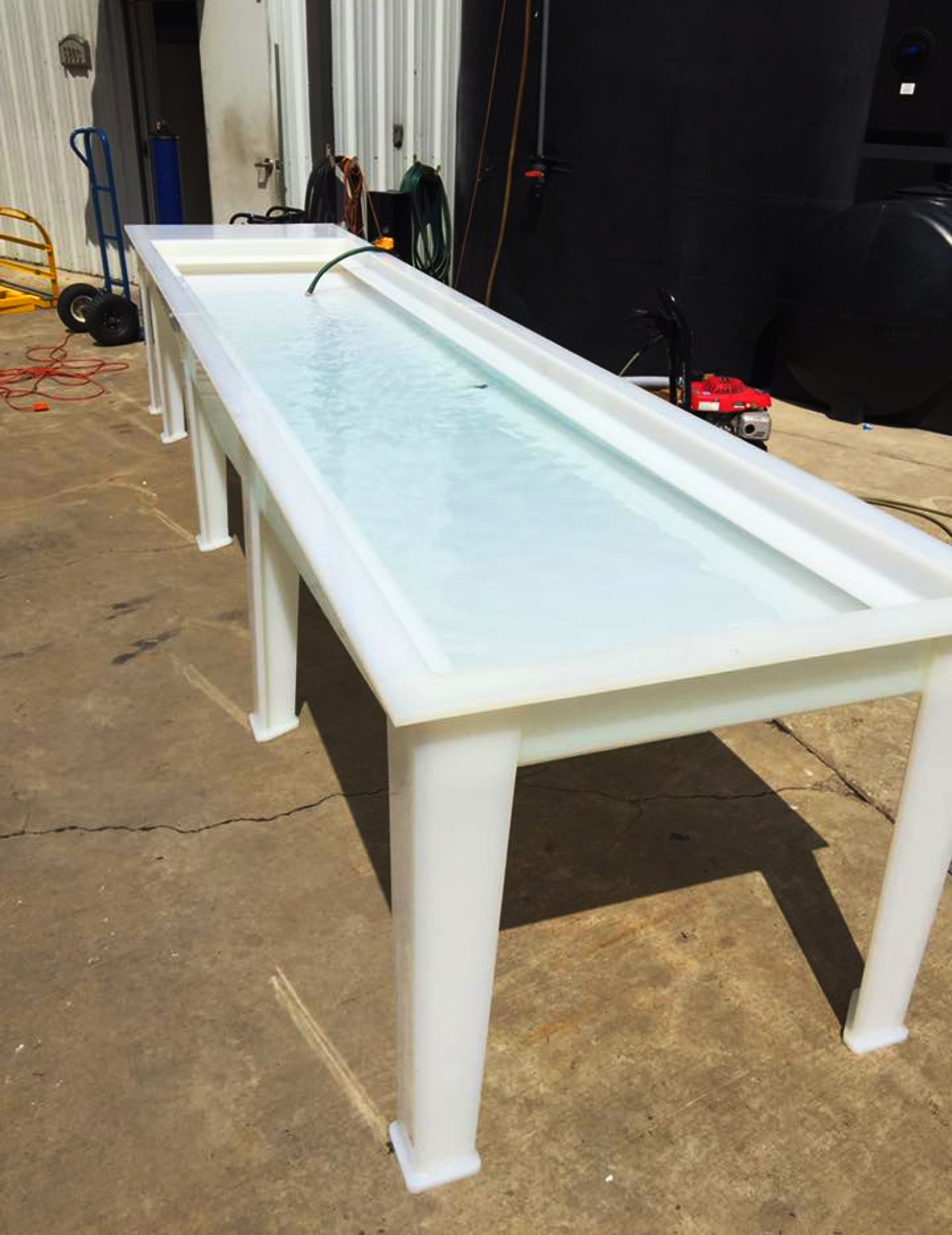
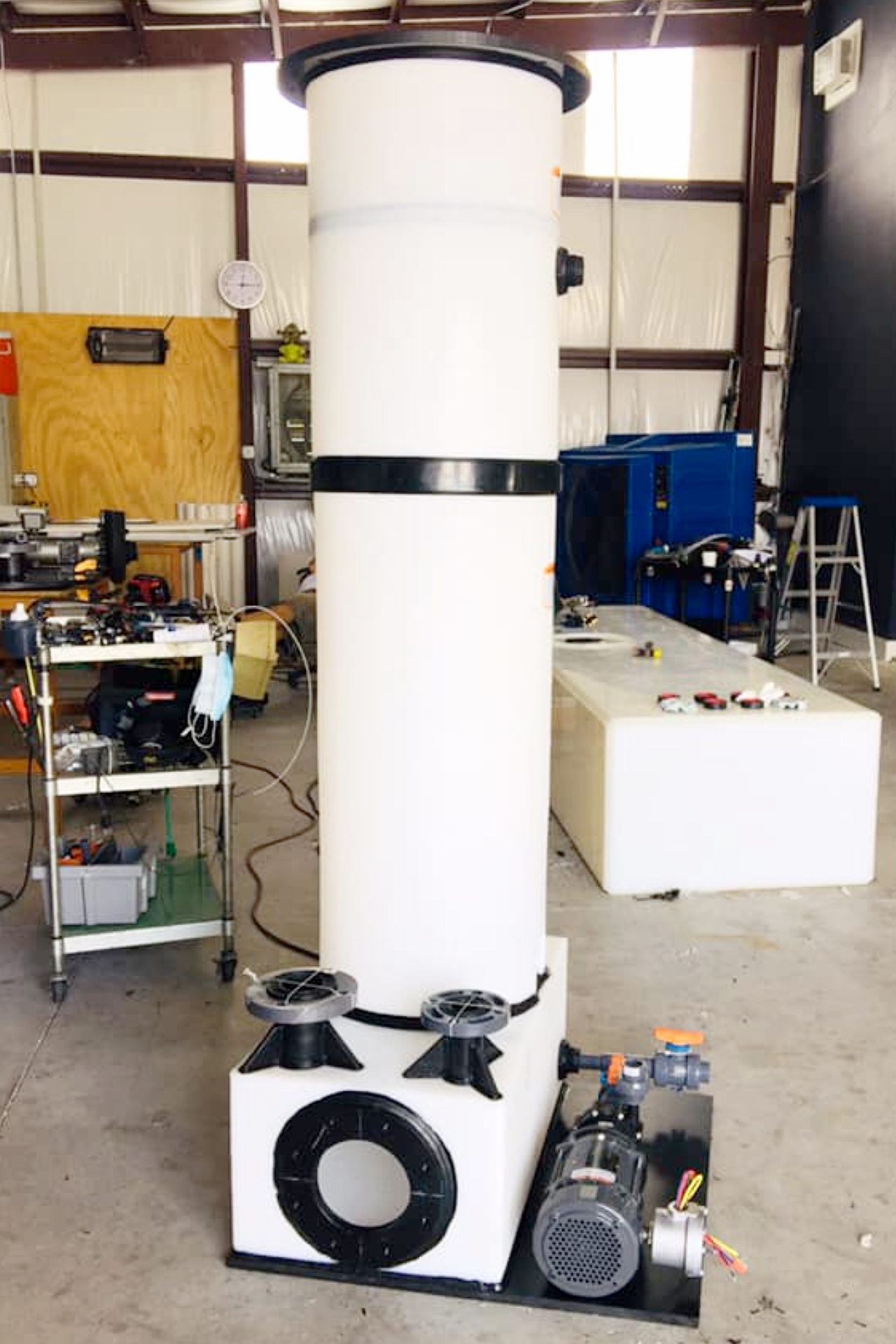
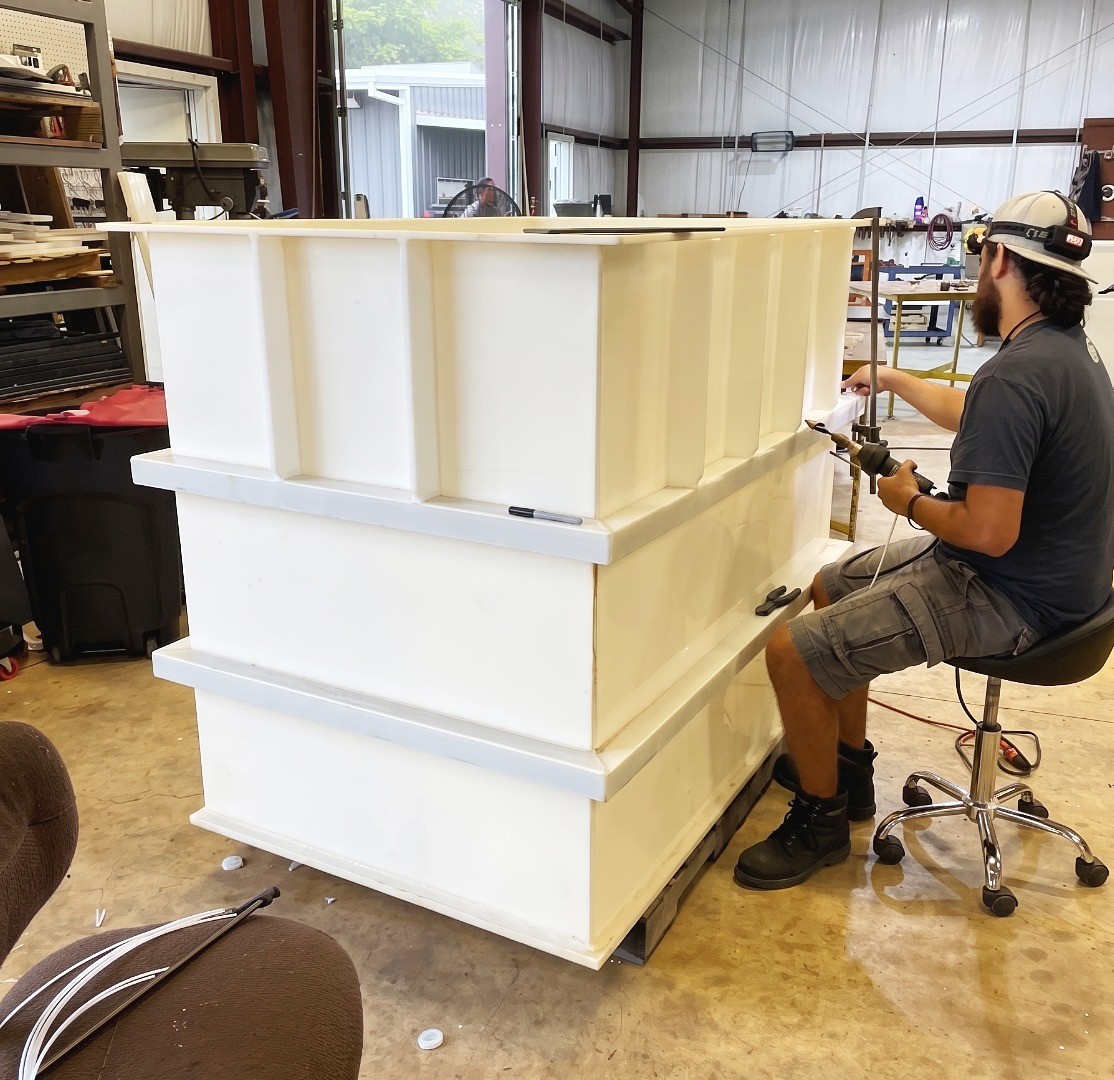
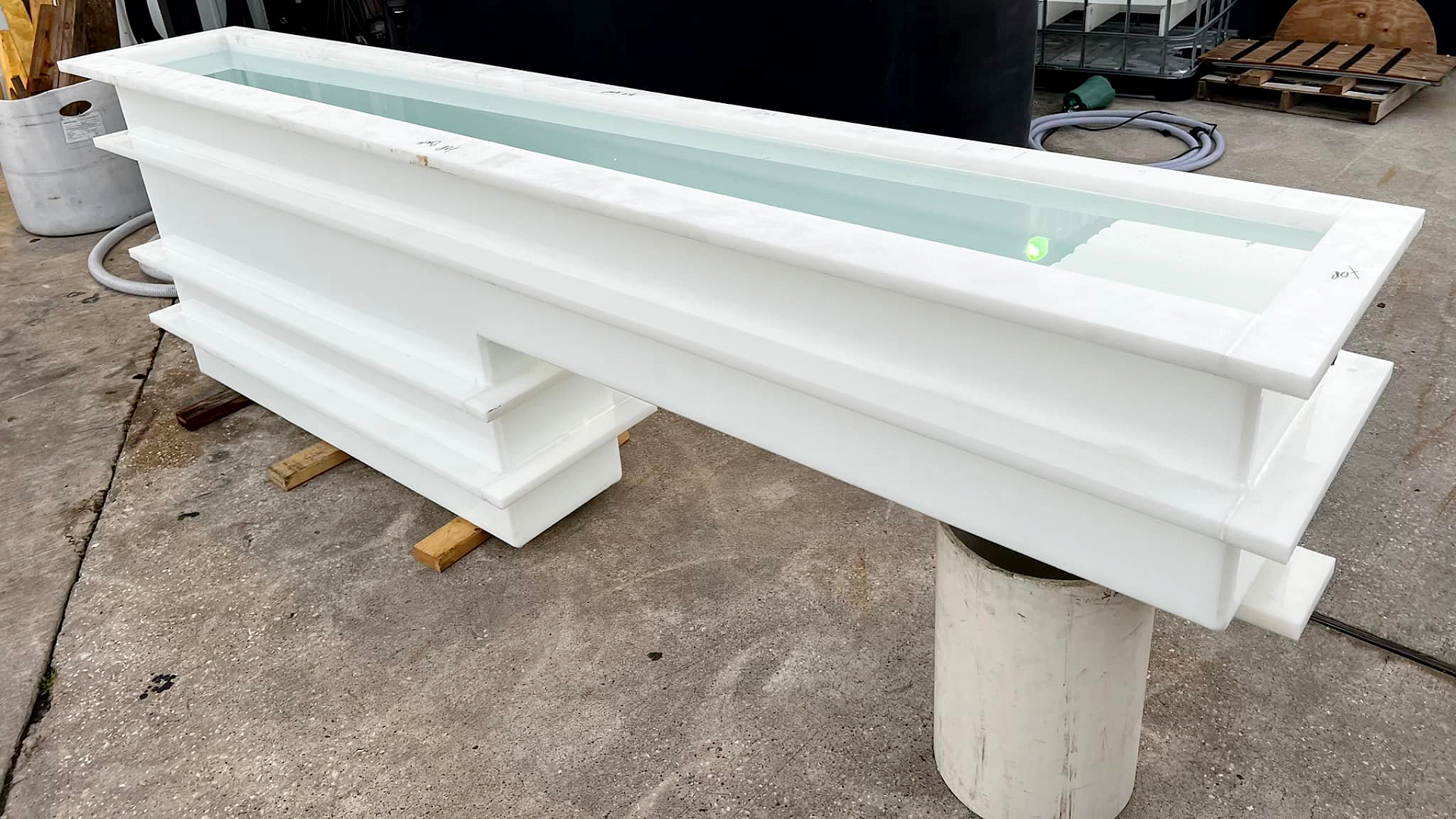
Built Right, The First Time
In-House Fabrication
Every tank is built at Protank's own facility by our experienced fabrication team, not outsourced. This means direct quality control, consistent workmanship, and faster lead times on every project.
Electrochemical Process Knowledge
Protank's custom tanks accommodate part dimensions, anode and cathode bar positioning, bath temperature needs, external pipe connections, and more.
Application Specific Design
Stainless steel, aluminum, titanium, and specialty alloys each require different electrolyte solutions and tank specifications—Protank matches specs to results.
Complete Process Lines
Protank can supply pre-clean, rinse, passivation, and electropolishing tanks as a complete, coordinated system to reduce setup complexity and ensure full workflow compatibility.
Nationwide Delivery
We ship complete custom made tank systems across the continental US, from our facilities to both coasts, with end-to-end support from consult through delivery.
20+ years of expertise
Over two decades of custom tank fabrication and providing precision solutions for businesses across industries, nationwide.
Achieve Precision Electropolishing with Protank
Every electropolishing tank we build is a custom fit product. Take the next step toward electropolishing optimization with custom tank solutions built by Protank to match your work demands, your chemicals, and your production line requirements.
Looking for a custom electropolishing tank built by experts to your exact requirements? Contact Protank today.
Response within 1-3 business days. Every inquiry. All quotes are confidential.
Need a tank sooner? Protank also offers a full line of stock open top and industrial poly tanks available for immediate order →