
Every electroplating line, galvanizing plant, and metal finishing operation depends on a clean surface before the next process step. Acid pickling provides this result by stripping rust, mill scale, and weld oxides from metal parts so follow-up coatings, plating, and galvanizing will adhere properly, without defects, and hold up over time.
The acid bath handling tank has to be built for the chemical/solution, the working temperature, the part size(s), and the application's throughput. Without post-market modifications, off-the-shelf tanks aren't designed for continuous acid immersion service, and if the wrong material, wall thickness, or components are specced, then bath integrity, equipment life, and operator safety are potentially put at risk. This is the gap that custom, made-to-order pickling tanks fill.
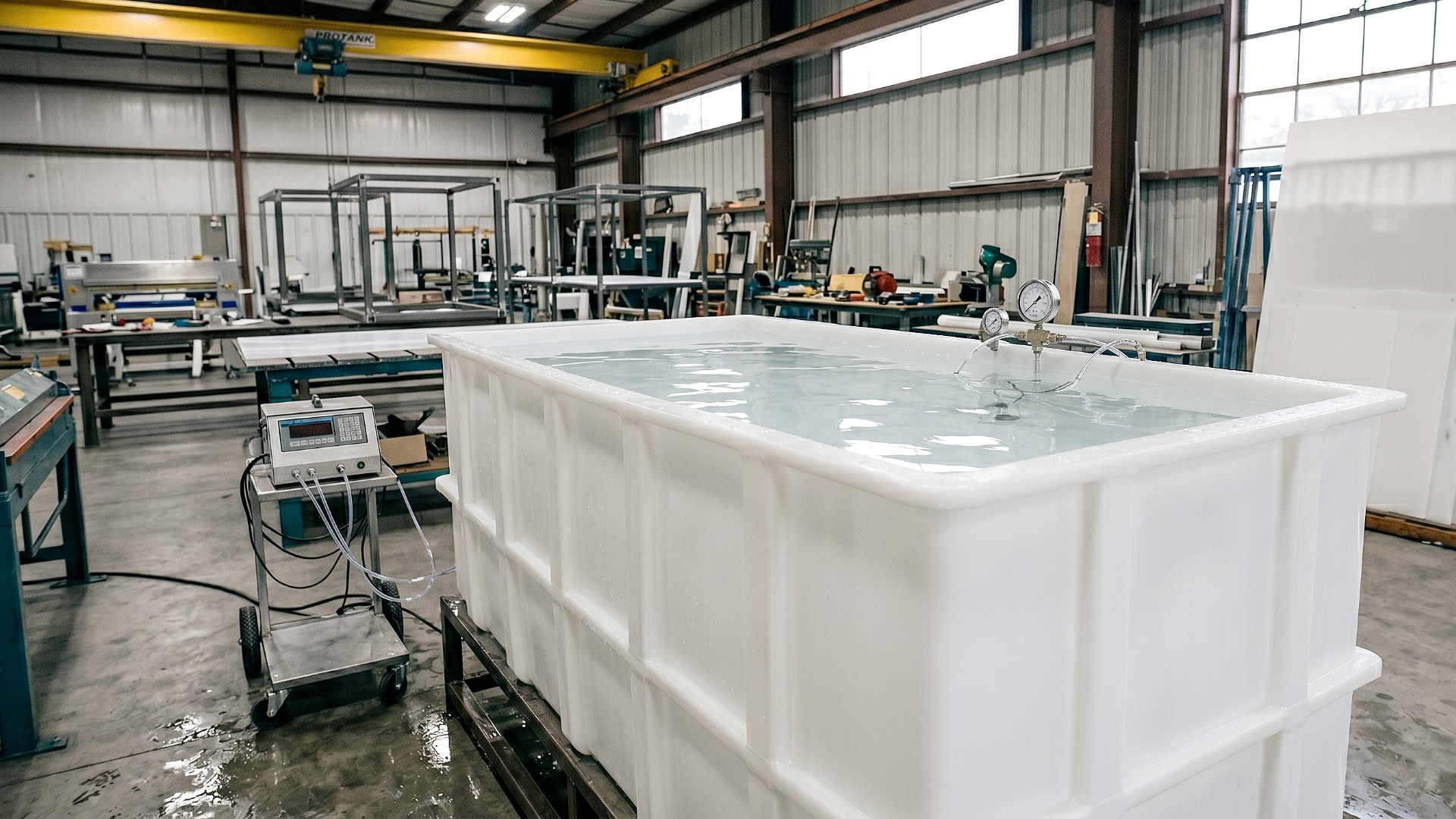
Custom Pickling Tanks, Built to Spec
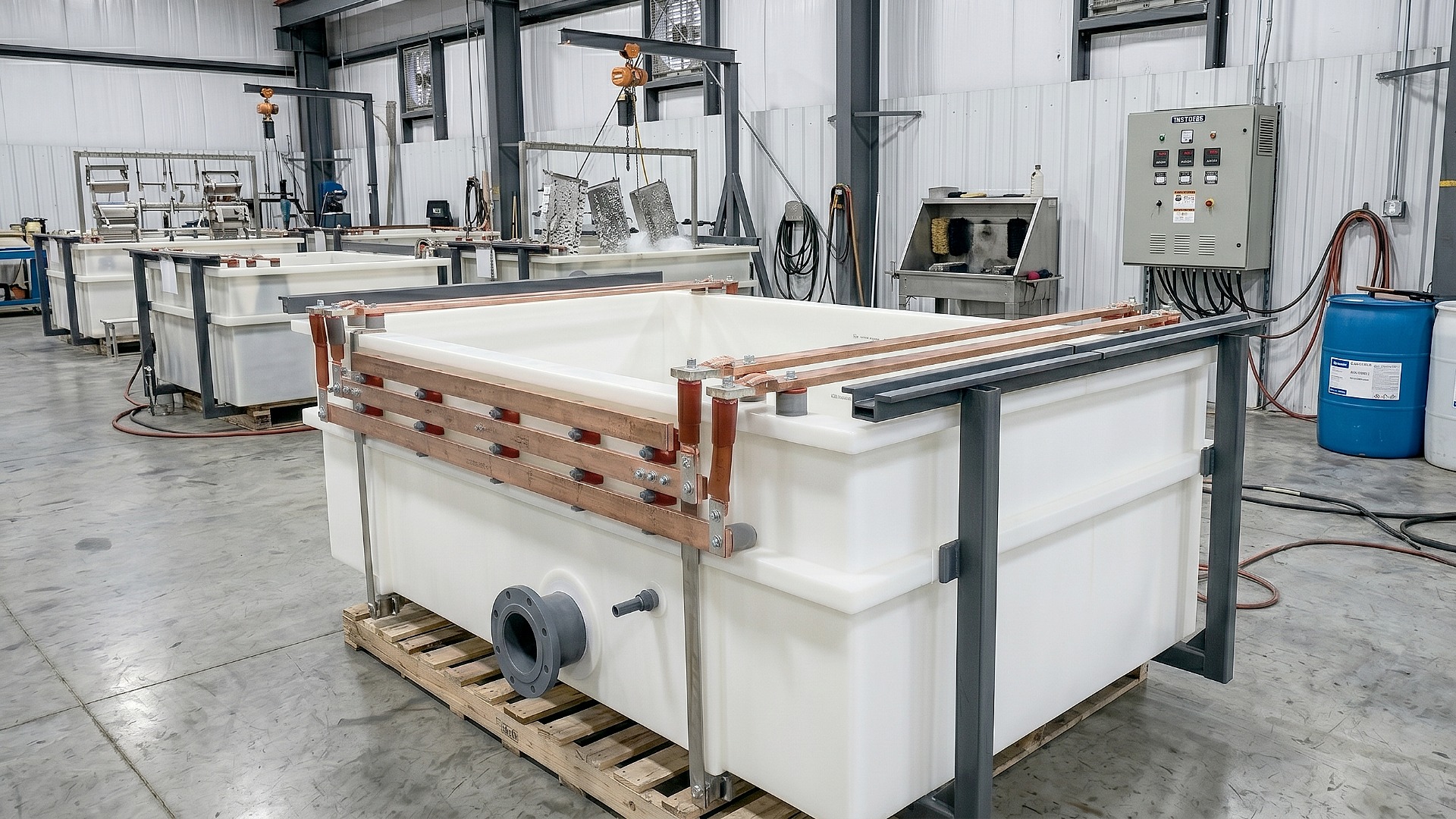
Protank builds custom polypropylene pickling tanks made to your specifications. Commonly requested by electroplating shops, galvanizing plants, metal fabricators, and surface finishing companies across the Gulf South and nationwide. Backed by over 20 years of custom tank fabrication experience.
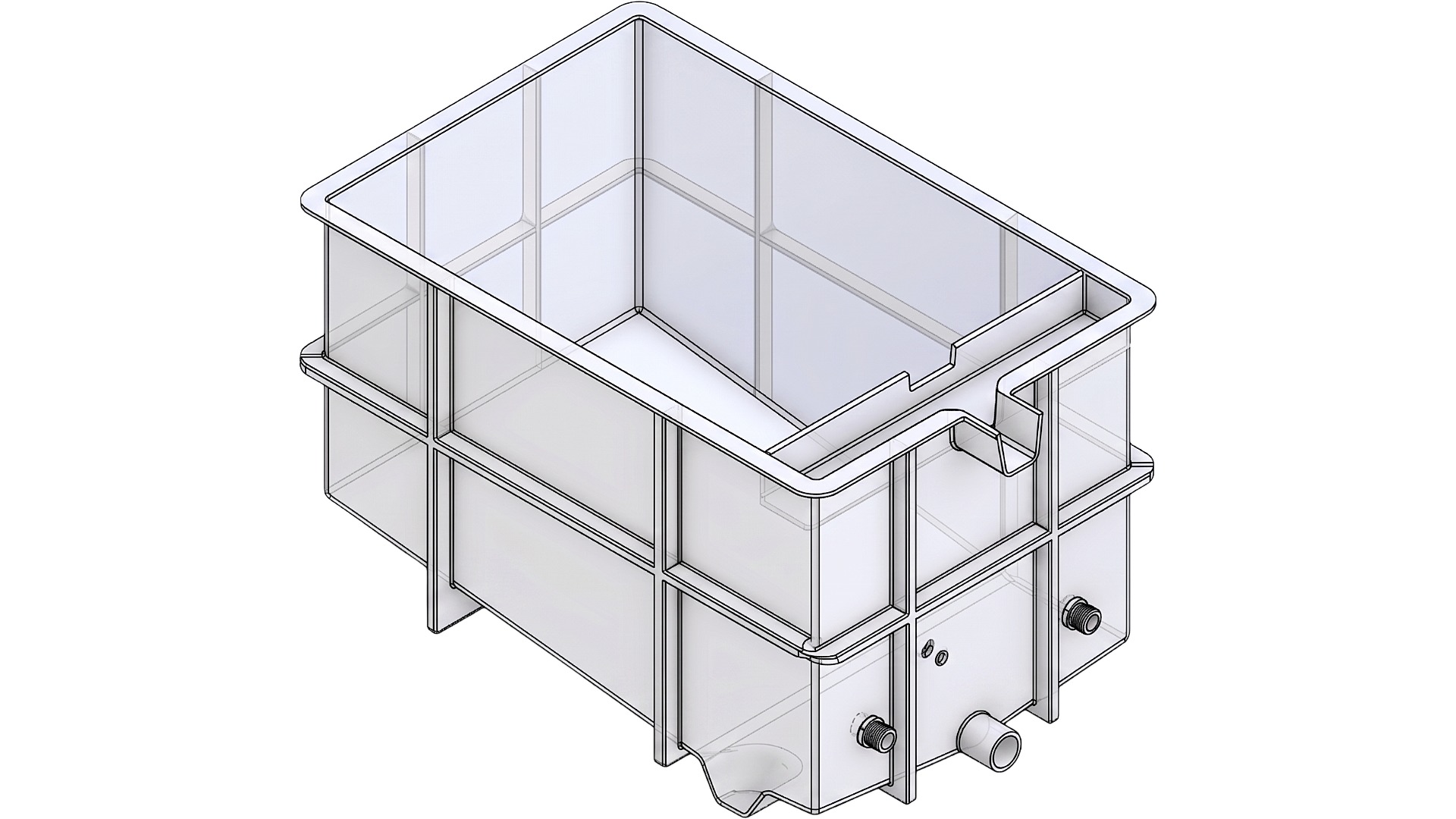
Tanks are made-to-order to match your acid, operating temperature, component dimensions, and process setup. Tanks can be specified according to capacity, wall thickness, reinforcement, bottom configuration, heat management accessories, as well as fitting type and placement. All driven by what your application demands. Single batch tanks, multi tank lines, and large volume galvanizing tanks are all options.
Polypropylene (PP)
HCl
H₂SO₄
HF
Ambient – 60°C
Up to 80°C, self-supporting
180°F / ~80°C, continuous
PP · PVDF Kynar
Batch · Continuous
Job Chemicals Drive the Build
The acid running in a pickling tank affects material, wall details, and fitting selection.
Hydrochloric Acid
Sulfuric Acid
Hydrofluoric & Phosphoric Acid
Mixed Acid (Stainless Pickling)
- Chemically inert to commonly used HCl and H₂SO₄ at industrial pickling concentrations and temperatures; no material contribution to bath or waste stream
- Thermally stable to 180°F (approximately 80°C) in continuous, self-supporting service; applications above this threshold require external structural support and increased wall specification
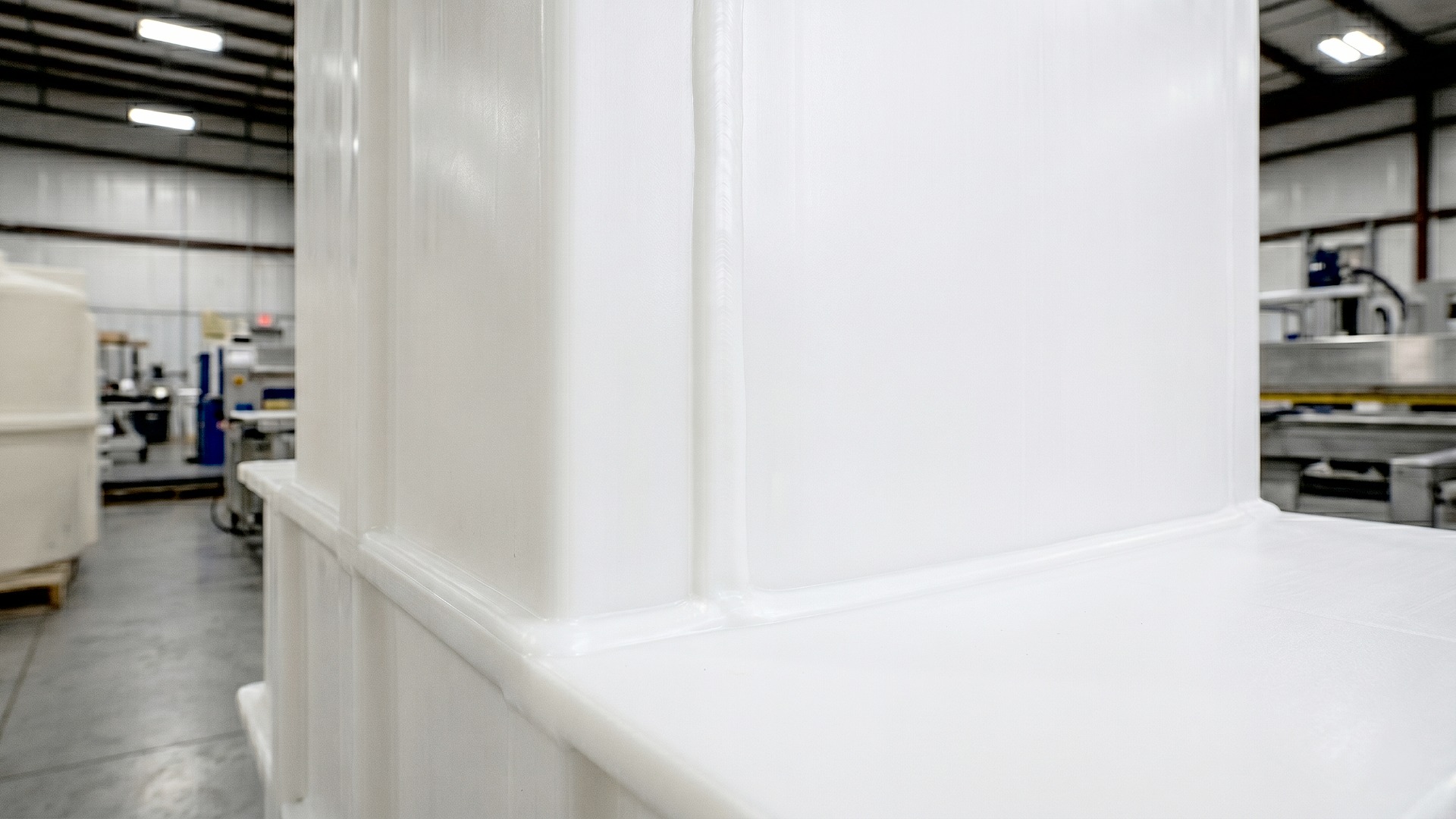
- Weld joints match base material; eliminates corrosion interfaces that accelerate failure in steel or lined tanks
- Does not corrode, rust, or leach metallic ions; eliminates bath contamination from tank degradation
Fittings
For heated sulfuric acid or aggressive mixtures, PVDF Kynar fittings are recommended at drain connections, nozzles, and valves over polypropylene components.
Built to Your Specs
Have a custom pickling tank built to your exact working requirements with Protank's customization options.
Tank Materials
Polypropylene: Standard tank material for pickling applications. Chemically resistant to hydrochloric acid, sulfuric acid, hydrofluoric acid, and phosphoric acid at typical industrial concentrations and operating temperatures.
FRP: Available for high temperature applications or chemicals outside polypropylene compatibility; e.g., mixed acid baths requiring corrosion resistant resin/liner.
Fitting materials: Fittings, gaskets, valves, and connection components are available in PVDF Kynar, PVC, CPVC, EPDM, Viton, stainless steel, and more depending on the chemical and operating conditions.
Tank Body
FRP
HDPE
PVDF
Fittings, Gaskets & Valves
PVC
CPVC
EPDM
Viton
PTFE
Buna-N
Neoprene
Silicone
Stainless Steel
Tank Sizes and Configurations
Batch tanks: For electroplating shops, job shops, and metal fabricators running rack or basket loaded parts in a defined soak cycle.
Industrial scale tanks: For galvanizing plants, wire processors, and high throughput operations with large part volumes and aggressive cycling.
Made to order: Protank fabricates pickling tanks from small capacity up to large volume tanks with dimensions to match your largest part, immersion depth, and floor plan.
Continuous throughput sizes: Long, narrow tanks for wire, coil, and strand processing lines, sized to match your workflows.
Connections and Equipment
Tank fittings: Inlet and outlet fittings, drain connections, overflow weirs, vent ports, and fill lines in the type, size, and location the job requires. Overflow weirs are available for multi-tank lines that feed directly into rinse stations.
Heating accessories: Immersion heater ports and external heat exchanger connections added at fabrication and positioned to spec. Buyer supplies heating equipment; Protank provides the supporting connections.
Heat tracing: External heat tracing tape with programmable control for bath temperature maintenance and keeping solutions elevated above ambient.
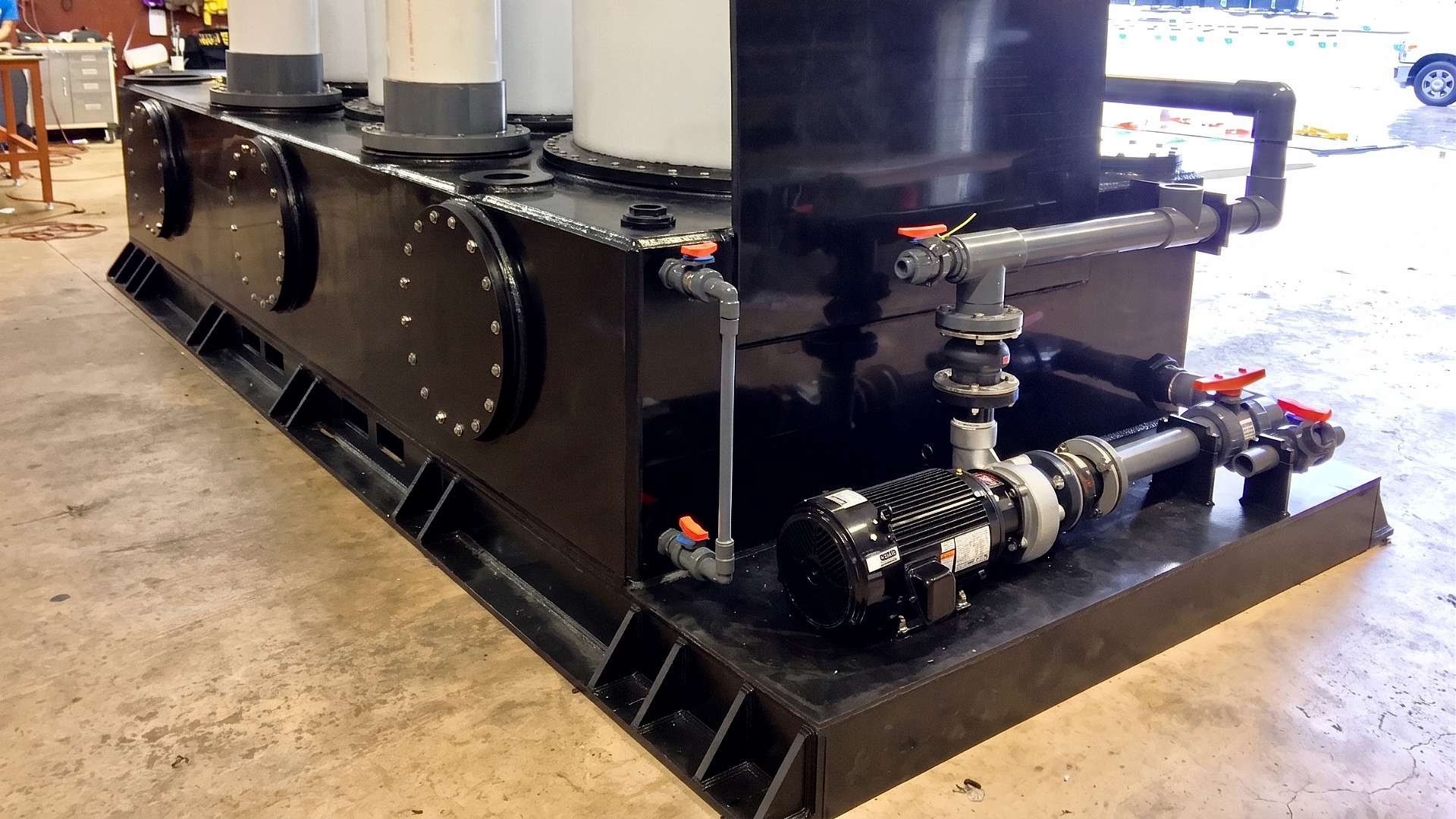
Circulation and agitation: Pumps with circulation inlet and outlet ports for keeping liquids uniform and preventing acid stratification.
Temperature and process monitoring: Thermowell and temperature probe ports, sampling ports, and chemical dosing inlets to support monitoring, replenishment, and strength control.
Fume management: Partial or full PP covers, lid options, and fume hood attachment flanges or built-in PP hood structure for extraction/scrubber connections. Pickling operations are subject to OSHA 29 CFR 1910.94(d) open surface tank ventilation requirements and require a tank designed to accommodate an extraction system.
Bottom and Drainage
Sloped bottom or full drain sump available for complete removal of spent acid during bath changeout and waste management. Drain valve connection sized and positioned as needed.
Safety Features
Secondary containment: Spill basins and double wall tank options provide an added layer of protection when required by regulations or the operational risk. Protank builds secondary containment tanks and basins with footprint and drains set to your specs. See also Custom Containment Tanks.
Leak detection sensors: In-solution and out-of-solution sensors for continuous liquid monitoring and alerts if a leak, unexpected loss, or low levels are detected.
Visual and audible alarms: Used alongside leak detection sensors to provide immediate alerts so personnel are notified in the event of a hazardous situation.
With Protank's catalog of customization options, you can build a pickling tank that matches your acids and chemicals, part shapes and sizes, throughput needs, and compliance requirements. From component materials to working fittings, drainage, fume management, and safety features, every tank is built to integrate directly with your operation.
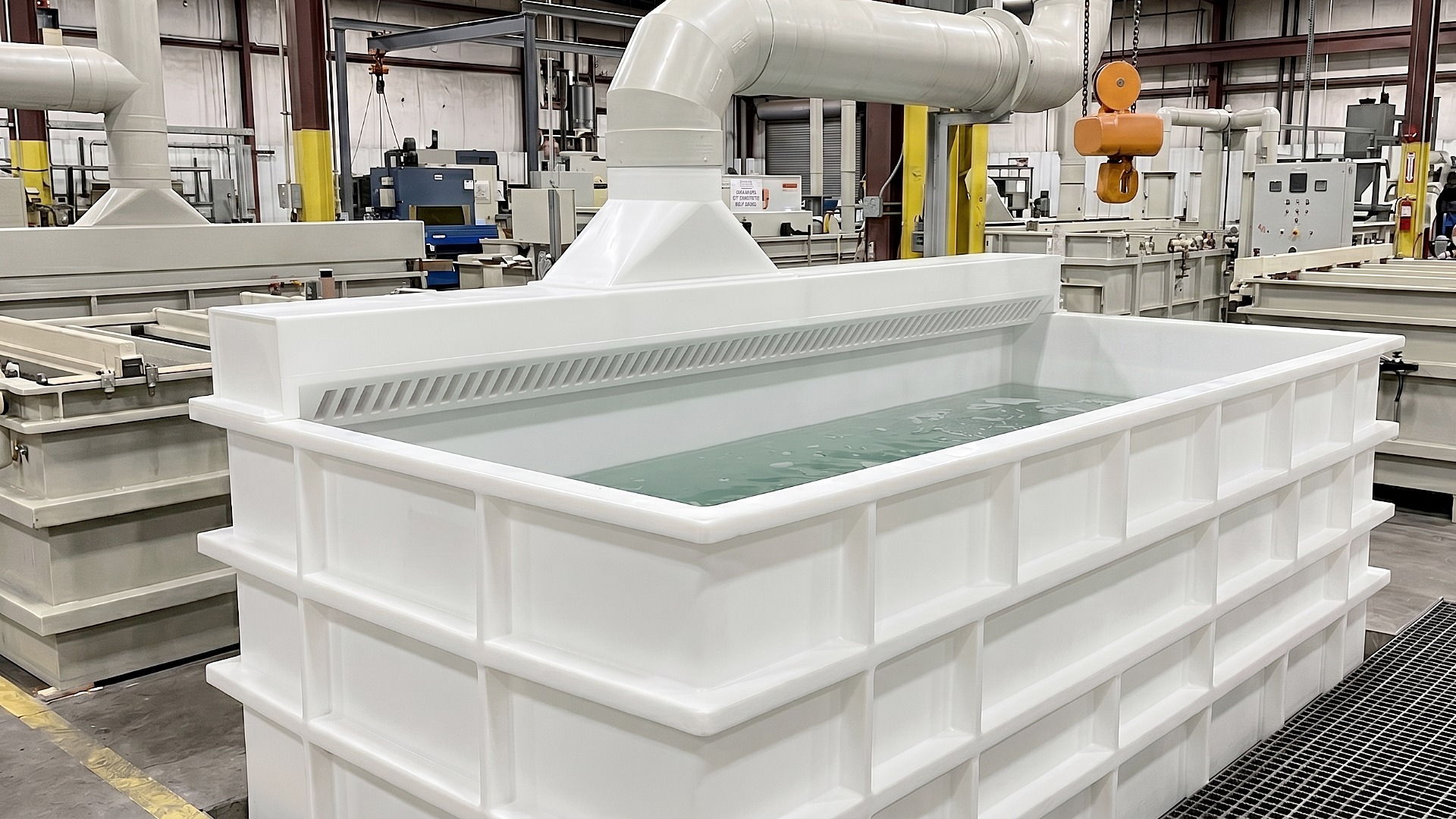
Where Pickling Tanks Get Specified
Protank fabricates pickling tanks for a range of industrial surface finishing and metal treatment applications. Each tank is built to your exact specifications to match your industry's demands.
Electroplating Job Shops
Metal Fabricators and Job Shops
Wire and Coil Processors
Anodizing and Surface Finishing Shops
Aerospace and Defense
General Industrial and Multi-Tank Lines
Connect with us to discuss your business needs. Get a free quote from Protank's team.
Compliance Built In
Pickling operations have compliance obligations that tank designs should support. Protank fabricates the storage tank and its connections. Regulatory compliance is the buyer's responsibility, but design features that support those requirements should be built in at the spec stage.
29 CFR 1910.94(d)
K062 · F006
40 CFR 433 · 413
RCRA 264/265
Why We Build It Better
In-house fabrication
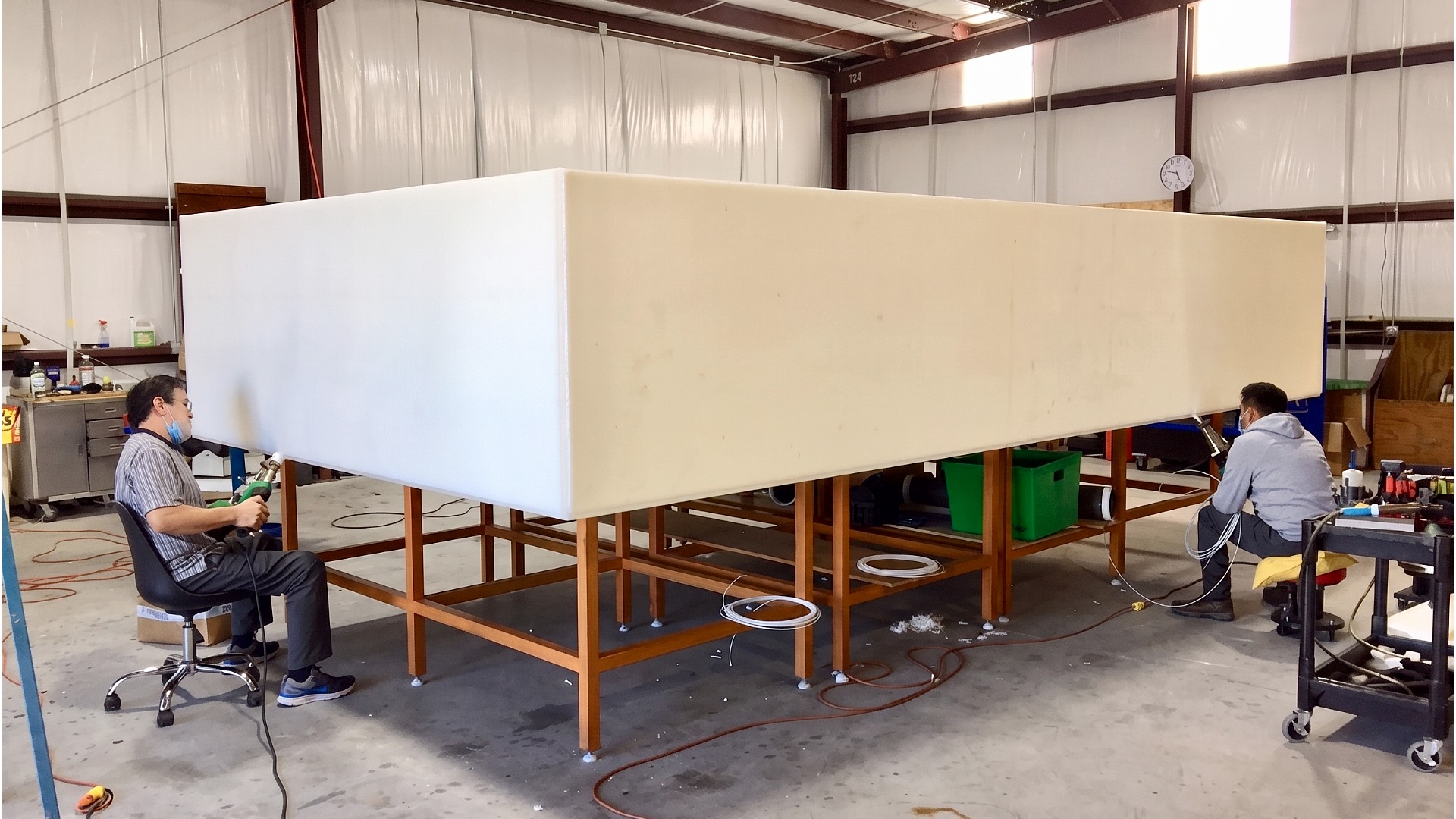
Every pickling tank is built at Protank's own Gulf Coast facilities by our professional fabrication team. This means direct quality control, consistent workmanship, and faster lead times on every project.
Application matching
No two pickling operations are identical, so custom tanks are sized and made for the chemicals, part, operating temperature, and throughput the process actually handles.
Multi-tank line capability
Protank fabricates pickling tanks alongside rinse, alkaline wash, plating, anodizing, and surface preparation tanks as a coordinated multi-tank setup for a single source of full process lines and job consistency.
Material breadth
Polypropylene is standard for most pickling op tanks. FRP is available for solutions outside PP's compatibility. PVDF Kynar, PVC, CPVC, EPDM, Viton, and stainless steel fittings are available to match the application demands.
Nationwide delivery
Protank ships completed tanks across the continental US from our Gulf Coast facilities, with end-to-end support from spec through delivery.
20+ years of expertise
Two decades of custom tank fabrication for industrial buyers across electroplating, galvanizing, metal finishing, aerospace, and general manufacturing.
Request Your Custom Pickling Tank Today
The more detail you bring to the first conversation or submit to us, the faster we can return an accurate quote. Useful details include:
- Chemicals: types and concentration (HCl %, H₂SO₄ %, or other)
- Operating temperature: ambient or heated, target temperature range
- Part dimensions: largest part to be processed
- Required components: heating, circulation, fume hood attachment, lid cover, overflow, etc.
- Installation environment: indoor, outdoor, secondary containment needs, workfloor constraints
Drawings, sketches, and engineered tank specifications are encouraged and, in some cases, required.