
Water treatment plants, surface finishing lines, and chemical processing operations rarely feed chemical stock straight from a bulk tank. A smaller container, a day tank, sits between the bulk supply and the point of use where it holds a set working quantity that metering pumps draw from to dose the process. This arrangement does two things at once: it keeps a single failure from emptying entire bulk inventories into a system, and it gives operators a clean way to measure daily usage rates.
Dosing tanks are used to keep active metering pumps supplied with a steady and flooded suction, vent any chemical off gassing, allow mixing activities, and lets an operator confirm that feed rates match setpoints.
An off-the-shelf tank rarely arrives with the outlet setup, vent sizing, mounting connections, and fitting materials these systems require. If specced wrong, the result can be pumps that air-lock, chemicals that degrade before depletion, or material corrosion due to incompatibility.
How this gets resolved: custom day and dosing tanks built to the chemical and the feed setup. Built in-house. Delivered nationwide.
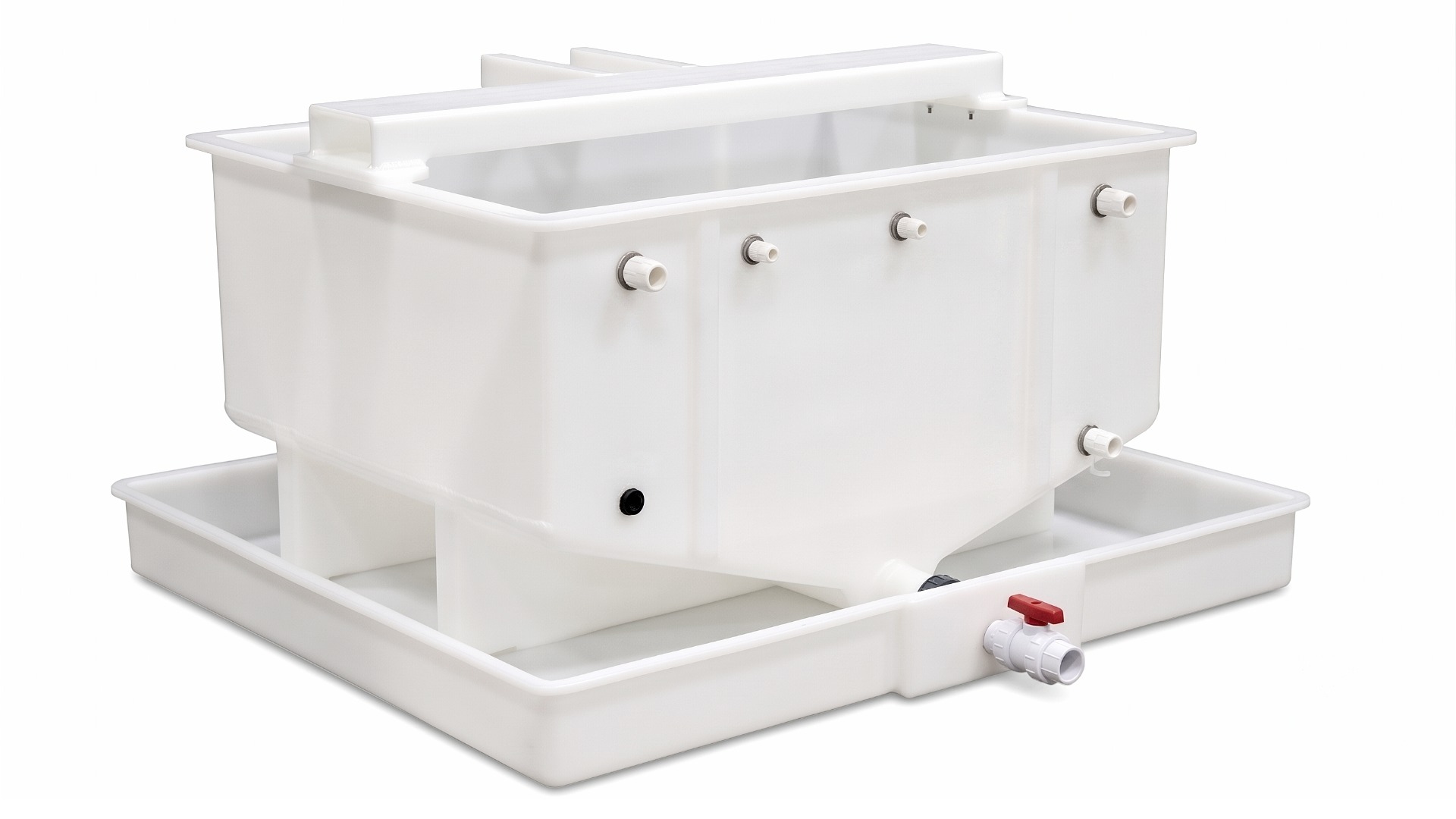
Custom Day & Dosing Tanks, Built to Spec
Protank builds custom day tanks and dosing tanks made to your specifications as well as outfits stock HDPE tanks. Our tanks and services are commonly requested by water and wastewater treatment contractors, systems integrators, surface finishing shops, manufacturers, and chemical processors across the Gulf South and nationwide—all backed by over 20 years of custom tank fabrication experience.
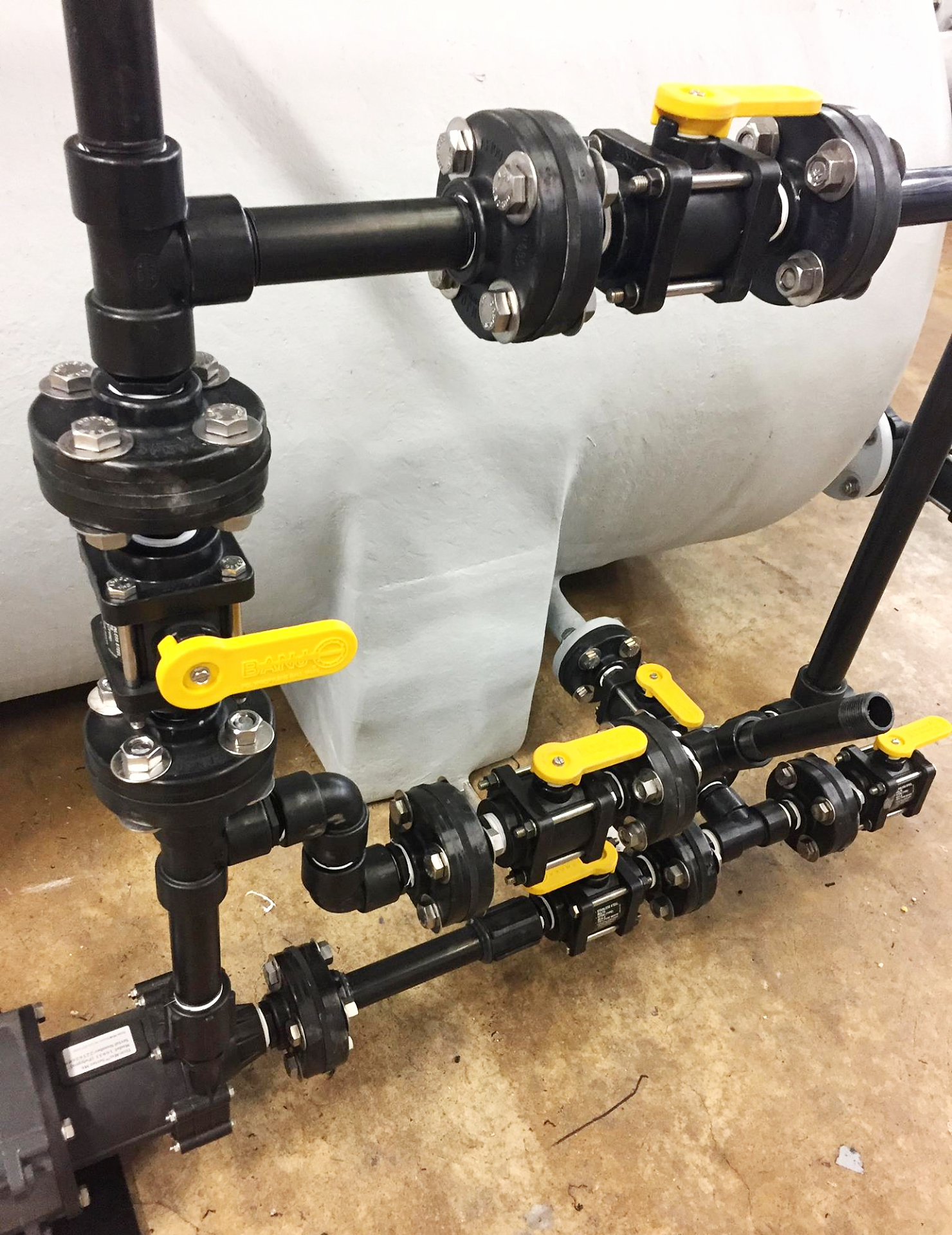
Protank fabricates the tank and the connection built into it: the ports, the mounting pads and bridges, the outlet setups, valves, piping manifolds, and the containment. Any metering pumps, mixers, level controllers, and dosing equipment are client supplied. We build the tank that equipment mounts to and draws from; we do not design the feed system or supply the instruments that run it. Single dosing tanks, bulk-and-day-tank pairs, and multi-tank feed setups are all options.
Tanks are made-to-order to match the chemical or solution, its concentration, the working volume and turnover, as well as any pump and mixing equipment the buyer is installing.
What a day or dosing tank delivers:
Volume-at-risk control
Usage measurement
Steady pump suction
Dosing verification
Your Chemical Drives the Build
The chemical running through a day or dosing tank drives the selection choices for the container build material, wall thickness and reinforcement details, fittings, and gasket types.
Chemicals Supported
PVDF / lined construction
Why Polyethylene and Polypropylene
- Polypropylene allows fully custom shapes and sizing through sheet-welded fabrication, with good resistance to non-oxidizing acids, caustics, and most organic solvents. Strong oxidizers and chlorinated chemicals often degrade it, so service moves to CPVC or PVDF depending on strength and temperature.
- Polyethylene (HDPE and XLPE) offers broad chemical resistance for chemical feed stock tanks; XLPE adds tear and stress-crack resistance and longer life potential; HDPE sheets also available for custom tank weld fabrication.
- Both resist corrosion and do not leach metallic ions into the chemical; welded PP or HDPE joints match base material to eliminate corrosion interfaces that can shorten the life of lined or metal tanks.
Fittings
For sodium hypochlorite and other oxidizers, wetted fittings are non-metallic, (e.g., PVC or CPVC with FKM/Viton gaskets), since metal drives NaOCl breakdown; titanium is used when metal fasteners cannot be avoided. For aggressive chemicals or higher service temperatures, PVDF is recommended at drain connections, nozzles, and valves.
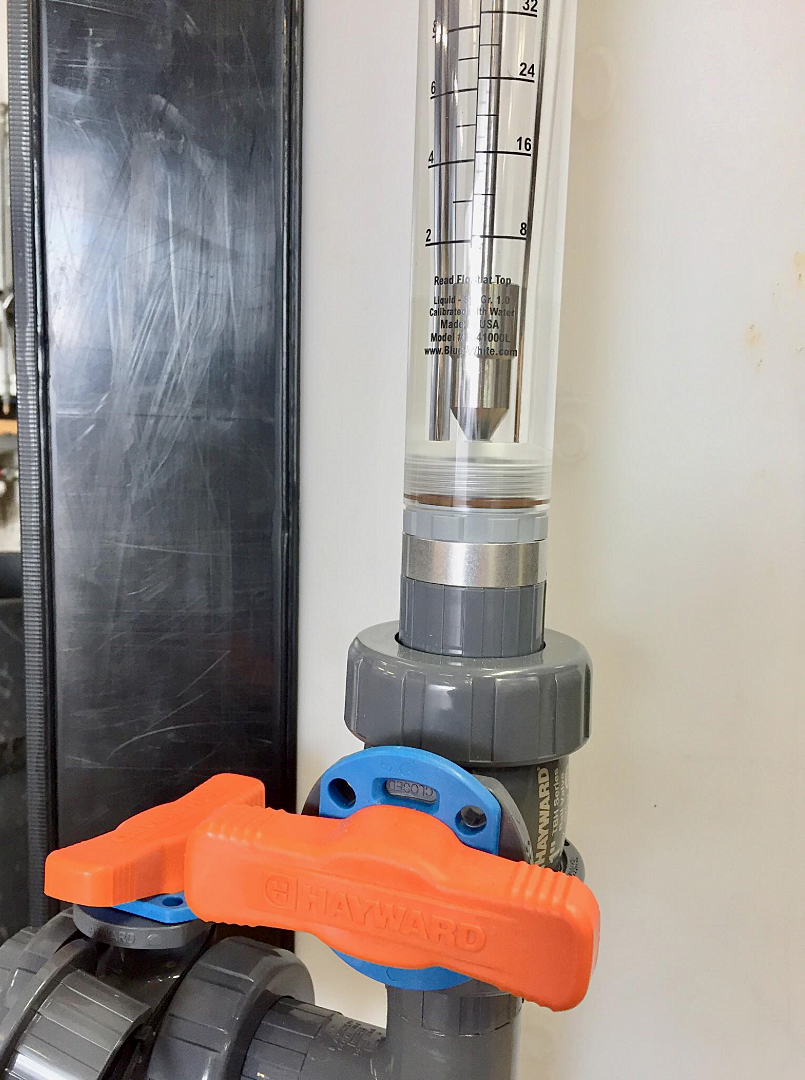
Tell us your chemical, concentration, working volume, and pump specs; we'll handle the rest.
Stock tanks and outfitting options
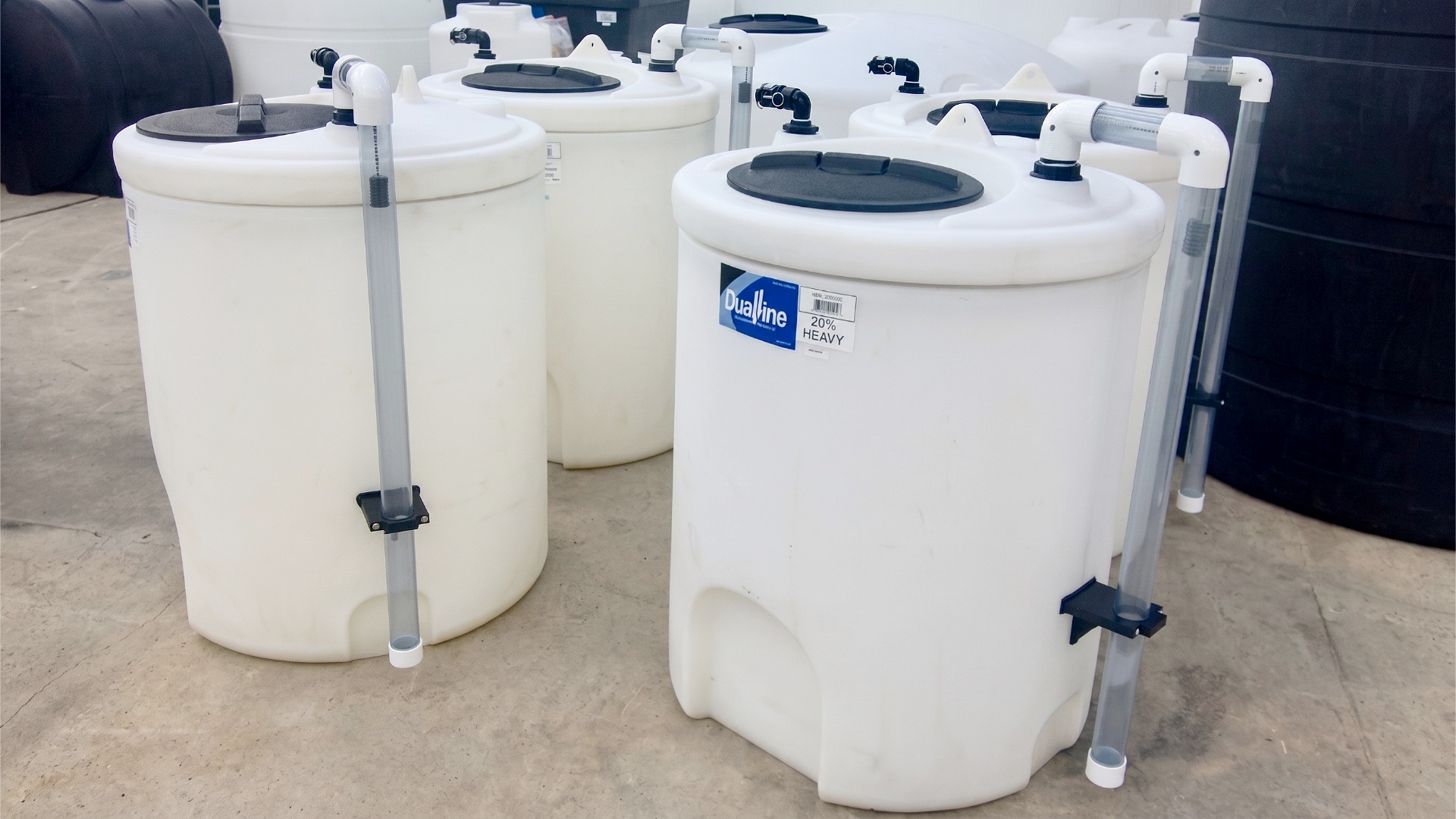
Protank also carries a catalog of stock tanks available for immediate purchase. This includes vertical storage HDPE and XLPE tanks, double wall tanks, open top polypropylene tanks, cone bottom tanks, and IBC totes. Stock tanks can be purchased as-is for buyers who need a standard vessel for their own use or customization, or Protank can fully outfit them with fittings, plumbing, pumps, and components to your specifications before shipment. Contact us to discuss stock availability and outfitting options.
Built to Your Specs
Have a day or dosing tank built to your exact feed requirements with Protank’s customization options. This list isn’t exhaustive. If you need an option or service not listed here, contact us. We can likely accommodate the request or help find an alternative.
Material Options
Polypropylene (PP-H / PP-C): The standard for made-to-order day tanks and dosing tanks. PP Homopolymer for rigidity under heat, PP Copolymer for impact toughness and stress-crack resistance. Rated to 180°F continuous, with intermittent spikes to 212°F.
PVC: For ambient and warm service up to roughly 140°F. The economical choice for jobs temperature and compatibility allow.
CPVC: A chlorinated grade for oxidizing and chlorinated chemicals such as sodium hypochlorite and bleach, plus many acids and caustics, incompatible with PP. Rated to 200°F continuous.
PVDF: For strong oxidizers, concentrated acids, and higher temp applications outside other materials’ range; an ideal choice for jobs where polyolefins would degrade.
HDPE (stock, sheet) and XLPE (stock): Rotomolded, seamless vessels fitted to the application; weldable HDPE sheets for custom projects; opaque UV-block resin available for outdoor or UV sensitive chemicals such as sodium hypochlorite.
FRP: Available where project scale or specific chemicals point away from polyolefins.
Fitting and gasket materials: PVDF, PVC, CPVC, FKM/Viton, EPDM, PTFE, Neoprene, Buna-N, Silicone, and titanium hardware to match service.
Sheet and welding: Fabricated from 3/16" to 1" sheet, joined by bead (hot-gas) and extrusion welding.
PVC
CPVC
PVDF
HDPE
XLPE
FRP
PVC
CPVC
FKM/Viton
EPDM
PTFE
Neoprene
Buna-N
Silicone
Titanium
Extrusion Welding
Tank Sizes and Configurations
Day tanks: Sized to match production day’s supply, enough to limit the volume at risk and make daily usage easy to measure, with freeboard for fill and off-gassing.
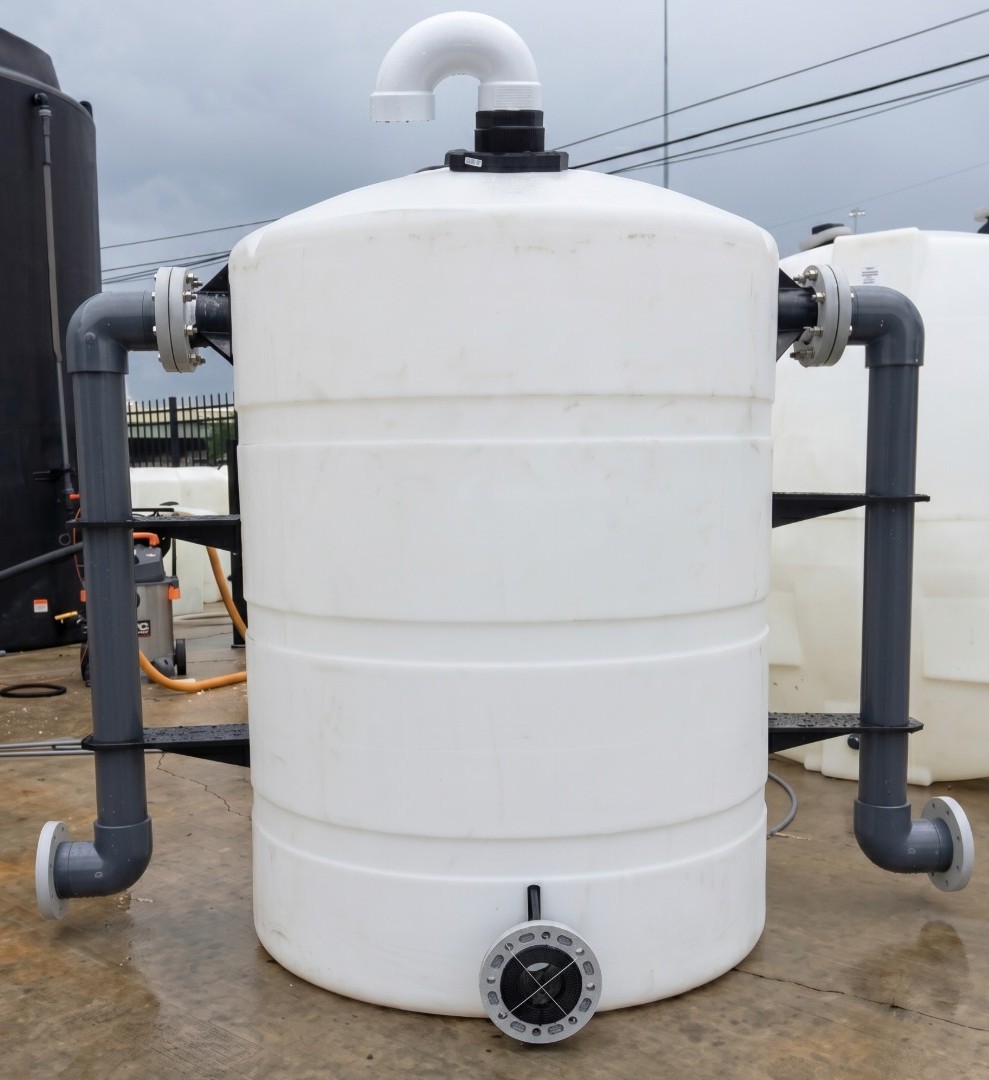
Dosing tanks: Sized to the metering pump’s draw, to any mixing or dilution the chemical requires, and fitted with fill lines, vent tubes, and more.
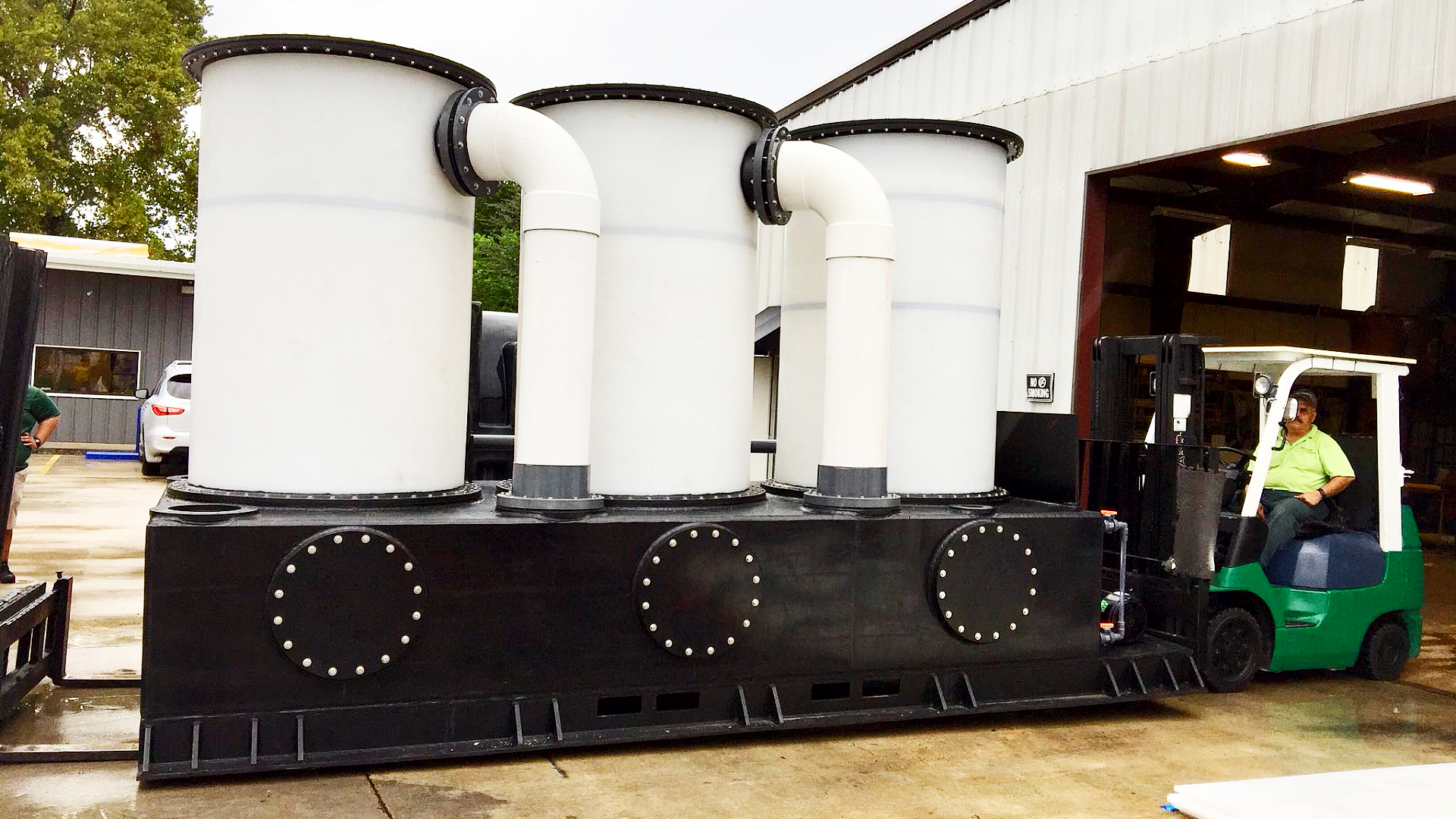
Multi-tank feed setups: Bulk tank and day tank pairs or multiple dosing tanks to match a set specification for a feed application.
Made to order: From small dosing vessels up to several thousands of gallons, with dimensions to match business footprint and equipment layout.
Temperature Control
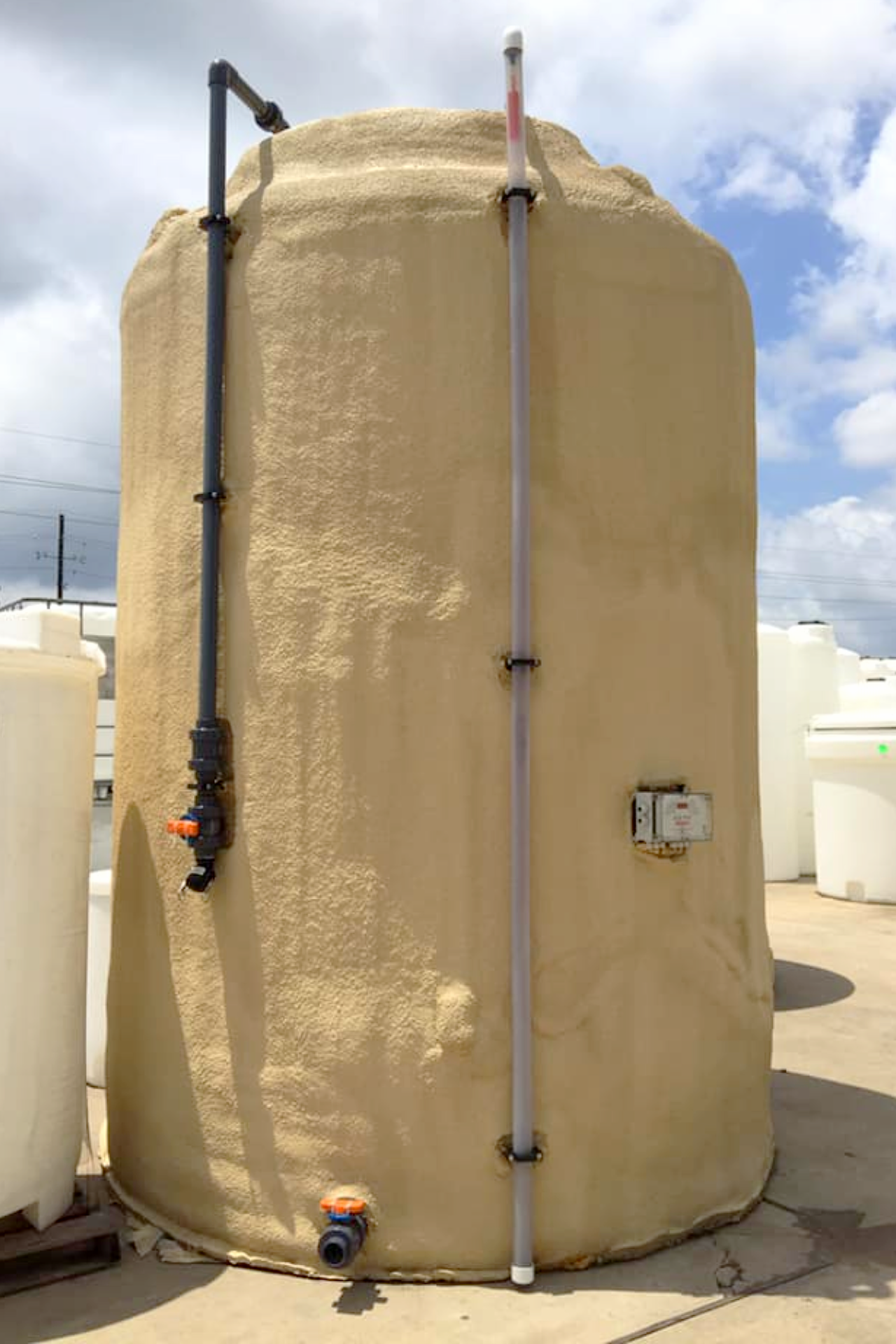
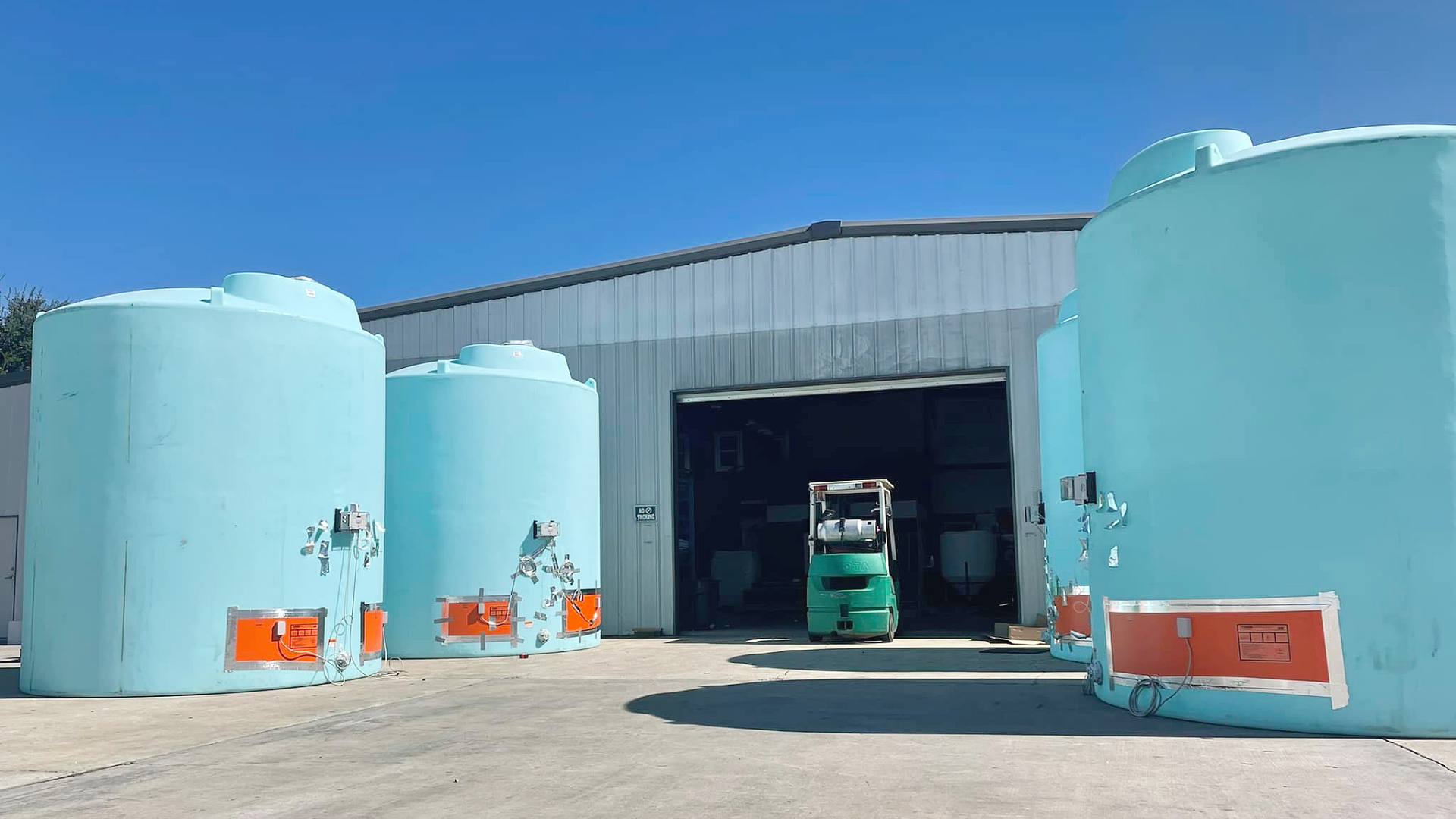
Heat tracing: External electrical resistance heat trace with a programmable controller and insulation, for freeze protection or holding caustic above crystallization point. See Heat Trace and Insulated Tanks.
Immersion heater cutouts: Port, cutout, and positioning for internal heaters.
Connections and Equipment
Fill, vent, and overflow: Connections sized for the service. Various vent sizes to match off-gassing chemical rates and air displacement on fill.
Flooded suction outlet: A low sidewall or bottom outlet and integration capabilities with anti-vortex designs, positioning for metering pump priming, and air or fume draw avoidance.
Metering pump mount: A level pad or shelf at the elevation the pump needs. Tell us your pump specs and we’ll see if it’s within our working catalog.
Mixer mount: A bridge or top flange for an agitator when chemicals have to stay in suspension or be diluted to working strength.
Calibration ports: Suction takeoffs and return ports for a drawdown calibration column.
Circulation: Inlet and outlet ports for recirculation loops to keep chemical solutions uniform or in suspension.
Level indication: Ports for sight tubes, gauges, or level sensors. Depending on the application and scope, we may be able to provide compatible level sensors and more.
Bottom and Drainage
Sloped bottoms or full drain sumps for complete draining between fills; important for chemicals like sodium hypochlorite, where flushing residuals out of the tank before refill slows decomposition. Drain and valve connections sized and positioned to spec.
Safety Features
Secondary containment: Integrated tank spill pan or containment basins, sized to 110% of the largest vessel or to local code. See also Custom Containment Tanks.
Level sensors: Ultrasonic, radar, and submersible level sensors for continuous monitoring of current tank volumes for operational data, safety, and refilling.
Leak detection: Containment and tank sensors for real time monitoring and alerts on leaks or unexpected losses.
Alarms: Visual and audible alarms alongside leak detection to notify personnel of hazardous conditions.
Anchoring: Hold down lugs, tie down contacts, or base details for wind and seismic loads when installation requires.
Where Chemical Feed Gets Specified
Day and dosing tanks run across water treatment, finishing, and processing, and each industry works to a different standard and requires tanks built to the application-specific chemical and feed setup.
Municipal and Industrial Water Treatment
Wastewater Treatment
Metal Finishing and Surface Treatment
Chemical Processing and Manufacturing
Power Generation and Industrial Utilities
Send us your specs; we'll handle the rest.
Compliance Built In
Many chemical feed operations carry compliance obligations that the tank, its fabricated design, and integrated components should support. Protank builds the vessel and its connections–or outfits stock poly tanks–the end regulatory compliance requirements are the buyer’s responsibility and supporting tank features should be built in at the spec stage.
Built In-House, Tested Before It Ships
Every day and dosing tank is built to your drawings, dimensions, and parameters:
- Wall thickness according to chemical specific gravity and working volumes,
- Polypropylene welds by bead and extrusion welding,
- Connections and add-ons positioned to spec, and
- Fittings in compatible material and type.
Material certificates on the resin and sheet, weld records on fabricated polypropylene, and a fitting spec documents are available to support standards, permits, and quality requirements for material traceability and fabrication evidence. Hydrostatic leak testing is completed before shipment, and tanks arrive ready for integration.
Why We Build It Better
In-house fabrication
Every tank is built at Protank’s own Gulf Coast facilities, which means direct quality control, consistent workmanship, and faster lead times.
Material matched to your chemical
We offer PP-H, PP-C, PVC, CPVC, PVDF, HDPE, or XPLE to match your chemical, concentration, and temperature so you get an accurate quote and reliable results.
Stock and custom sourcing
Custom fabricated tanks where the job calls for it, and outfitted stock or NSF 61 certified tanks where the application requires them.
Full system capability
Bulk storage, day tanks, dosing tanks, and containment fabricated or provided to your specifications.
Nationwide delivery
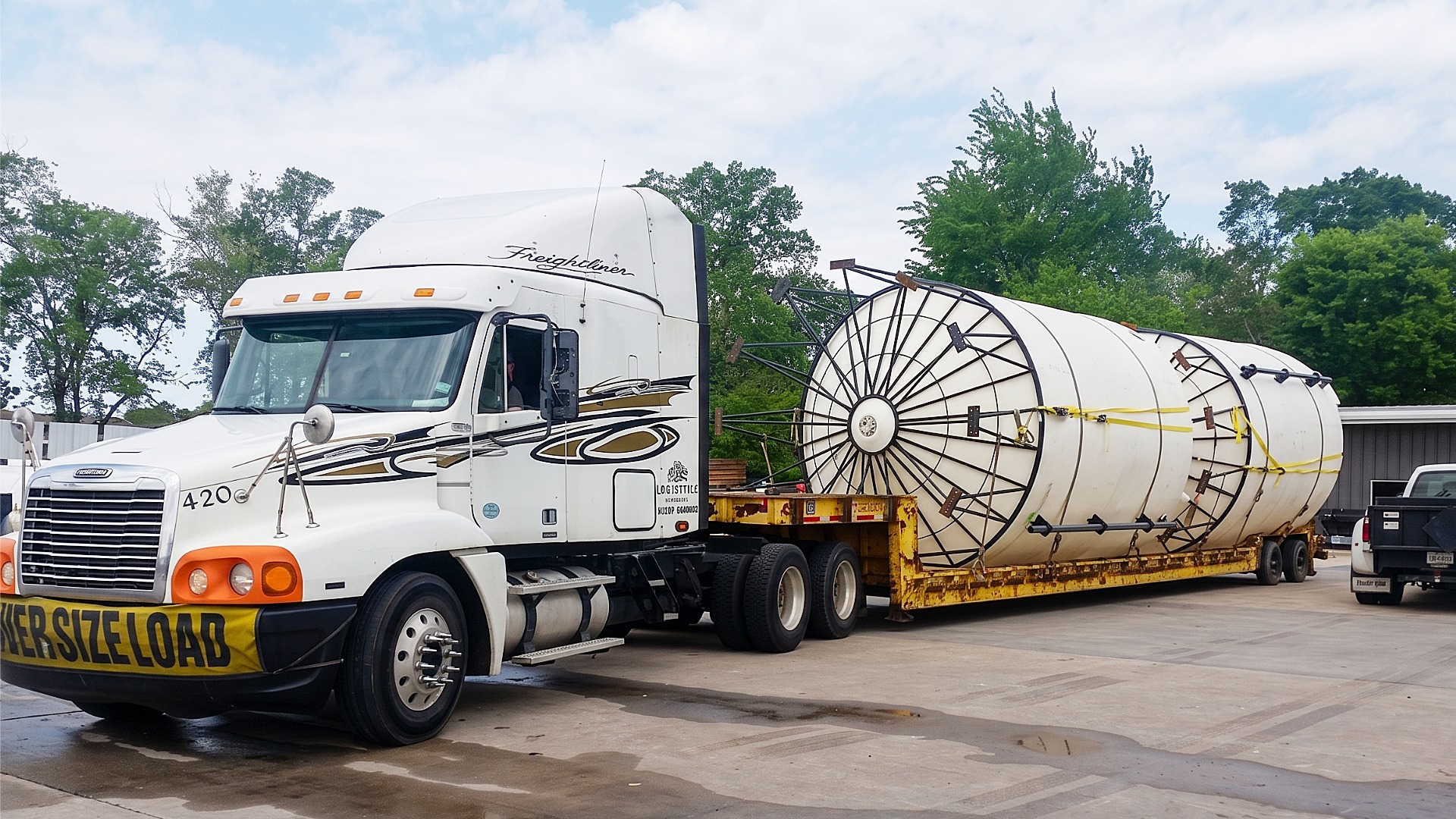
Completed tanks ship across the continental US from Protank’s Gulf Coast facilities, with support from spec through delivery.
20+ years of expertise
Two decades of custom tank fabrication for water treatment, surface finishing, and chemical processing buyers.
Request Your Custom Day or Dosing Tank Today
The more detail you bring to the first call or submit to us, the faster we can return an accurate quote. Useful details include:
- Chemicals: type and concentration, and whether it generates fumes or degrades.
- Operating conditions: ambient or heated, freeze exposure, indoor/outdoor, UV exposure.
- Tank material preferences: PP, PVC/CPVC, PVDF, or PE.
- Volume and size: storage capacity, unique measurements or footprint.
- Pump and mixing: tank connected ports, piping, and mounts for pumps, agitation, or dilution.
- Required components: bulkheads, calibration ports, level indication, circulation, containment.
- Connections: fills, feeds, vents, level, drain.
Drawings, sketches, and engineering specifications are encouraged and, in some cases, required.
One to three business day response time: contact Protank's fabrication team for a free quote.