
Plating, anodizing, and surface finishing operations depend on chemical solutions that are regulated, aggressive, and unforgiving. The wrong tank material, inadequate containment, or insufficient vapor control can create compliance problems, worker exposure concerns, and outcome failures that no downstream step can correct. In these applications, the tank is a controlled environment that has to be built for the specific chemical involved.
Need to replace an aging system or steel? Protank regularly does this and can build custom replacement tanks to match your exact design and process specifications.
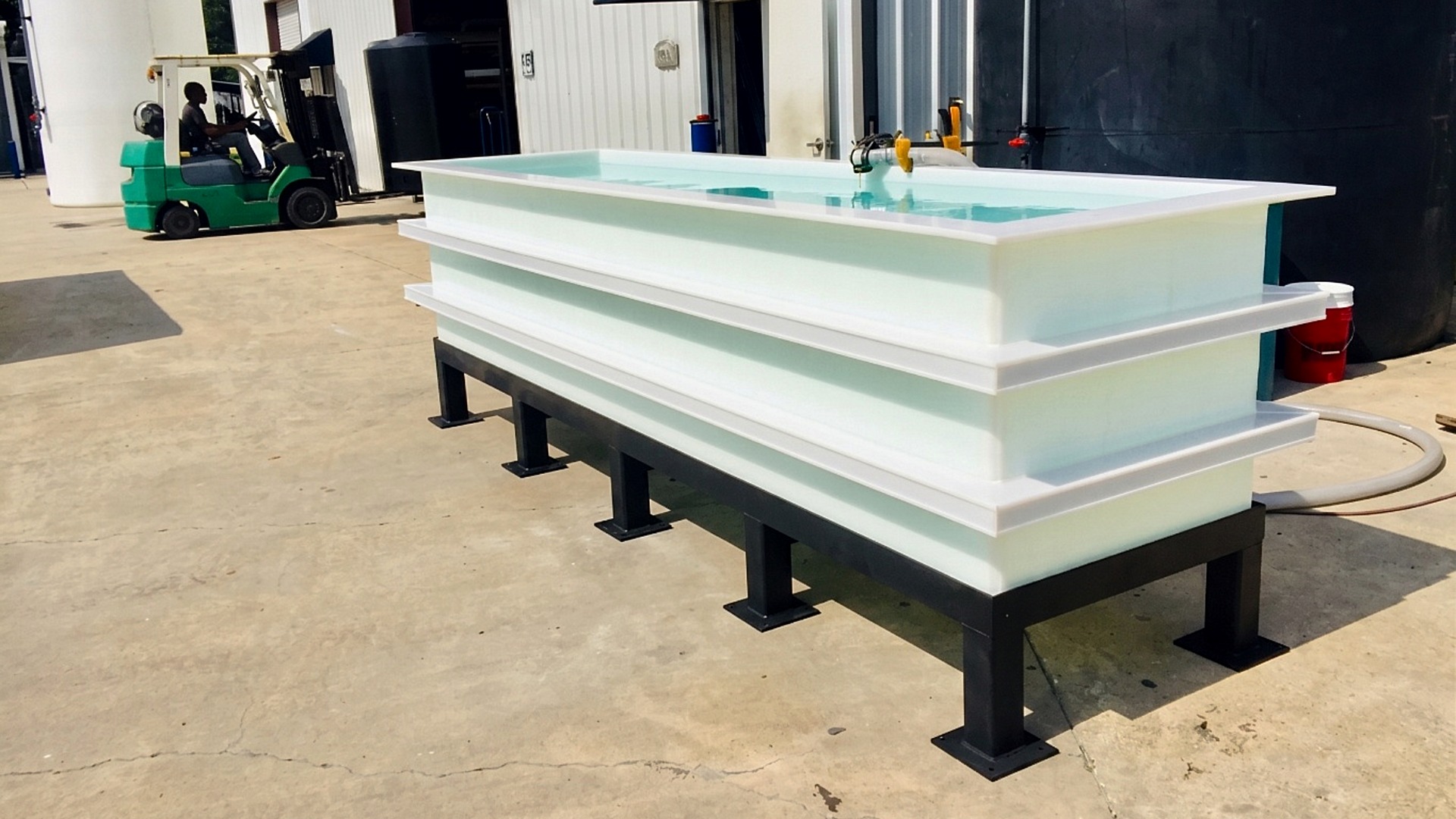
Tank Types, Applications & Common Chemicals
Protank offers a full range of custom tanks to support the varied and often specialized needs of plating, anodizing, and surface finishing operations. Common tank types, applications, and chemicals include:
Plating Tanks
Designed for copper, silver, gold, nickel, and chrome plating applications, custom plating tanks are used for their chemical compatibility and capacity for uniform results across varying production volumes. Ideal for electronics, jewelry, automotive, military equipment, and industrial manufacturing. For decorative chrome plating, Protank can build tanks for both hexavalent chromium (Cr(VI)) and trivalent chromium (Cr(III)) solutions. Cr(VI) decorative and hard chrome operations are subject to EPA NESHAP standards (40 CFR Part 63, Subpart N) for air emissions. Tanks can be configured with fume capture lip edges and scrubber system connections to support compliance.
- Electrolytes: Copper sulfate, nickel sulfate, gold chloride, silver nitrate
- Cyanide Solutions: Gold cyanide, silver cyanide, copper cyanide
- Acids: Sulfuric acid, hydrochloric acid, nitric acid
- Alkaline Solutions: Sodium hydroxide, potassium hydroxide
- Additives: Brighteners, levelers, and wetting agents
Anodizing Tanks
Custom built tanks for the precision aluminum anodizing of lightweight, corrosion resistant parts common in aerospace, automotive, and defense manufacturing. For Type III hardcoat anodizing, Protank configures tanks for enhanced thermal management and rectifier connections. Hardcoat applications run at lower bath temperatures (28°F to 50°F), higher current densities, and longer cycle times than standard anodizing, requiring active bath chilling, more durable connections, and a tank construction that is built to endure the conditions across production runs.
- Sulfuric Acid: Primary electrolyte in Type II anodizing
- Chromic Acid: Type I corrosion-resistant anodizing per MIL-PRF-8625
- Phosphoric Acid: PAA for adhesive bonding prep, pre-treatment, sealing
- Dyes: Organic and inorganic dyes for architectural and decorative finishes
Chemical Recovery Tanks
Chemical recovery tanks are designed to reclaim valuable, often expensive, materials—gold, silver, copper, nickel—from spent plating solutions to support workflow recovery efforts, reduce waste, and raw material costs. Chemical recovery tanks also reduce the volume of hazardous waste that requires disposal. This in turn directly supports compliance with EPA metal finishing effluent guidelines for wastewater discharge. Protank can build custom tanks to match the recovery method your process uses:
- Metal Recovery Solutions: Valuable metals reclaimed from spent plating baths and concentrated dragout
- Ion Exchange Resins: For separating and reclaiming valuable metals from dilute dragout and rinse water streams
- Electrolytic Recovery Cells: For high concentration metal recovery from dragout tanks and rinse stages
Etching Tanks
Custom etching tanks are built for precise, repeatable etching applications in printed circuit board (PCB) manufacturing, electronics production, and decorative metalwork. These tanks handle aggressive etchants and provide the access and safety needed for intricate design work and sensitive components. Tanks for PCB processing can be configured for spray nozzle systems to provide uniform contact of etchants across board surfaces.
- Ferric Chloride: For etching copper in PCB and electronics production
- Ammonium Persulfate: A common precision etchant in electronics applications
- Acidic or Alkaline Solutions: For etching stainless steel, aluminum, or other metals
- Nitric Acid, Ferric Chloride, Acid Blends: For decorative etching of brass, copper, and steel in jewelry, signage, and artistic metalwork applications
Pre-Treatment Tanks
Pre-treatment is a results-critical step for coating adhesion quality. Contamination that survives pre-treatment causes plating or anodizing defects that cannot be corrected downstream, and pre-treatment chemicals range from contamination removal to active surface conversion. Protank's pre-treatment tanks are built as part of a complete line meant to work alongside primary process tanks.
- Degreasers: Alkaline or solvent based for oil and contaminant removal
- Pickling Solutions: HCl or H₂SO₄ for removing oxides and scale
- Phosphating Solutions: Corrosion resistance and surface prep before coating
Rinse, Overflow & Electropolishing Tanks
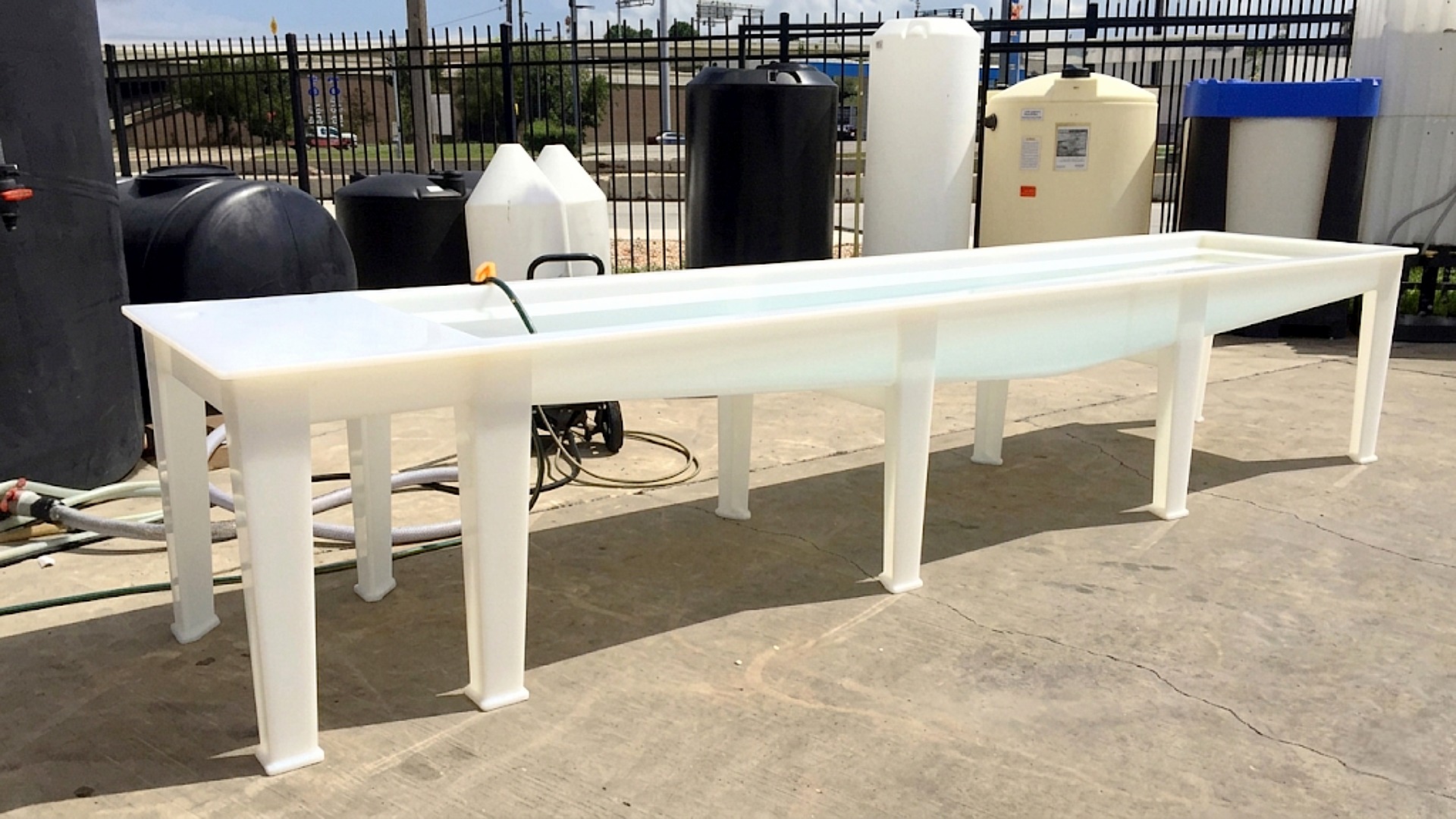
Rinse and overflow tanks are part of nearly every plating and anodizing line to manage dragout, chemical carryover, and rinsing between baths. Protank builds rinse tanks to integrate directly with your plating and anodizing tanks. Electropolishing tanks are designed to deliver smooth, defect free finishes on metal components and improve their corrosion resistance. Protank can supply electropolishing tanks as standalone systems or as part of complete finishing lines.
- Cascading rinse stages with dragout control
- DI water rinse stations to match IPC and MIL-PRF-31032 requirements
- Overflow weir designs for continuous rinse flow management
- Electropolishing baths, standalone or line-integrated
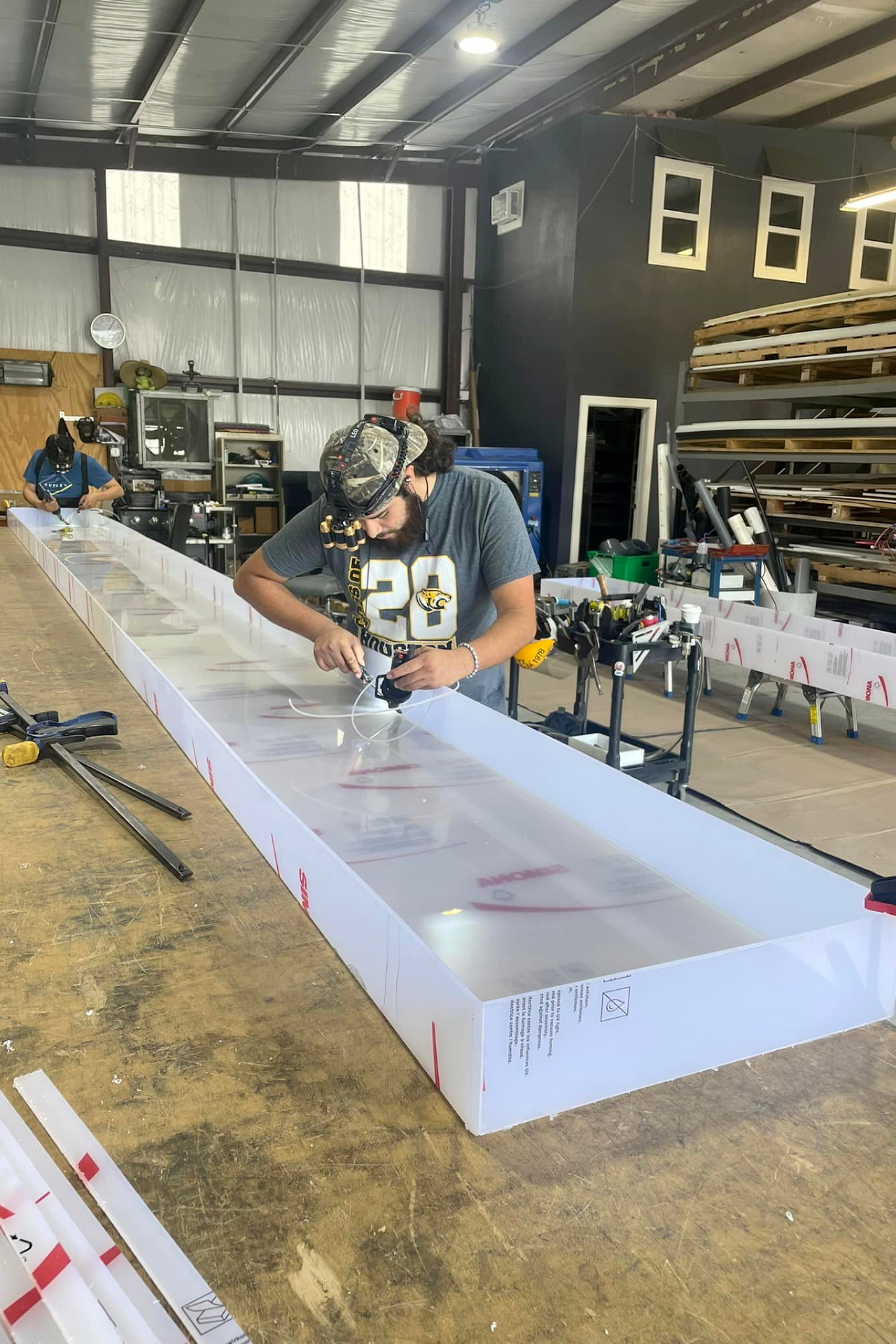
Complete Surface Finishing Lines
Protank also custom builds the rinse tanks, overflow tanks, and electropolishing tanks that work alongside these primary work tanks—the result: a single source provider for a complete surface finishing line.
Discuss Your LineMarkets & Applications
Plating and anodizing process tanks built to the technical requirements of heavily regulated, specification-driven industries nationwide.
Aerospace
MIL-PRF-8625 · MIL-DTL-5541Defense & Military
MIL-SPEC Process LinesElectronics
IPC · MIL-PRF-31032Automotive
40 CFR 63 Subpart NMedical Devices
21 CFR Part 820 · ISO 13485Jewelry
Cyanide Bath CapableEnergy Sector
EV · Solar · Fuel CellGeneral Metal Finishing
Tank Construction Materials
The right construction material depends on the specific chemical being handled, operating temperatures, concentration, and the regulatory environment. Protank reviews compatibility across specified tank body, fittings, gaskets, valves, and piping before any work begins.
Polypropylene (PP-H / PP-C)
PVDF Kynar
CPVC
HDPE, FRP & Fittings
Engineered to Specification
Protank offers a comprehensive range of customization options to ensure your plating, anodizing, and surface finishing tanks meet the requirements of your process. Our design capabilities combine flexibility with professional precision to deliver optimal performance in even the most demanding or chemically aggressive applications. Each system is built to your engineering set and specifications: size, shape, depth, formulation, safety features, inflow/outflow, fittings, piping, accessory ports, and more.
Tank & Fitting Materials
Tanks are fabricated from weldable thermoplastic sheet, PP (PP-H/PP-C), PVC, CPVC, HDPE, and PVDF, in thicknesses from 3/16" to 1", joined by hot gas bead welding and/or extrusion welding. External structural support, such as reinforcement ribs, steel girth bands, or I-beam encased in PP, can be added to your specified requirements.
Tank Body Options
Fitting & Wetted Component Materials
Tank Sizes & Configurations
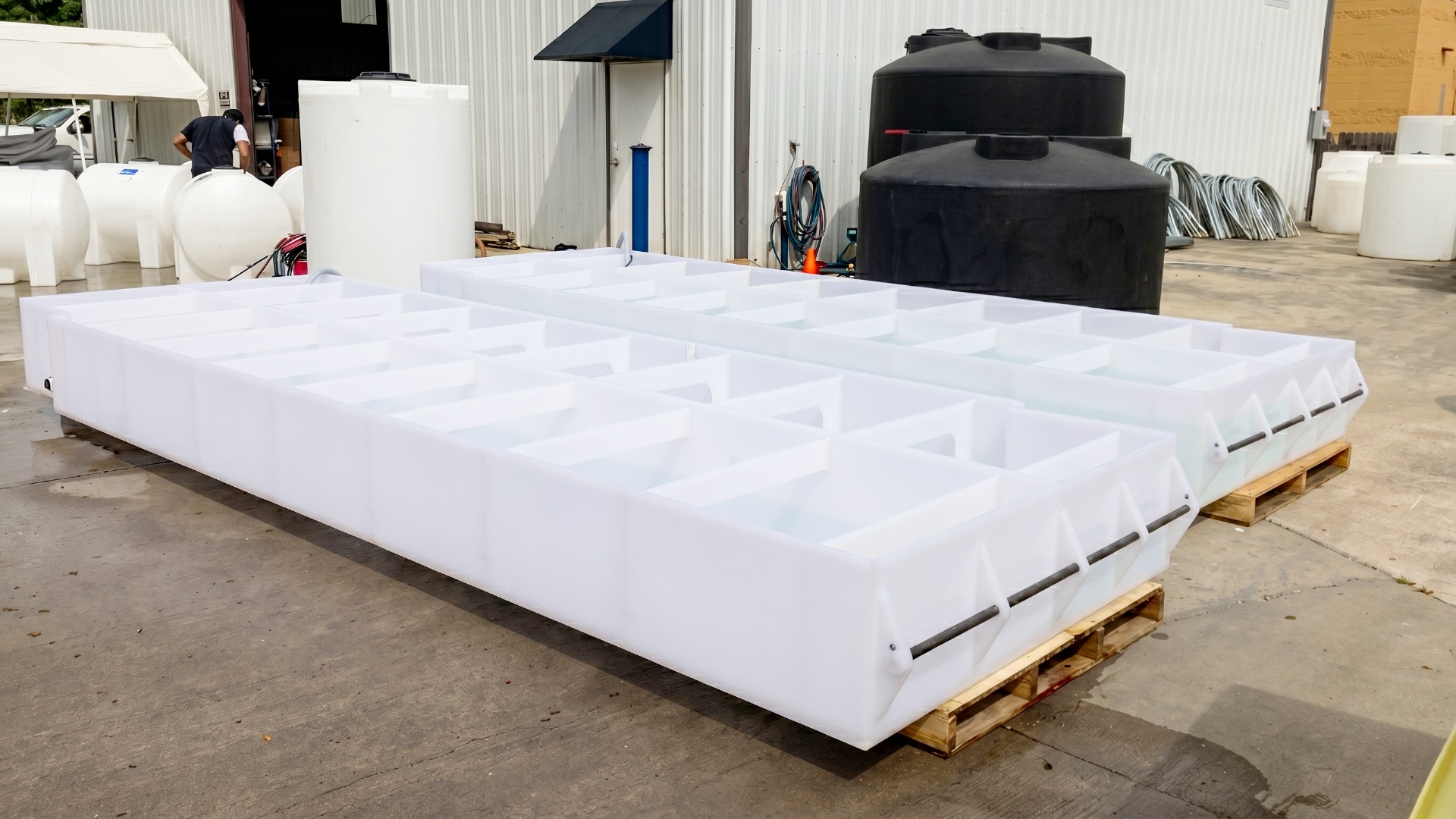
Custom tanks can be configured as single tank systems or multi tank modular setups capable of scaling-up with your operation. Modular systems allow both small shops and large production lines to adapt to changing work needs or growing throughput demands such as allowing for future tank additions without having to make a full line replacement.
Stock Option Available
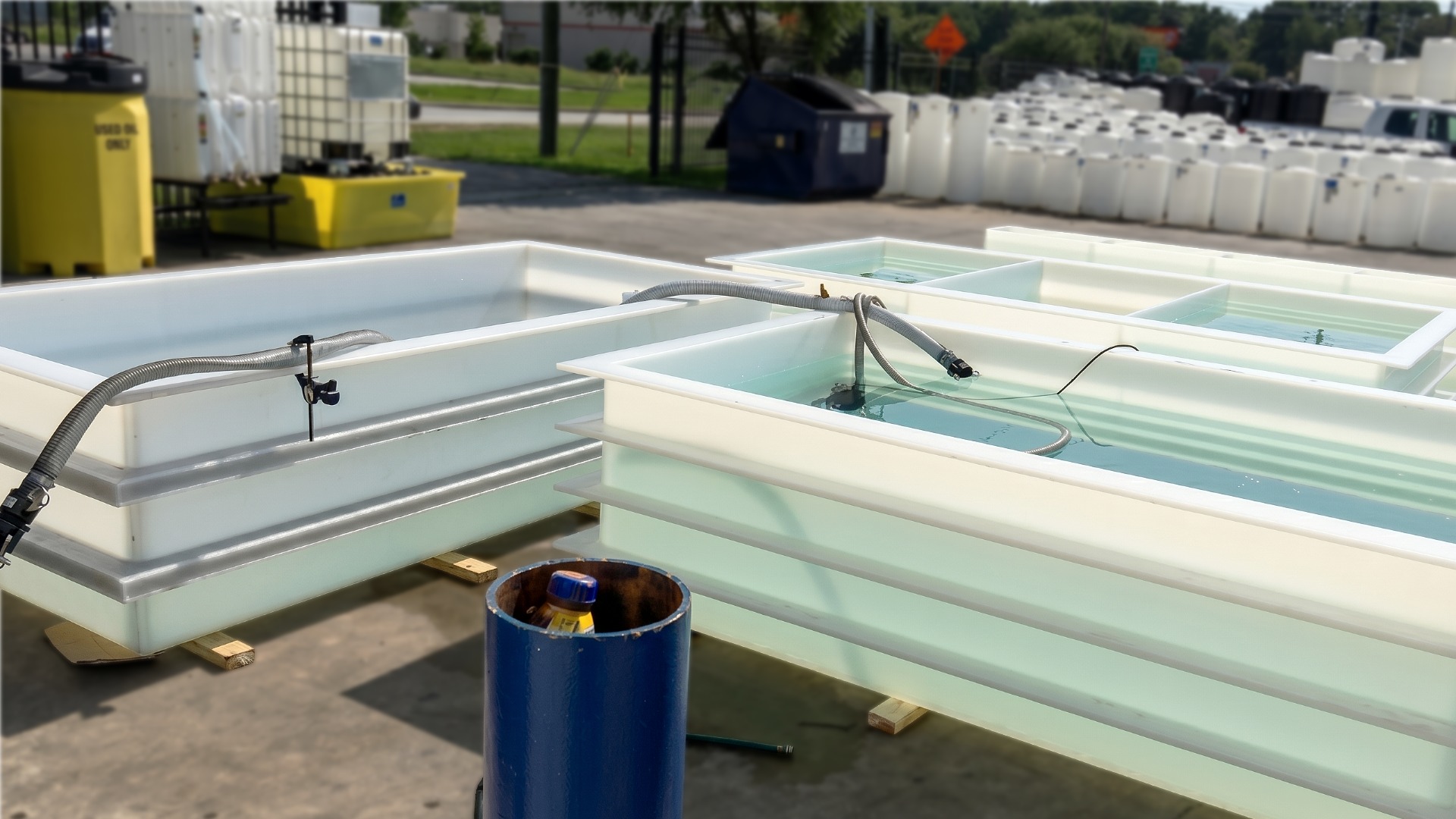
For shops sourcing the bath vessel separately and handling their own customization, Protank’s stock polypropylene rectangular open top tanks are available in a selection of sizes for plating and anodizing bath needs:
Browse open top tanks →
Anode Bar, Cathode Bar & Rack Support
Plating and anodizing tanks require integrated anode bar supports, cathode bar positions, and rack hanger systems built directly into the tank structure for part processing. Protank can build these provisions into the tank design as specified, including titanium, polypropylene, or stainless steel bus bar supports positioned for your electrical layout and racking system.
Rectifier & Electrical Connections
Electrochemical processes such as anodizing and electroplating require direct current (DC) connections to the tank. Tanks can be built with provisions for anode and cathode bus bar mounting, rectifier cable entry points, and electrical isolation features as required by your workflow and layout needs.
Fume Capture & Scrubber Integration
Plating tanks for chromium, cyanide, acid, and other regulated chemical solutions generate vapors that require capture and treatment. Tanks can be built with fume hood lip edges, exhaust slots, and scrubber system duct connection points for integration with fume scrubber systems.
See also our Custom Fume Scrubber Systems for vapor control and compliance.
Process Features & Integrated Components
- Automated agitation: Air sparging, pump circulation, or mechanical agitation for consistent chemical distribution and elimination of dead zones for uniform plating thickness and anodizing quality
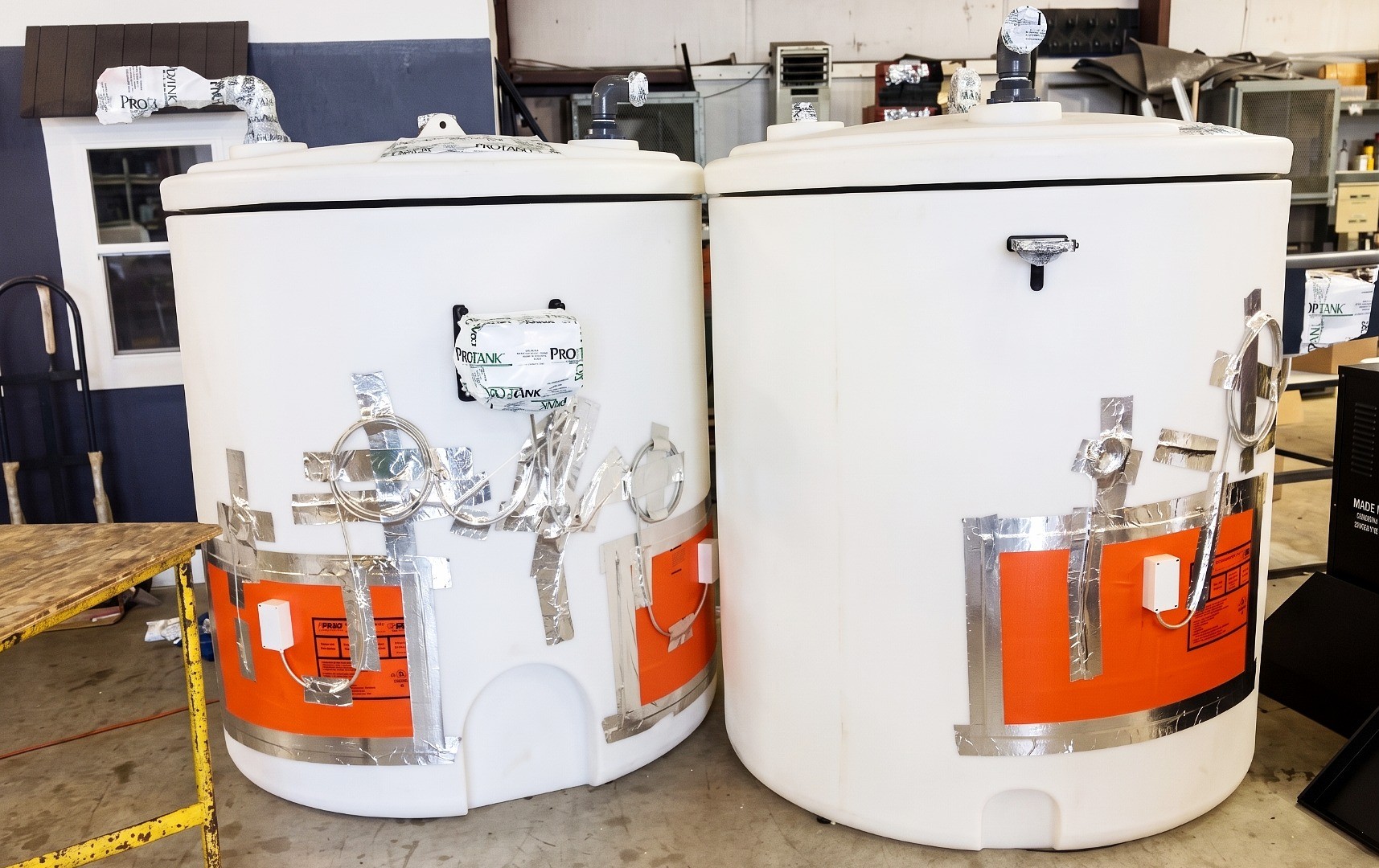
- Programmable temperature controls: Heat tracing and programmable controllers for maintaining precise bath temperatures automatically across production cycles: results-critical in hardcoat and chromic acid workflows where a few degrees off target risks measurable coating defects
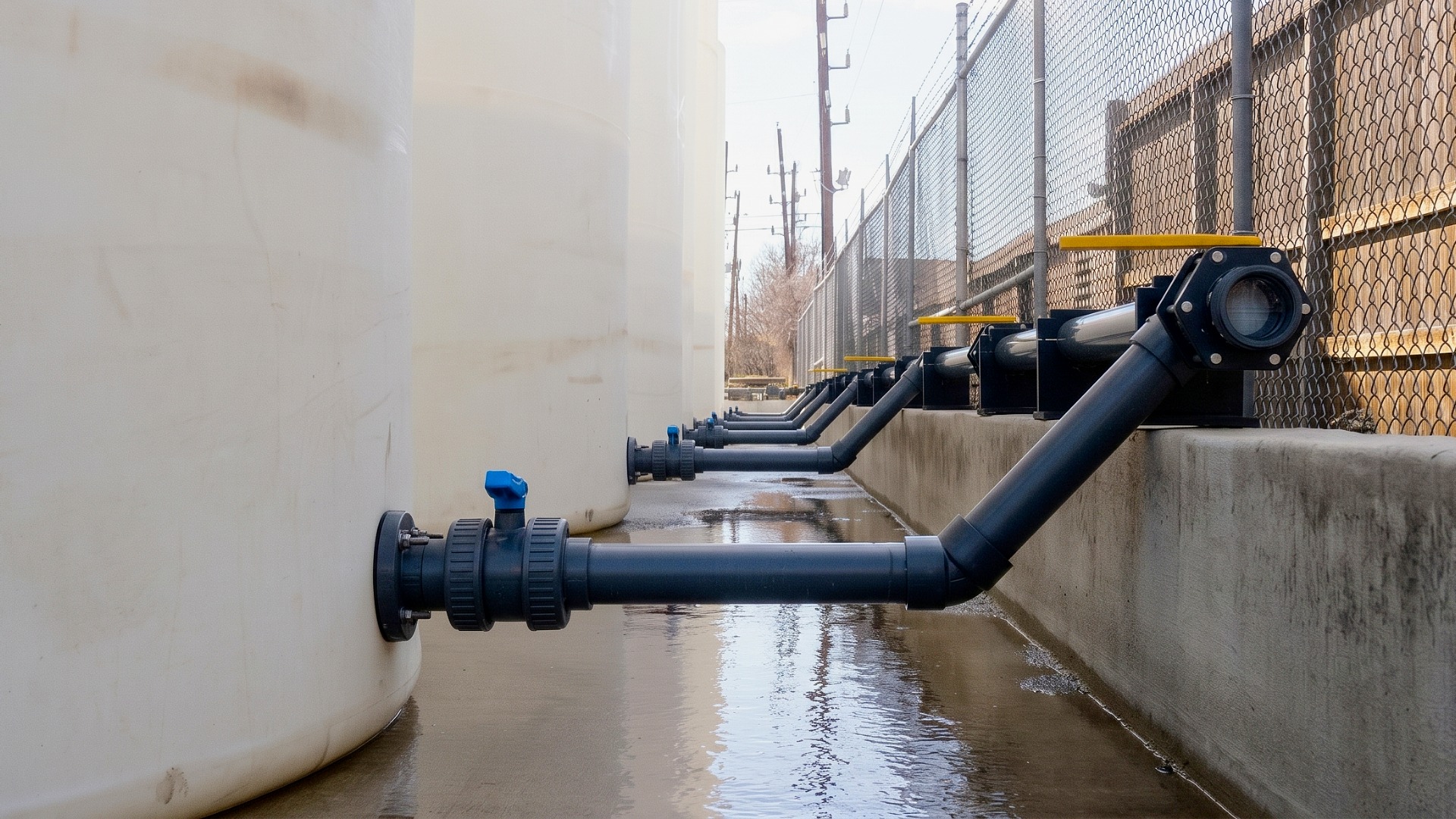
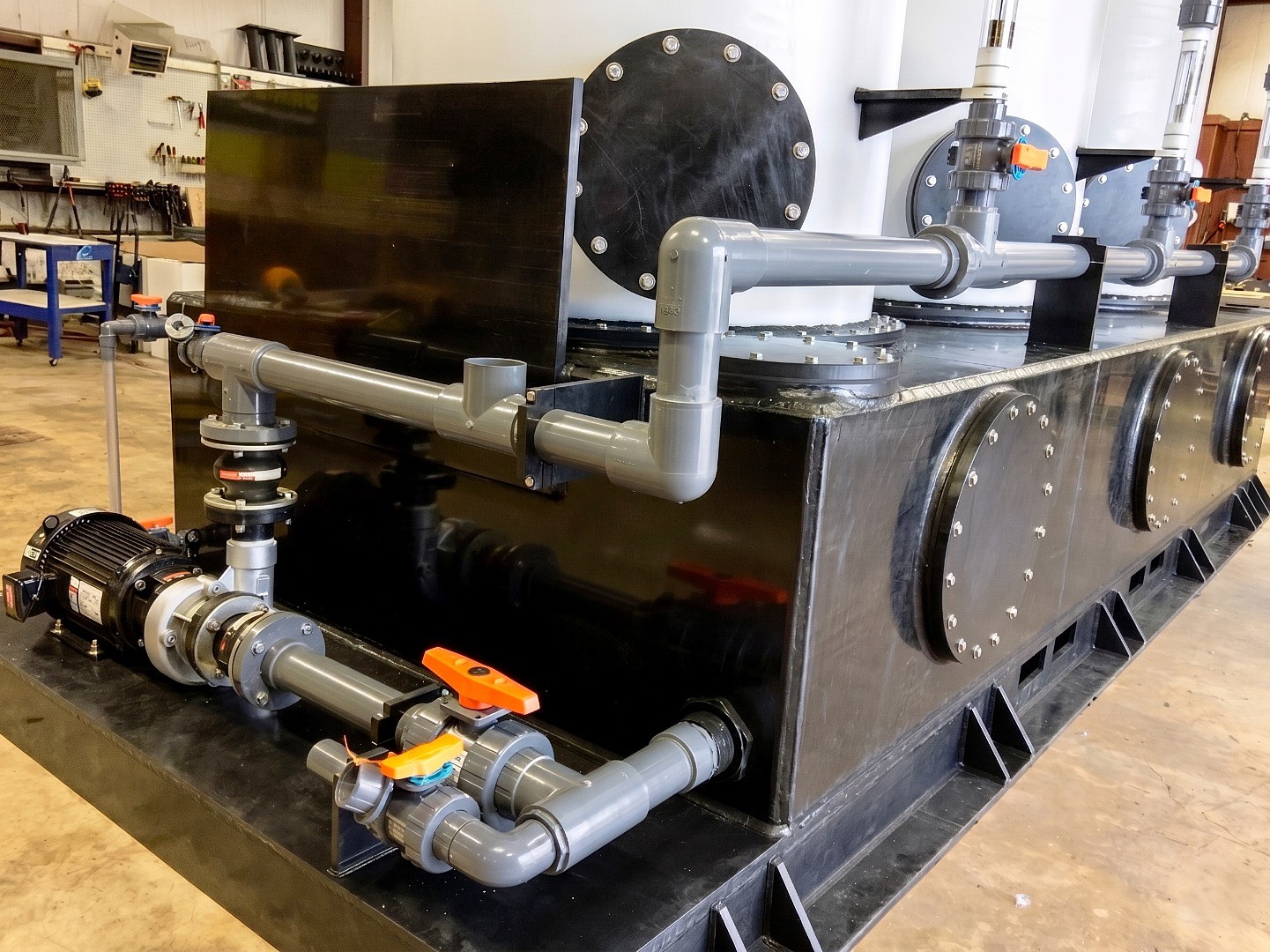
- Integrated components: Pumps, valves, fittings, draw tubes, baffles, vents, insulation, and sensors for precise control of temperature, chemical flow, and process parameters
- Spray nozzle systems: For etching tanks used in PCB processing and uniform contact of etchants across board surfaces
Safety & Secondary Containment
- Tank level sensors: Radar, ultrasonic, or submersible options for liquid level monitoring and overflow prevention
- Leak detection systems: Sensors and alarms for immediate notification of containment breach
- Secondary containment: Containment bases and double wall designs to meet workplace safety and EPA regulatory requirements
- Cyanide and Cr(VI) safety: Extra containment, safety accessories, and vapor control features can be built in to support OSHA and EPA compliance
Built for Compliance
Plating and anodizing applications are among the most heavily regulated industrial processes in the US. Protank builds tanks to support compliance with EPA metal finishing effluent guidelines, OSHA hexavalent chromium standards, and EPA NESHAP air emission requirements.
Built right, the first time.
In-house fabrication
Every tank is built at Protank's own facility by our experienced fabrication team, not outsourced. This means direct quality control, consistent workmanship, and faster lead times on every project.
Regulatory and compliance design
We build tanks that support compliance with EPA metal finishing effluent guidelines, OSHA hexavalent chromium standards, and EPA NESHAP air emission requirements—not just chemical compatibility.
Process chemistry expertise
Protank reviews your specific plating or anodizing chemistry, operating temperatures, and part dimensions before work begins, since different use cases have different design approaches.
Complete line capability
Protank supplies the full process line: pre-treatment, primary process, rinse, recovery, and electropolishing tanks built to work together as a coordinated system—all from one fabricator.
Nationwide delivery
Protank ships custom fabricated tanks across the continental US, from our facilities to both coasts, with end-to-end support from consult through delivery.
20+ years of expertise
Over two decades of custom tank fabrication and providing precision solutions for businesses across industries, nationwide.
Optimize Your Plating & Anodizing Lines Today
Take the next step toward optimizing your surface finishing applications with Protank’s custom tank solutions built to your line layout, your chemicals, your parts, and your production requirements.
Response within 1-3 business days. All inquiries confidential. For questions about your specific chemistry or compliance needs, email us directly.
Every custom plating and anodizing tank we build is made by our expert team. Send us your specs; we'll connect and get to work.