
A wastewater treatment train is judged at one point: the discharge. Every stage ahead of it exists to bring the stream inside permit limits before it leaves the site, and a single vessel that can't hold up to the process parameters puts the whole line's compliance at risk. For direct, surface discharges, that means holding pH between 6.0 and 9.0 under an NPDES permit. For a plant discharging into a municipal system, it means staying within federal pretreatment prohibitions and the categorical limits that apply.
Off-the-shelf tanks often don’t meet the needs for the continuous service these waste streams require. Either they have the wrong material or wall thickness, or a stock fitting that can become a failure point that takes the stage or whole system offline. Protank provides the vessels a treatment train requires: custom polypropylene tanks, PVC/CPVC tanks, PVDF, customized stock HDPE or XLPE tanks, fiberglass, and bolted steel tanks, with the connections, ports, and setups the rest of the system plugs into.
Tell us your specs and we'll handle the rest.
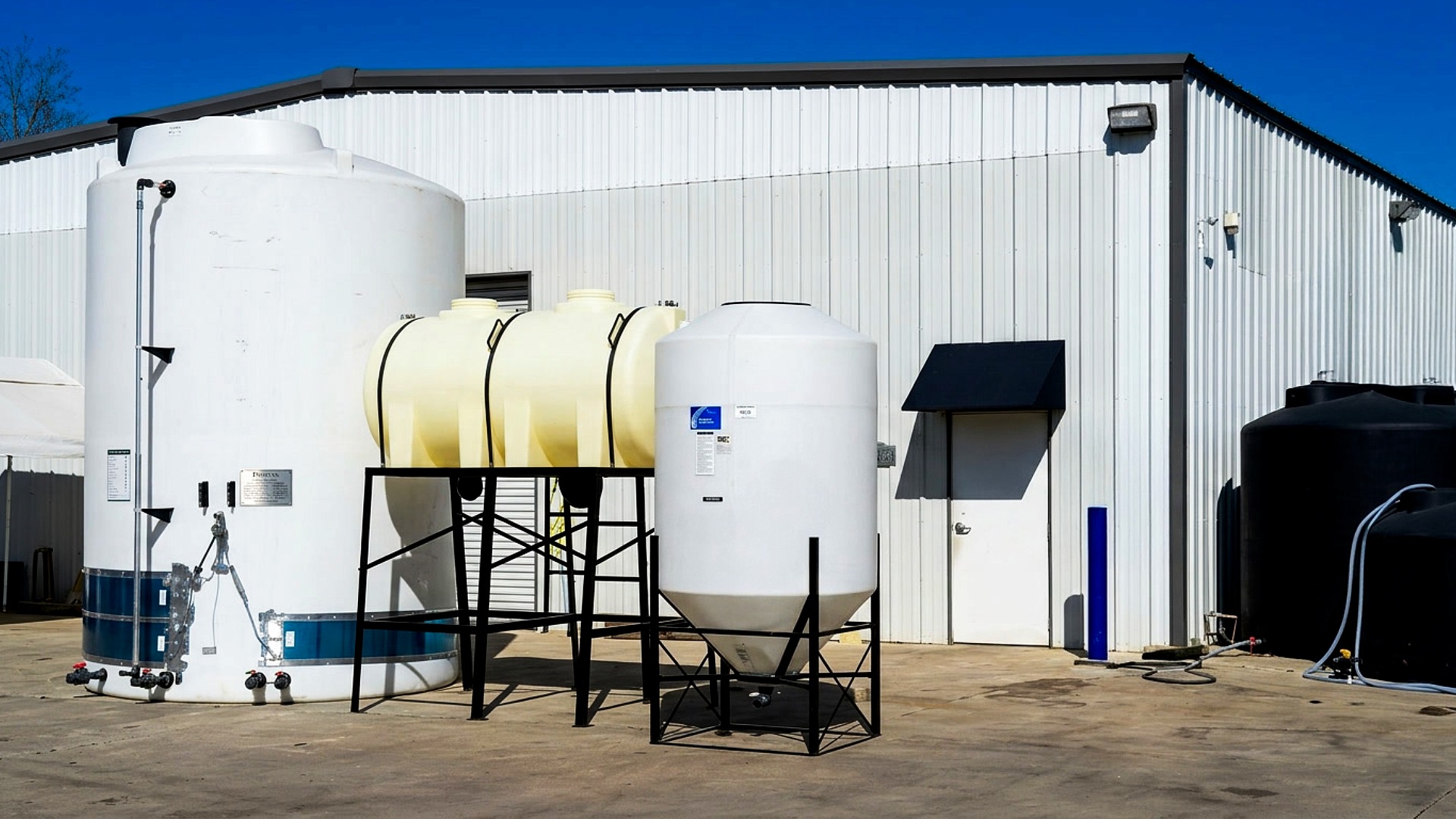
Built to the Stream and the Spec
Protank builds custom polypropylene wastewater treatment tanks, customizes stock HDPE, bolted steel, and FRP tanks to your specifications. Commonly requested by environmental engineering firms, wastewater treatment contractors, centralized waste treatment operators, and in-house industrial pretreatment teams across the Gulf South and nationwide. Backed by 20+ years of custom tank fabrication experience.
Tanks are made-to-order to match the chemicals in your waste stream, flow rates, treatment stages, and site layout. Capacity, wall thickness, tank bottom style, fitting type and placement, and the port connections for your instruments and equipment are all customizable and built to what the application demands. Single containers, coordinated multi-tank sets spanning the full waste treatment train, and custom outfitted stock tanks are all options. For custom tanks, wall thickness can be modified and reinforcement added to match the stream's specific gravity, thermal load, and hydrostatic head. Every team-fabricated tank is hydrostatically leak tested before it ships and arrives ready to integrate.
A Tank for Every Stage
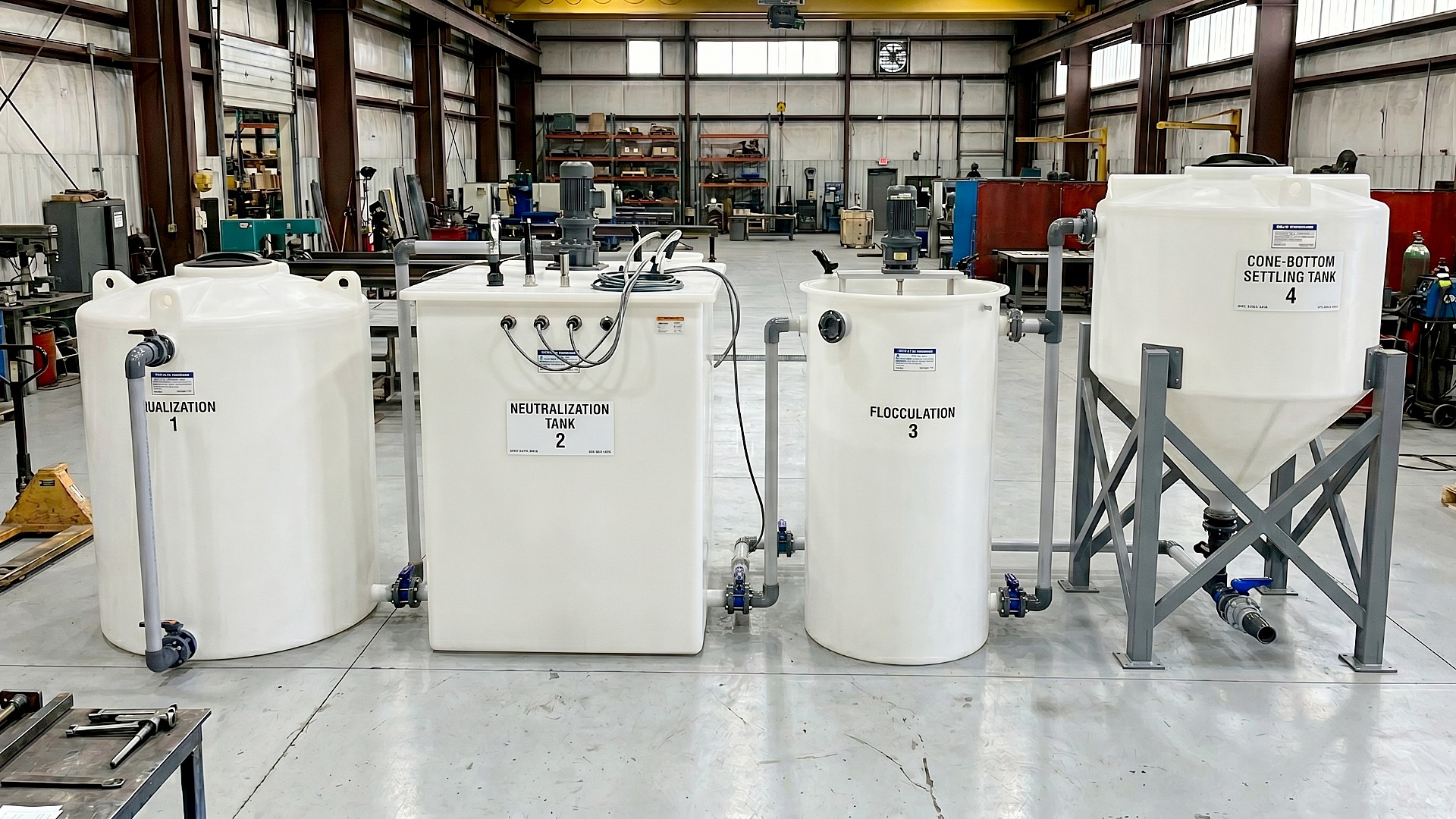
A wastewater treatment train is a sequence of unit operations, each with its own vessel, working together to ensure the liquid stream reaches permit quality prior to discharge or disposal. Treatment trains usually start with equalization, move to pH adjustment, then coagulation/flocculation, settling, and lastly, an effluent holding tank before the discharge point.
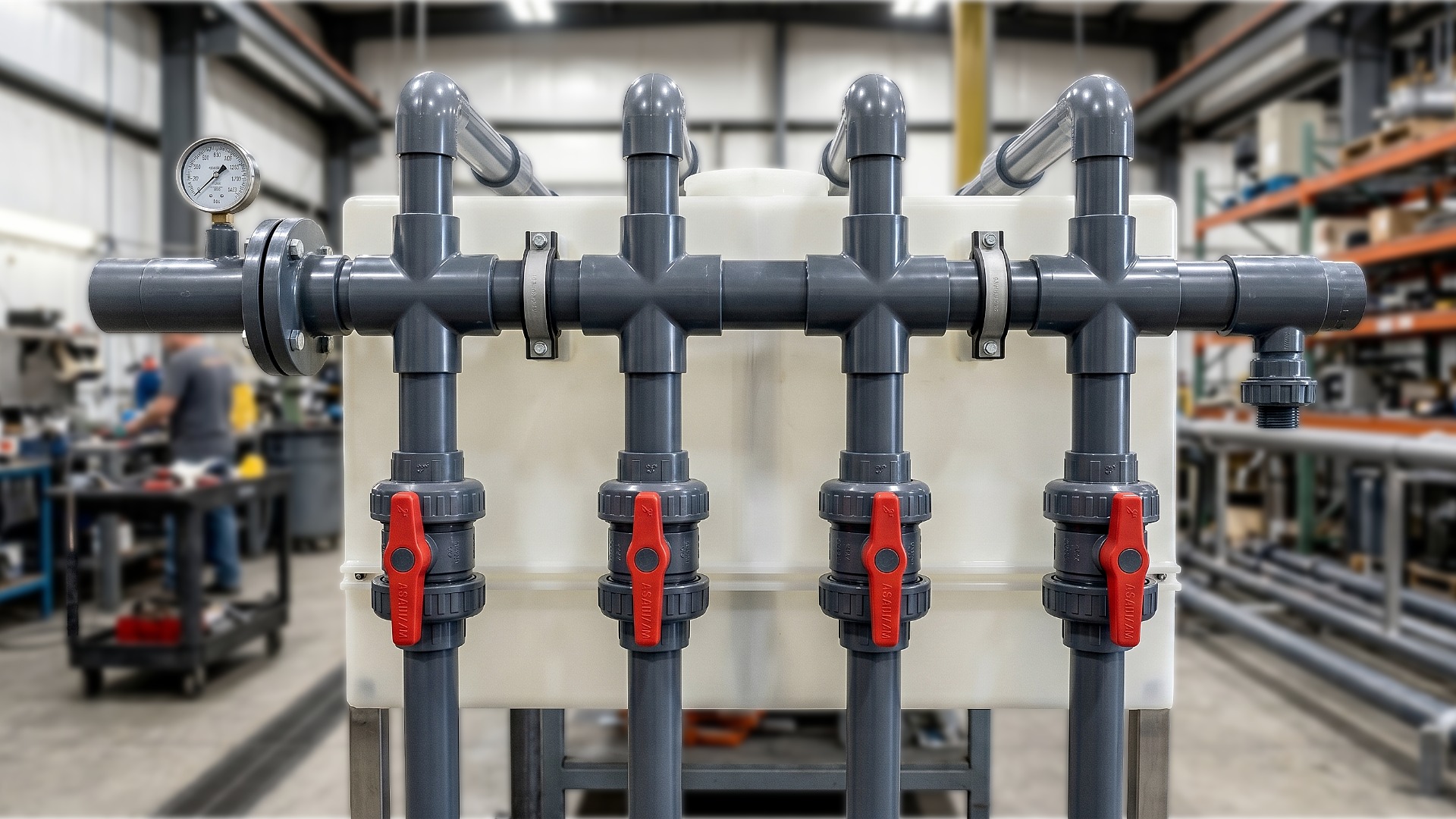
Protank's focus is the vessel and what's built into it. This includes the tank itself, its slope or drainage, valves, pipes, and bulkhead fittings, baffles when designs specify, and the port setups where probes, dosing lines, and sample taps are installed. Our client brings their specifications, project, or problem, and Protank provides the tank.
The Full Set a Train Runs On
Protank fabricates and customizes the full set of tanks a wastewater treatment train runs on so each one is specified to its job in the line and what it holds.
Equalization and holding tanks
Equalization tanks are used to take in variable flow and concentration and feed downstream stages at a steady rate to keep dosing or settling stages from being slugged by waste surges. These vessels are most often a customized stock tank, HDPE or crosslinked polyethylene fitted with bulkhead connections, overflow lines, level sensors, and sample ports, and sized to needed peak flow and retention times.
pH adjustment and neutralization tanks
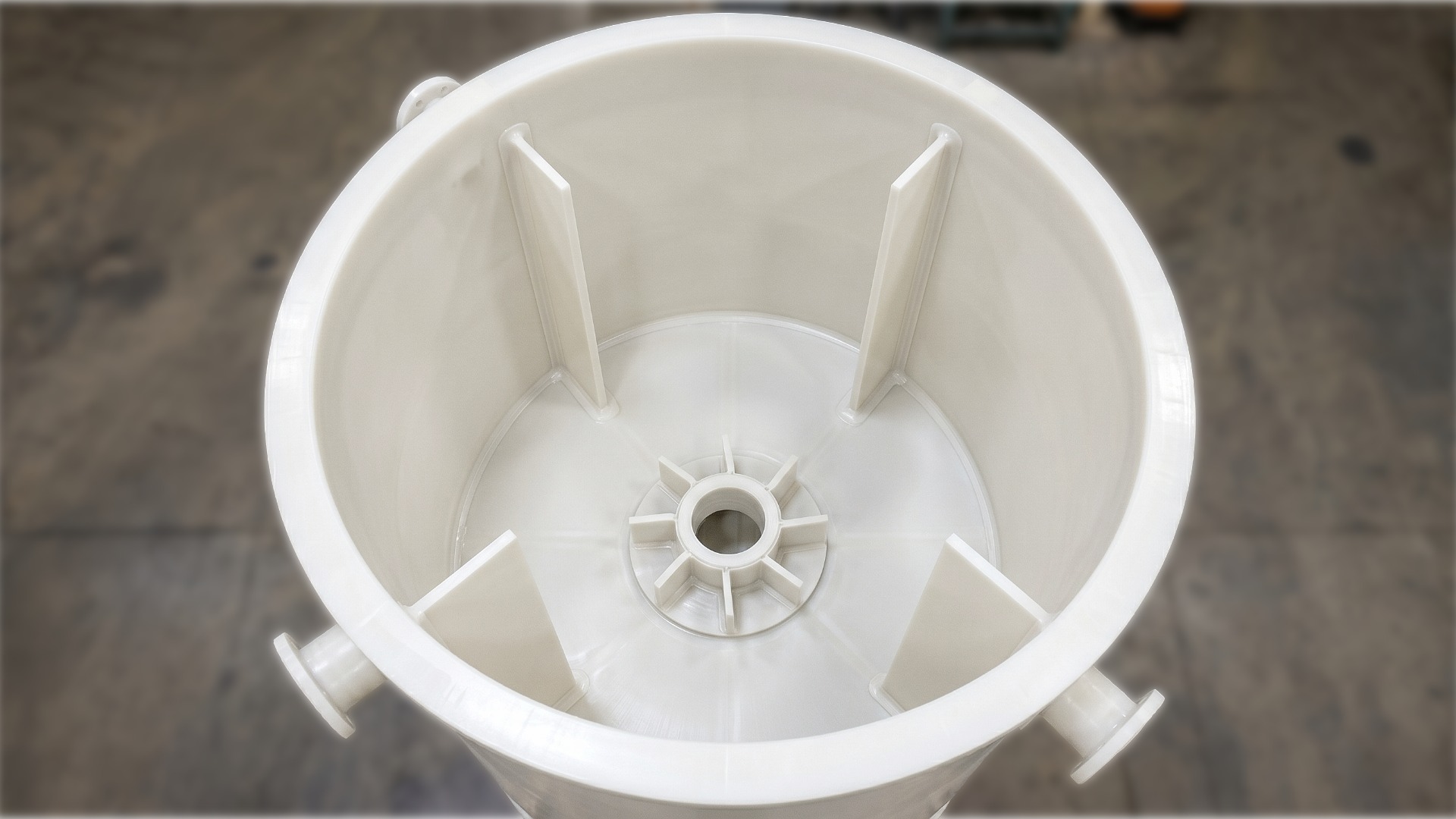
Acid neutralization and pH adjustment tanks bring an acidic or alkaline stream toward specified discharge ranges, often through reagent dosing. Common line runs include batch treatment, limestone chip beds, or single, dual, or three stage continuous flow setups. Polypropylene tanks are frequently installed when waste streams run hot or aggressive. Application tanks typically feature reagent inlet connections, mounting points for mixers or agitators, and pH and ORP probe ports.
Coagulation and flocculation tanks
Coagulation and flocculation tanks are used to perform and hold the precipitation reaction. Here, a coagulant is rapidly mixed in, then a flocculant is gently blended to gather destabilized solids into settleable floc. Two separate tanks or baffled compartments are often used. PP or HDPE made tanks are typically specified for this application based on the expected waste type and temperature.
Cone bottom settling and sludge tanks
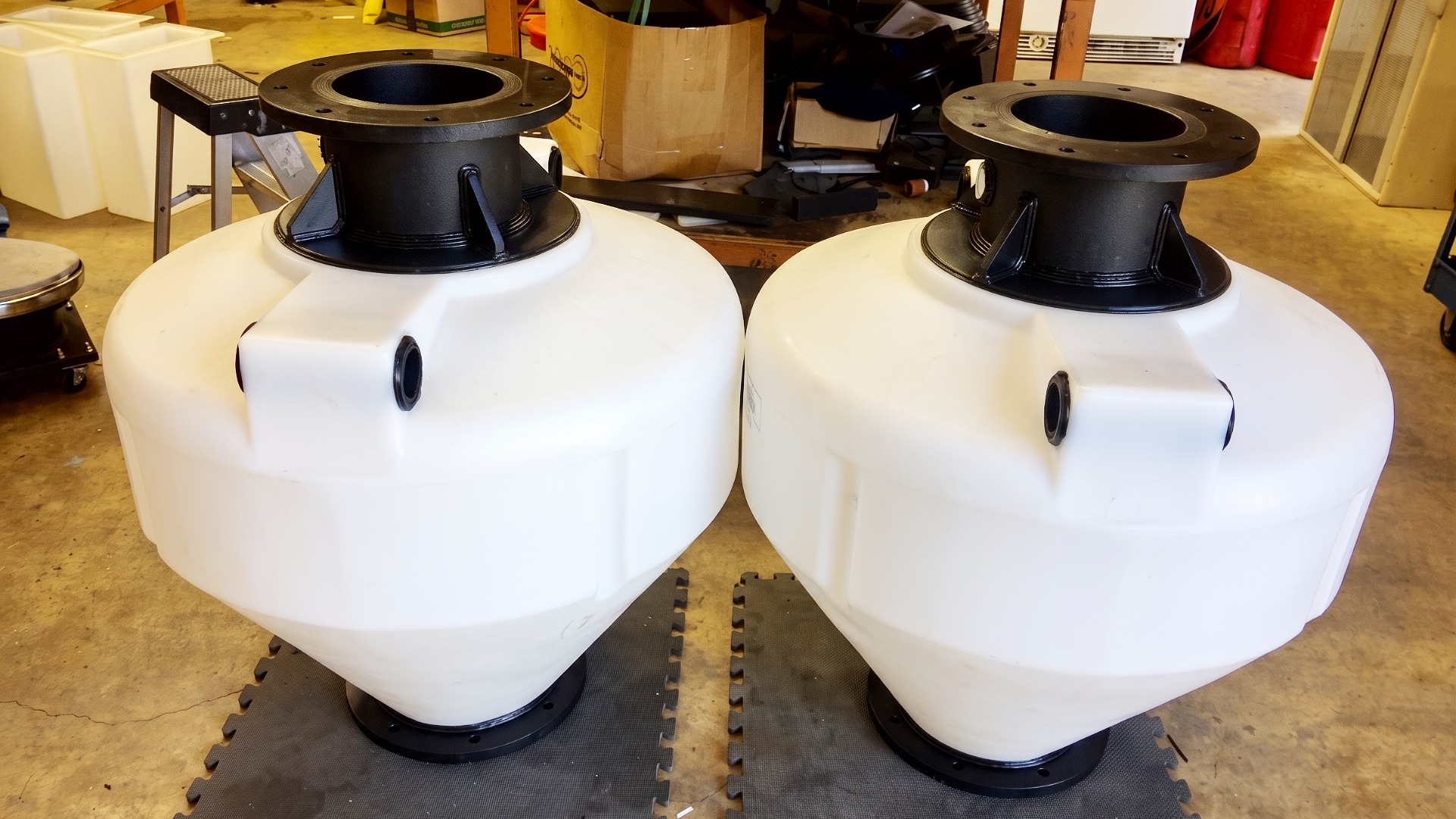
Settling and sludge tanks separate floc from the clarified stream and concentrate solids for draw-off removal. Customized stock cone bottom HDPE tanks are often used here. They come in a range of volumes and cone angles, with steeper angles common for more complete, easier evacuation compared to shallow slopes.
Effluent and discharge holding tanks
Effluent and discharge tanks hold the treated stream at the end of the line before it reaches the discharge point for verification, reporting, and further treatment if needed. This vessel holds wastewater closest to permit limits. They are typically fitted with grab sample ports, level sensors, and flow connections. Customized stock poly tanks usually suit the task. PP or FRP are sometimes used when volume or temperature exceed standard rotomolded tank capabilities.
Tanks can be requested independently or as a coordinated set for a full treatment train.
Matched to the Stream
The waste stream intended for a container and the reagents that will be dosed into it directly influence tank construction material, wall thickness, reinforcement, fitting types, and accessory components.
Built to Your Specs
Every tank Protank builds is fabricated to the job. Below outlines our available material options, specification details, and tank customization options.
Materials
Polypropylene (PP)
The custom fabrication standard for neutralization and precipitation; chemically inert to common waste stream acids, alkalis, and mild oxidizers, with welded joints that match base material, and a continuous service temperature of 180°F, intermittent to 212°F. Available in homopolymer (PP-H) for higher temperature rigidity and copolymer (PP-C) for impact, low temperature, and stress crack strength.
CPVC
For hot, non-oxidizing streams outside PP's performance and compatibility range; roughly 200°F, continuous.
PVDF (Kynar)
For the strongest oxidizers, aggressive connections, and elevated temperatures where PP and CPVC fall short.
High Density Polyethylene (HDPE)
Available in weldable sheets or as customized stock for ambient equalization, settling, and effluent tanks; wide range of volumes and cone bottom models; high impact resistance and cold weather ductility suitable for outdoor and unheated installations.
Cross-linked Polyethylene (XLPE)
Customizable stock tank options only; ideal for reagent and dosing vessels handling flocculants and neutralizer solutions.
Fiberglass & Bolted Steel
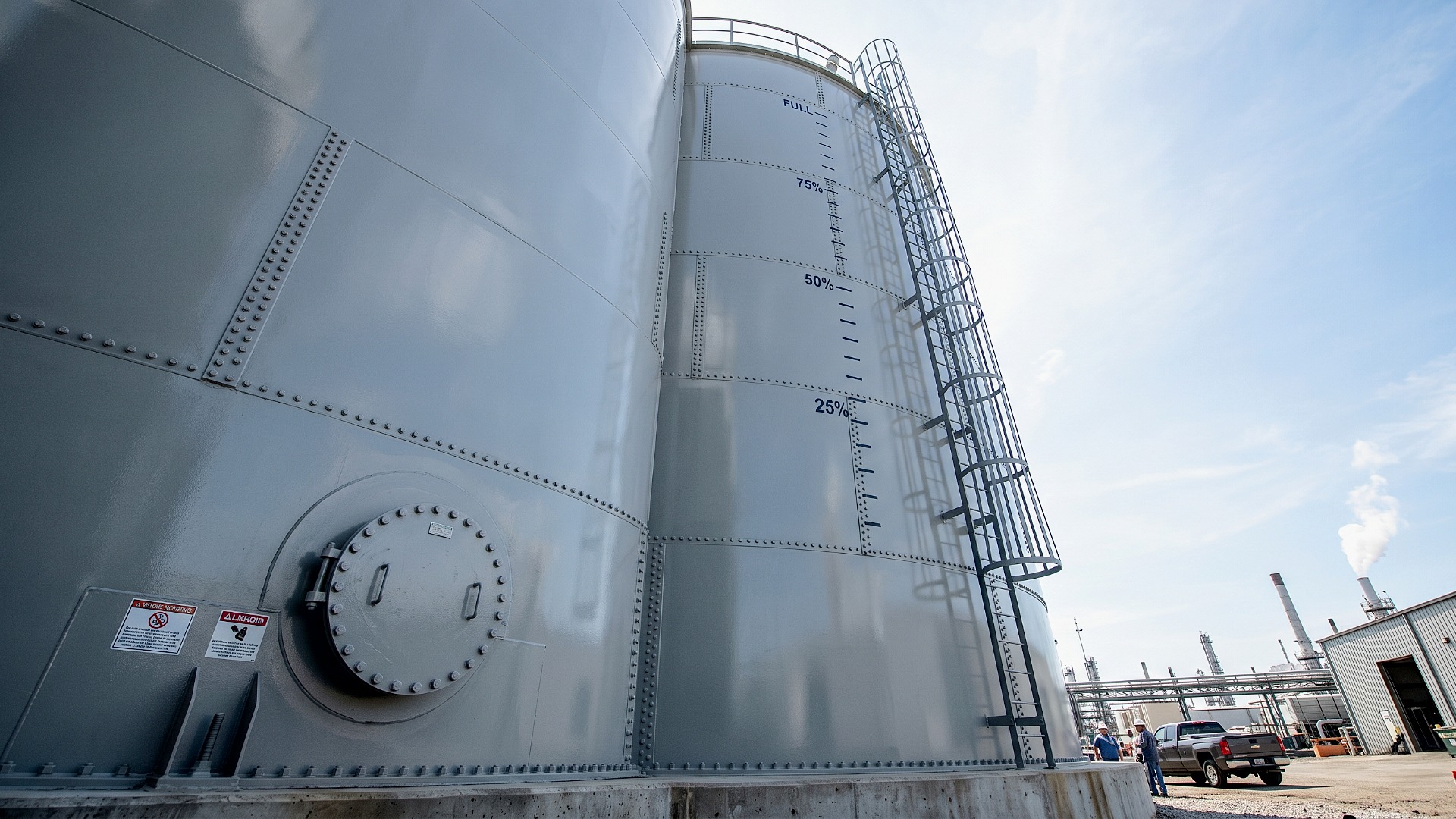
Supplied and customized for large diameter, high volume tanks needed by big projects.
Sheet and wall
Weldable sheet from 3/16" to 1", with wall thicknesses to match the stream's specific gravity, thermal load, and hydrostatic head. Weld methods include hand/bead welding or extrusion welding depending on the task, tank size, and application needs.
Structural reinforcement
On large equalization, holding, and basin type containers, external reinforcement, including girth bands, steel box sections, or polypropylene encased I-beams, can be added per specifications. Load calculations and engineering are client-side requirements.
Built-in accessories
Protank can add or build in level sensors (submersible, radar, or ultrasonic), circulation and transfer pumps, manifold systems, access ladders, polyurethane foam insulation with weatherproof mastic coating, and heat tracing. Depending on the application scope and specifics, we may also be able to provide flow meters, temperature, pH, and ORP sensors, and certain chemical feed equipment.
Bottoms, fittings, and containment
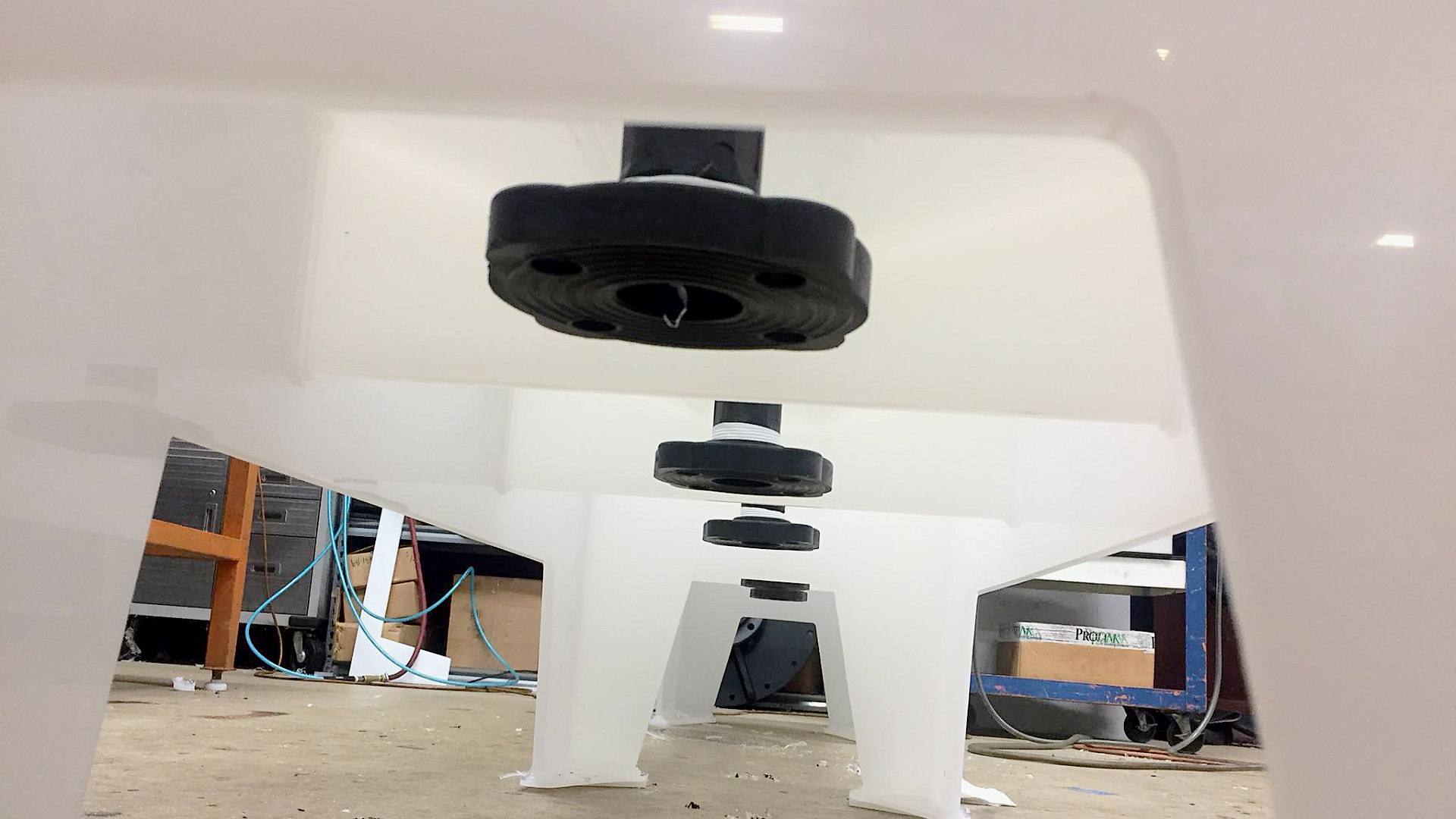
Available tank options include: sloped and cone bottom tanks with bulkhead drains for full precipitate/sludge draw-off; fittings, piping, valves, and gaskets in the material and type to match the connection and chemical; secondary containment basins, double wall builds, and double wall tanks for jobs requiring an advanced security profile (see Custom Containment Tanks).
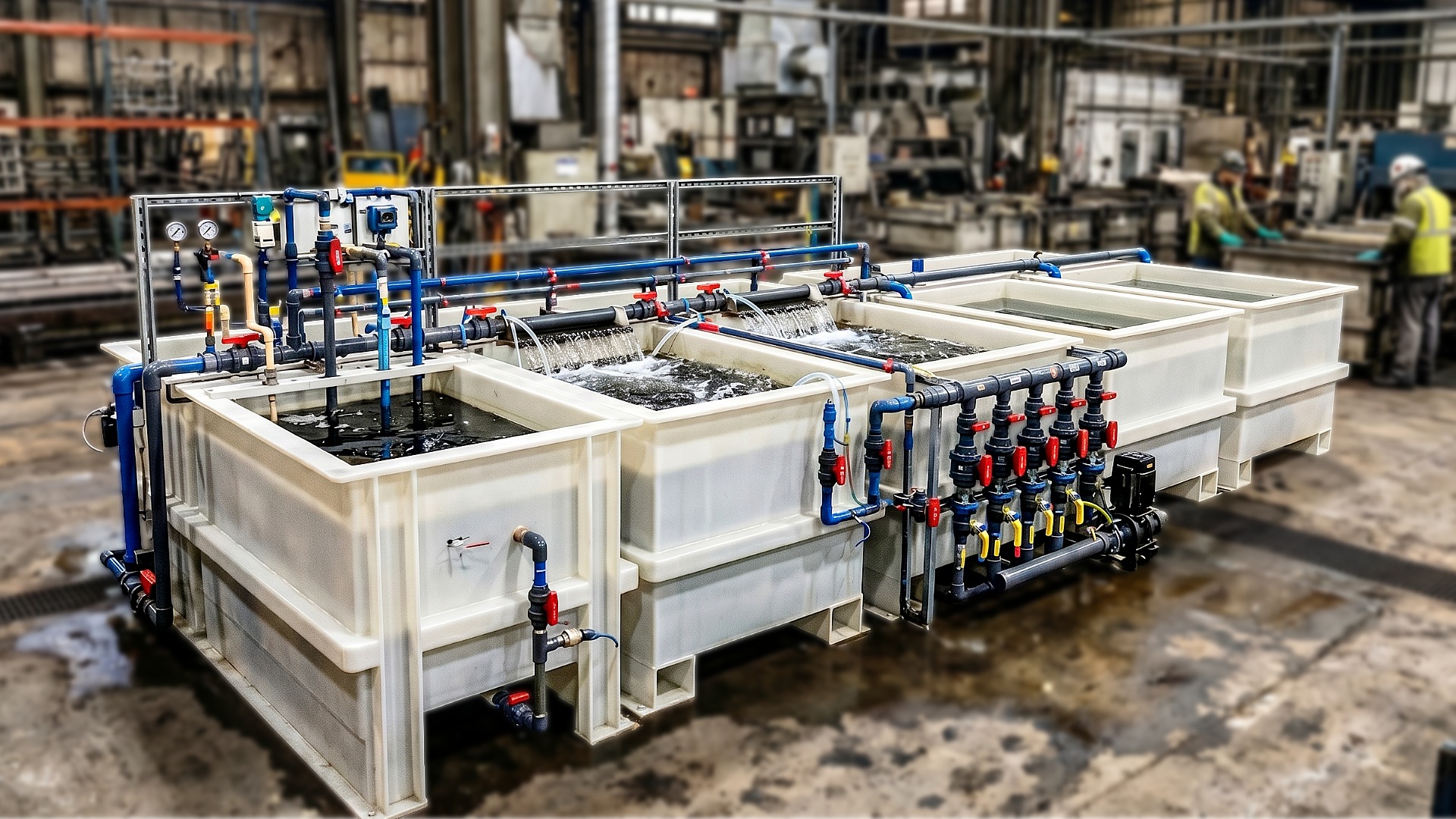
Where Treatment Trains Get Built
Protank's wastewater tanks are installed into treatment trains built by specialists, environmental engineering firms, treatment contractors, centralized waste treatment operators, and in-house pretreatment teams across a wide range of end industries. Their wastewater trains are largely the same across them; what changes is the stream, the volume, and the permit.
Surface finishing and metals
Chemical and process
Electronics and high purity
Food, beverage, and life sciences
Heavy industry and energy
Environmental services and pretreatment
Recommended tank and component materials follow stream characteristics and scale: polypropylene for warm, aggressive stages, customized stock HDPE for ambient holding and settling, and FRP or bolted steel when volume runs high. Bolted steel tanks range up to 700,000 gallons, so very large and basin scale jobs are a material compatibility question, not a capability limit. See Fiberglass Tanks and Bolted Steel Tanks for more info.
The Standards these Tanks Support
Industrial wastewater discharge is governed by federal, state, and, sometimes, county local rules. Compliance obligation is the responsibility of the discharger, not the tank fabricator. Protank provides vessels and connections to help support those obligations through the right material for the stream, matching retention volume to the client's permit requirements, as well as sample and monitoring ports for verification and reporting activities. The standards below are common ones we get tank requests to support.
Why We Build It Better
In-house fabrication
Every custom tank is built at Protank's Gulf Coast facilities by our experienced fabrication team; the result: direct quality control, consistent workmanship, and faster lead times than splitting a job across suppliers.
One source: complete job scope
A treatment train runs on several different tanks in several different materials. Protank fabricates the custom PP tanks, customizes stock HDPE tanks, and supplies FRP or bolted steel tanks for large capacity jobs, so projects can source every tank from one shop, built to one consistent spec, instead of coordinating a separate vendor for each.
Built to your spec
Treatment streams are rarely identical. Every tank is fabricated to the client's drawings and process parameters, volume, retention time, peak flow, and chemicals, with connections or components placed for dosing, mixing, and instrumentation.
Material breadth
Polypropylene, HDPE, XLPE, PVC, CPVC, PVDF, FRP, and bolted steel for tanks; PVDF, PVC, CPVC, EPDM, Viton, and stainless steel for fittings, gaskets, and valves; all to match the stream and application specifics.
Nationwide delivery
Protank ships completed tanks across the continental US from its Gulf Coast facilities, with support from spec through delivery.
20+ years of expertise
Two decades of custom tank fabrication for industrial buyers, including surface finishing, chemical, and environmental industries whose wastewater these vessels treat.
Request Your Custom Wastewater Treatment Tanks
The fastest quote comes from a drawing, STEP file, or tank spec. Protank builds to what you provide. If you're still defining the tank, these are the details that let us help match the material and build it:
- Scope: a single tank or a coordinated set across the treatment train, and which stage(s) it covers
- Capacity and footprint: the volume the tank holds and the space it has to fit
- Stream and temperature: the chemicals, concentrations, and operating temperature it will hold, so material and wall thickness can be matched, or name the material if it's already specified
- Connections: fittings, valves, drains, mixer and dosing mounts, tank level sensors, probe and sample ports, and bottom style, sloped or cone, with types and locations
- Installation environment: indoor or outdoor, secondary containment, and footprint constraints
Drawings, sketches, and engineered specifications are encouraged and, in some cases, required.