
Passivation removes free iron from stainless steel and rebuilds the chromium-rich oxide layer that protects it from corrosion. A citric or nitric acid bath does the work, and the finished parts have to pass copper sulfate or salt spray verification to ASTM A967 or a customer specification.
The tank holding that bath has to be built for the chemical, the concentration, and operating temperature as well as the part sizes and working cycle of the business. The wrong material, wall support, or fittings can put overall integrity and part quality at risk.
How this gets resolved: custom, made-to-order passivation tanks built to the application. Built in-house. Delivered nationwide.
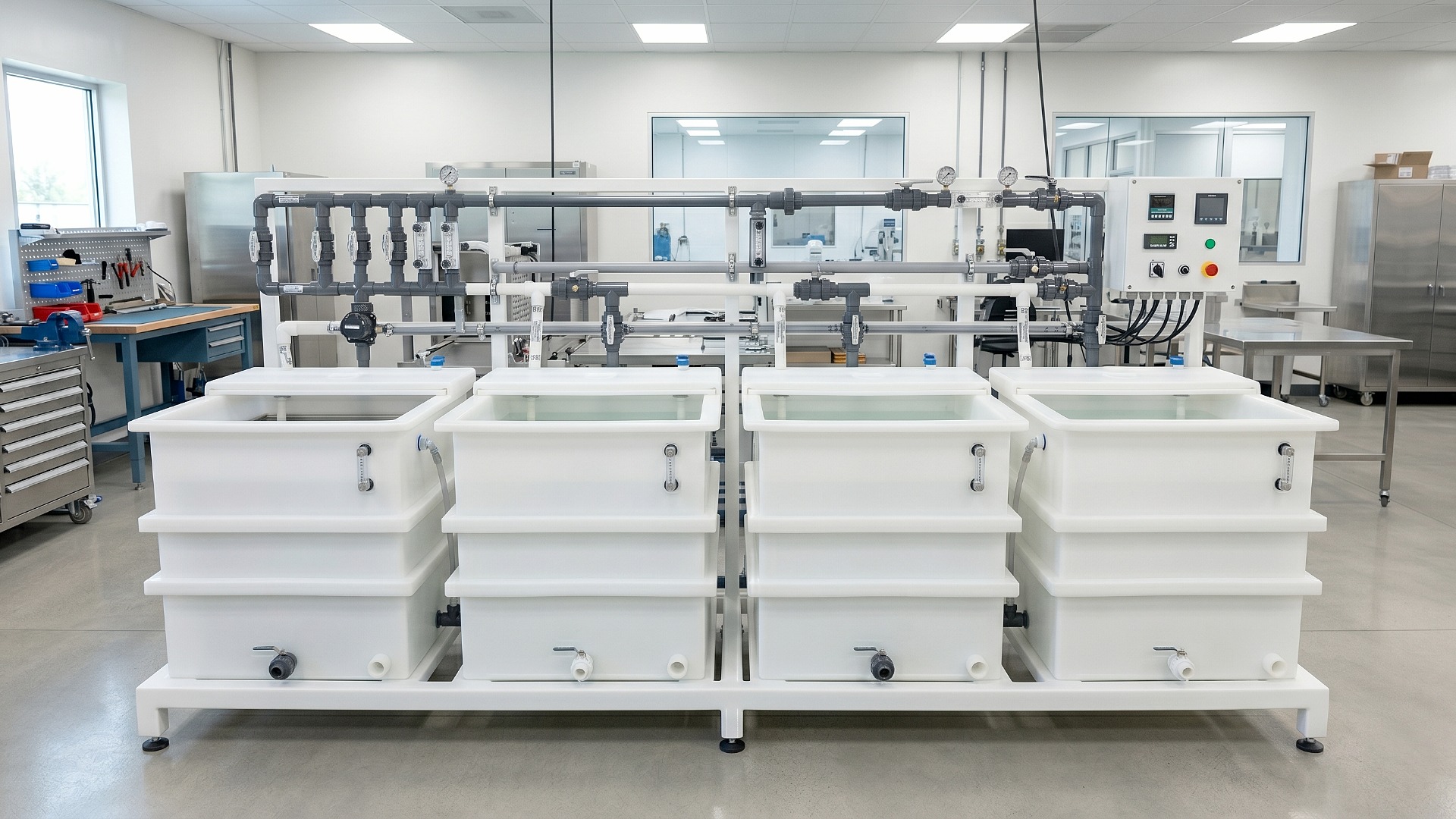
Custom Passivation Tanks, Built to Spec
Protank builds custom polypropylene, PVC, and PVDF passivation tanks made to your chemical, thermal, and footprint specifications to eliminate material degradation and bath contamination in high compliance finishing lines. Commonly requested by medical device manufacturers, pharmaceutical producers, food processors, aerospace shops, and semiconductor businesses across the Gulf South and nationwide. Backed by 20+ years of custom tank fabrication experience.
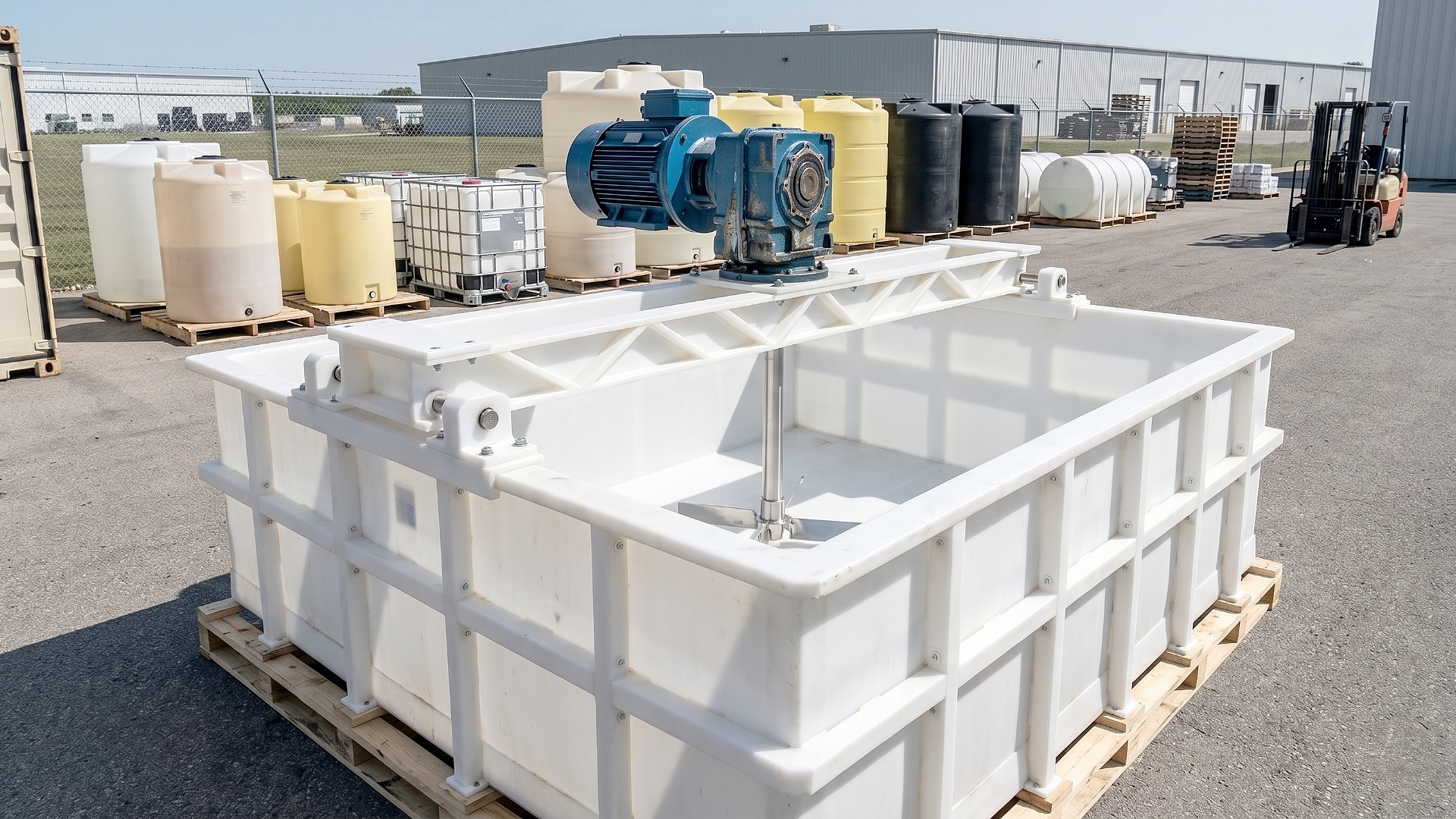
Tanks are made-to-order to match your acids used, operating temperature, part dimensions, and line setup. Capacity, wall thickness, reinforcement, drain configuration, temperature control, fitting type, and placements are all set according to the needs of your application. Citric acid and nitric baths are both supported. Single passivation tanks, multi-tank lines with pre-clean and rinse, and large capacity immersion tanks are all options.
Passivation goals, part outcomes:
Free Iron Removal
Passive Layer Restoration
Corrosion Resistance
Contamination Control
Job Chemicals Drive the Build
The chemical solution running in a passivation tank drives material, wall, and fitting selection.
Chemicals Supported
Polypropylene, application-confirmed
PVDF / lined construction
Why Polypropylene
- Chemically resistant to citric acid across passivation temperature ranges; handles plain dilute nitric within confirmed concentration limits
- Thermally rated to 180°F, which is above all citric operating temperatures (maximum ~160°F)
- Weld joints match base material; no corrosion interfaces at seams
- Does not corrode, rust, or leach metallic ions; no tank driven bath contamination
- FDA grade, NSF 61 capable grades available for food and medical applications
Fittings
For nitric service or drain and valve connections on heated acid baths, PVDF Kynar fittings are recommended at drain connections, nozzles, and valves over polypropylene components.
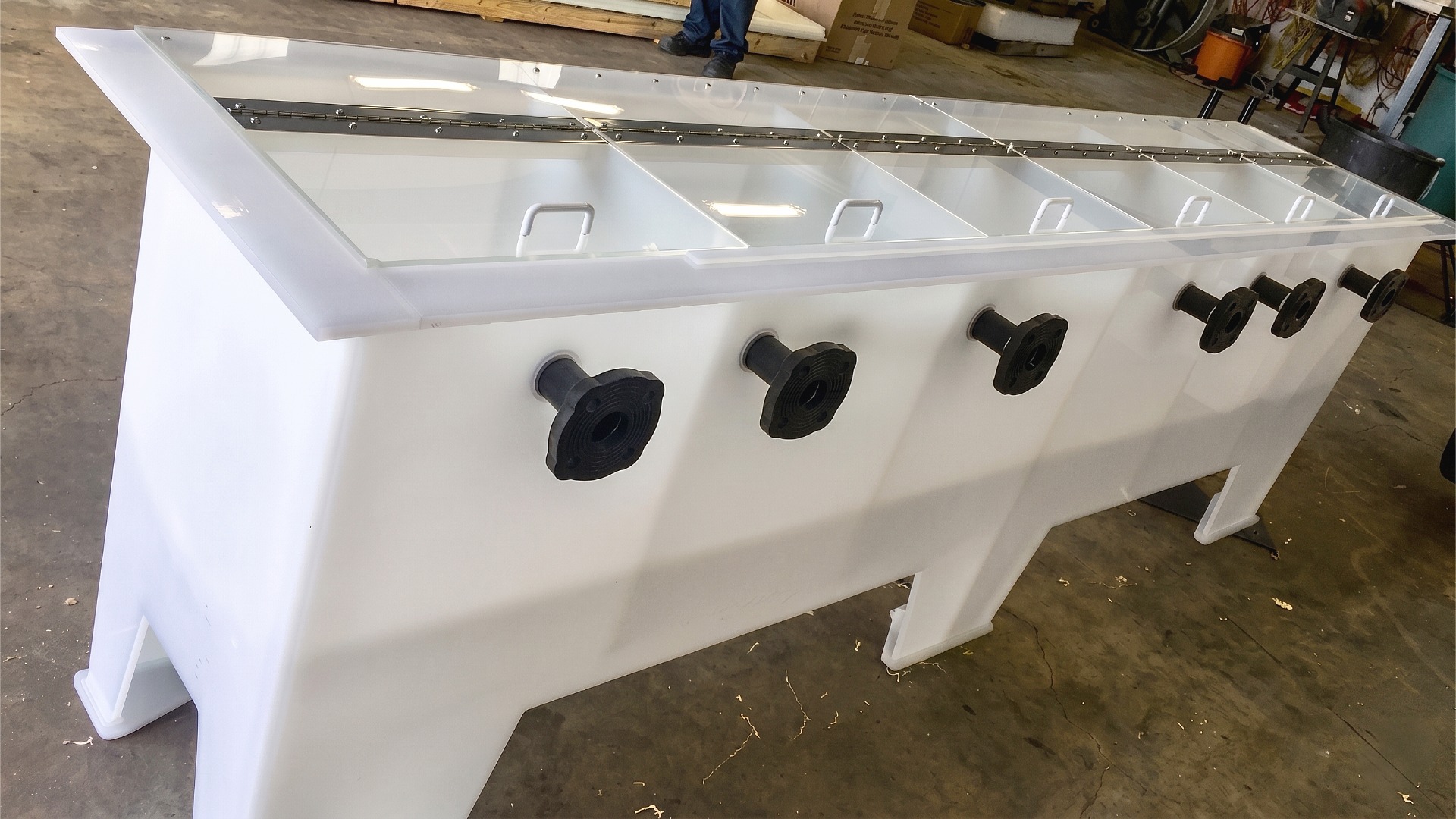
Tell us your chemical, concentration, operating temperature, and tank specs; we'll handle the rest.
Built to Your Specs
Have a custom passivation tank built to your exact working requirements with Protank’s fabrication options. This list isn't exhaustive. If you need an option or service not listed below, contact us. We can likely accommodate your request or help find an alternative.
Material Options
Polypropylene: Standard tank material for citric acid and dilute nitric passivation. Chemically resistant at passivation concentrations and temperatures. Thermally rated to 180°F continuous; above citric's ~160°F ceiling. Available in homopolymer (PP-H) for heated-bath rigidity and copolymer (PP-C) for impact toughness and stress-crack resistance. Weldable from 3/16" to 1" sheet.
PVC: For ambient and warm citric acid applications up to 140°F. Lower cost option for baths that don’t require PP’s temperature advantage.
PVDF: For nitric acid or dichromate-accelerated passivation baths at concentrations, mixtures, and temperatures beyond PP or PVC compatibility.
Fitting Materials: Fittings, gaskets, valves, and connection components are available in PVDF Kynar, PVC, CPVC, EPDM, FKM/Viton, PTFE, and more depending on the service.
PVC
PVDF
PVC
CPVC
Viton
EPDM
PTFE
Buna-N
Neoprene
Silicone
Stainless Steel
Extrusion Welding
Tank Sizes and Configurations
Immersion tanks: Open top, welded rectangular tanks for dip-and-hold passivation where parts and baskets lower directly into the bath. Built from PP or PVC sheet.
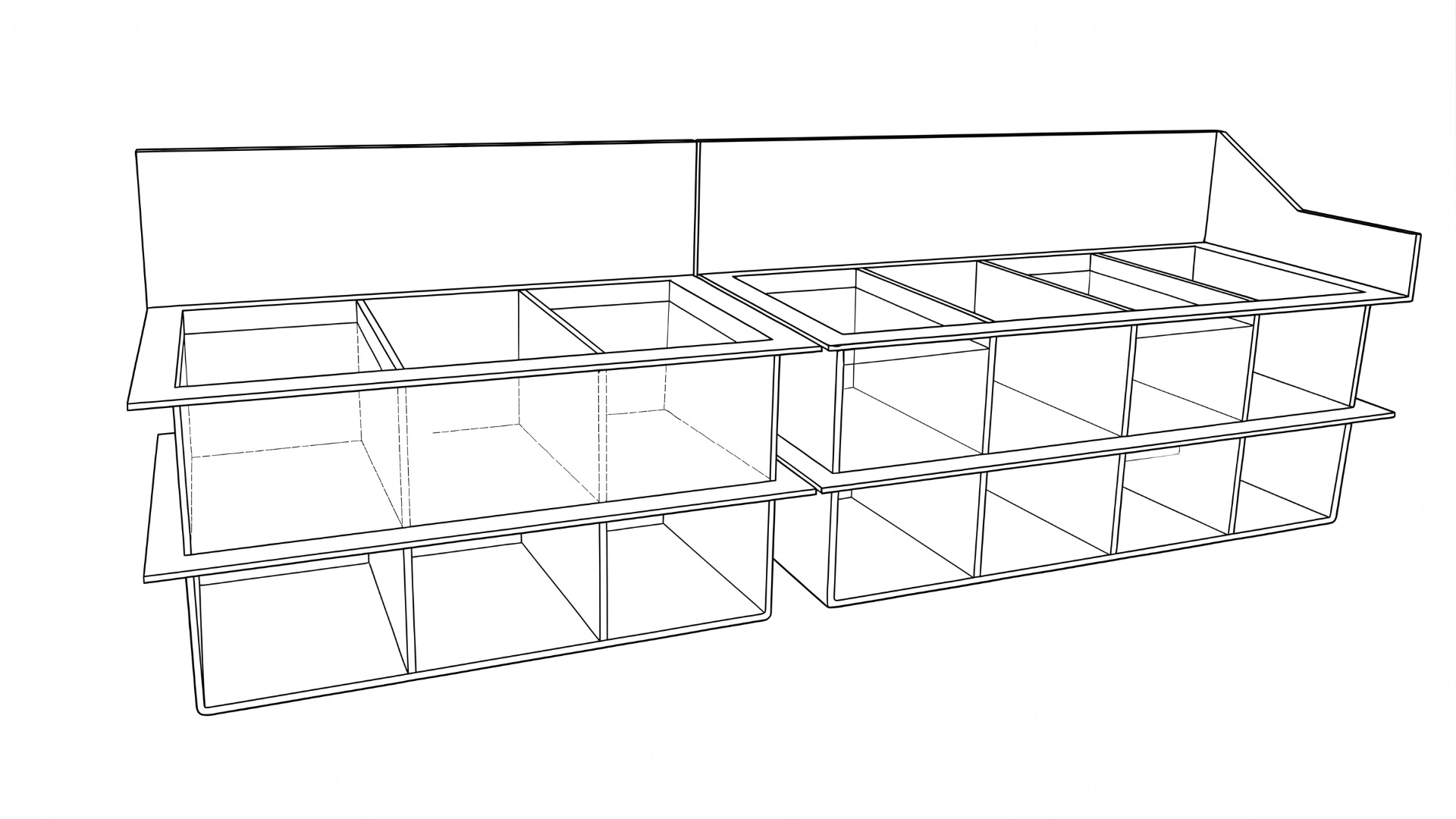
Multi-tank lines: Pre-clean, passivation, and rinse stations are often used together and can be fabricated as a matched set to accommodate worksite footprint and workflow.
Made to order: Internal dimensions are set from the largest part, basket sizes, your engineering sketch, or STEP file, with freeboard added for displacement and handling. Capacity follows your part handling needs, not a catalog volume.
Process scale: From bench-top tanks to large scale immersion tanks.
Simple ambient builds: For operations running a straightforward ambient citric bath with no heat or complex component setups, simple, nearly standard rectangular builds are available.
Temperature Control
Heat tracing: External heat trace tape with a programmable temperature controller. Distributes heat at the tank exterior to warm internal solutions via conduction heating; holds set temperature without regular attention. Common active heating option on heated citric and warm nitric builds.
Immersion heater cutouts: Available for operations that prefer internal heating. Buyer supplies heater; Protank provides the port, cutout, and positioning, ready to accept the equipment on delivery.
Connections and Equipment
Tank fittings: Inlet and outlet fittings, drain connections, overflow weirs, and fill lines in the size, type, and location the job requires.
Thermowell and sensor ports: Temperature probe and liquid level sensor ports sized and positioned to spec. Buyer supplies instruments; Protank provides installation points.
Circulation and filtration: Inlet and outlet ports for pump and filtration connections. Protank can configure circulatory systems with pipes, valves, and a pump to match onsite connections and job fluid flow dynamics.
Fume management: For nitric acid, lip exhaust slots or hooding flanges for ventilation system connections can be added according to your specs. Citric baths do not generate hazardous fumes.
Covers and lids: Full or partial PP covers and lids fabricated to fit, style, and access needs.
Bottom and Drainage
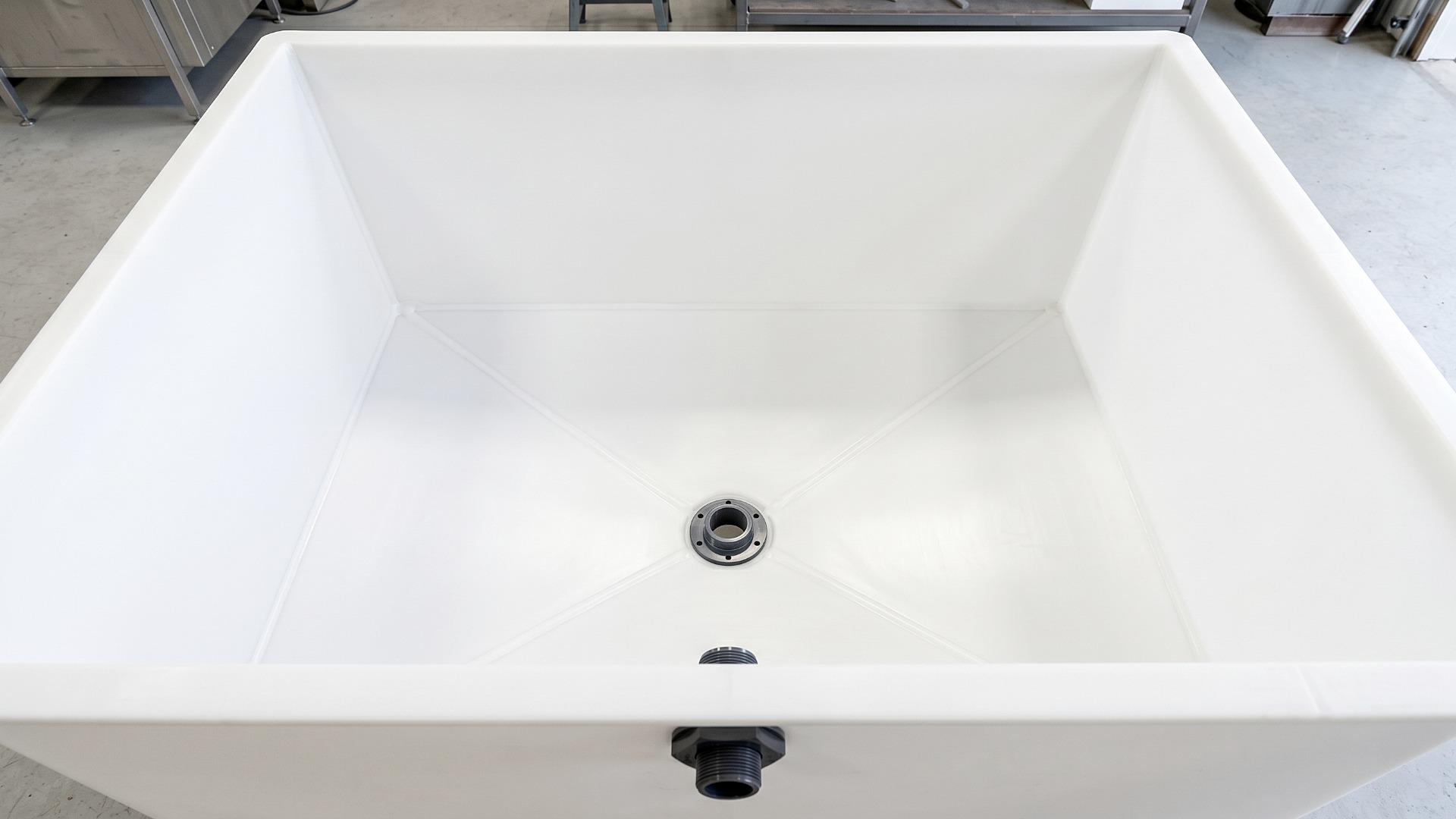
Sloped tank bottoms with a bulkhead drain for complete solution removal at changeouts and replacement. Drain valve connections are sized and positioned as needed. Complete drainage helps prevent contamination between work cycles and specific parts by ensuring there is no residual, leftover chemicals.
Safety Features
Secondary containment: Double wall tanks, custom builds, and containment basin options available. Footprint and drain placement set to your specs for custom order tanks.
With Protank's fabrication options, you can spec a passivation tank matched to your application, from fittings and drainage to temperature control and secondary containment. Connect with us, tell us your specs, and we'll handle the rest.
Where Passivation Gets Specified
The manufacturers and shops that run passivation in-house typically belong to a few industries, where each works to a different standard and each with its own part outcome goals. Protank fabricates passivation tanks for onsite operations across surface-driven industries. Each tank is built to the specifications needed to match workflow and performance requirements.
Medical Device Manufacturers
Pharmaceutical & Biotech
Food & Beverage
Aerospace
Semiconductor
Why We Build It Better
In-House Fabrication
Every passivation tank is built at Protank’s Gulf Coast facilities by our professional fabrication team. Direct quality control, consistent workmanship, and faster lead times on every build.
Material Matched to Your Bath
We match the resin, PP-H, PP-C, PVC, or PVDF for the aggressive nitric methods, to your chemical, concentration, and operating temperature before we quote; we tell you directly if your job requires more than we can provide.
Complete Line Capability
Protank builds passivation tanks alongside pre-clean, rinse, and electropolishing tanks to provide a coordinated multi-tank setup from a single source.
Temperature Control Built In
Heat trace tape with a programmable controller, push foam insulation, is a common, active capability for holding bath temperatures steady for repeatable results without shift-by-shift monitoring.
Nationwide Delivery
We ship complete custom tanks across the continental US from our Gulf Coast facilities, with support from spec through delivery.
20+ Years of Expertise
Two decades of custom tank fabrication for buyers across medical, pharmaceutical, food processing, aerospace, and semiconductor surface finishing work.
Request Your Custom Passivation Tank Today
The more detail you bring to the first call or submit to us, the faster we can return an accurate quote. Useful details include:
- Chemicals: citric acid, nitric acid; concentration (citric wt%, nitric vol%)
- Operating temperature: ambient or heated; target temperature range
- Material preferences: PP, PVC/CPVC, PVDF, etc.
- Part dimensions: largest part or basket size being processed
- Required components: heating method, circulation, fume provisions, secondary containment, etc.
- Installation environment: indoor, outdoor, floor constraints, secondary containment needs
Drawings, sketches, and engineering specifications are encouraged and, in some cases, required.
One to three business day response time: Contact Protank's fabrication team for a free quote.