Your browser is not supported. For the best experience, you should upgrade to a modern browser with improved speed and security.

Custom Chemical Stripping Tanks

Coated parts often have to be brought back to bare metal before they can be recoated, reworked, or returned to service. Cured paint, powder, e-coat, anodize, or a plated deposit has to come off completely and cannot harm the underlying metal. Removal is typically done through immersion, where parts soak in a strip solution until the coating softens, dissolves, or lifts. The industrial dip tank holding that solution is the center of these operations.

Strip solutions are aggressive and not interchangeable.

  • Hot caustic lifts coating from steel.
  • Solvent solutions dissolve coating from aluminum and alloy parts sensitive to caustic attack.
  • Acid solutions remove conversion coatings and plated deposits.

A tank built from the wrong material does not last. It softens, swells, or stress-cracks in service, and such failure becomes downtime, leaks, and a tank to replace.

The fix is a dip tank matched to the solution it holds, the temperature it runs, and the parts it will handle. Protank builds custom stripping tanks to your work specifications, in polypropylene through PVDF, built in-house, made in the USA, and delivered nationwide.

Send us your specs for a free quote from Protank’s fabrication team, or see what we build below.
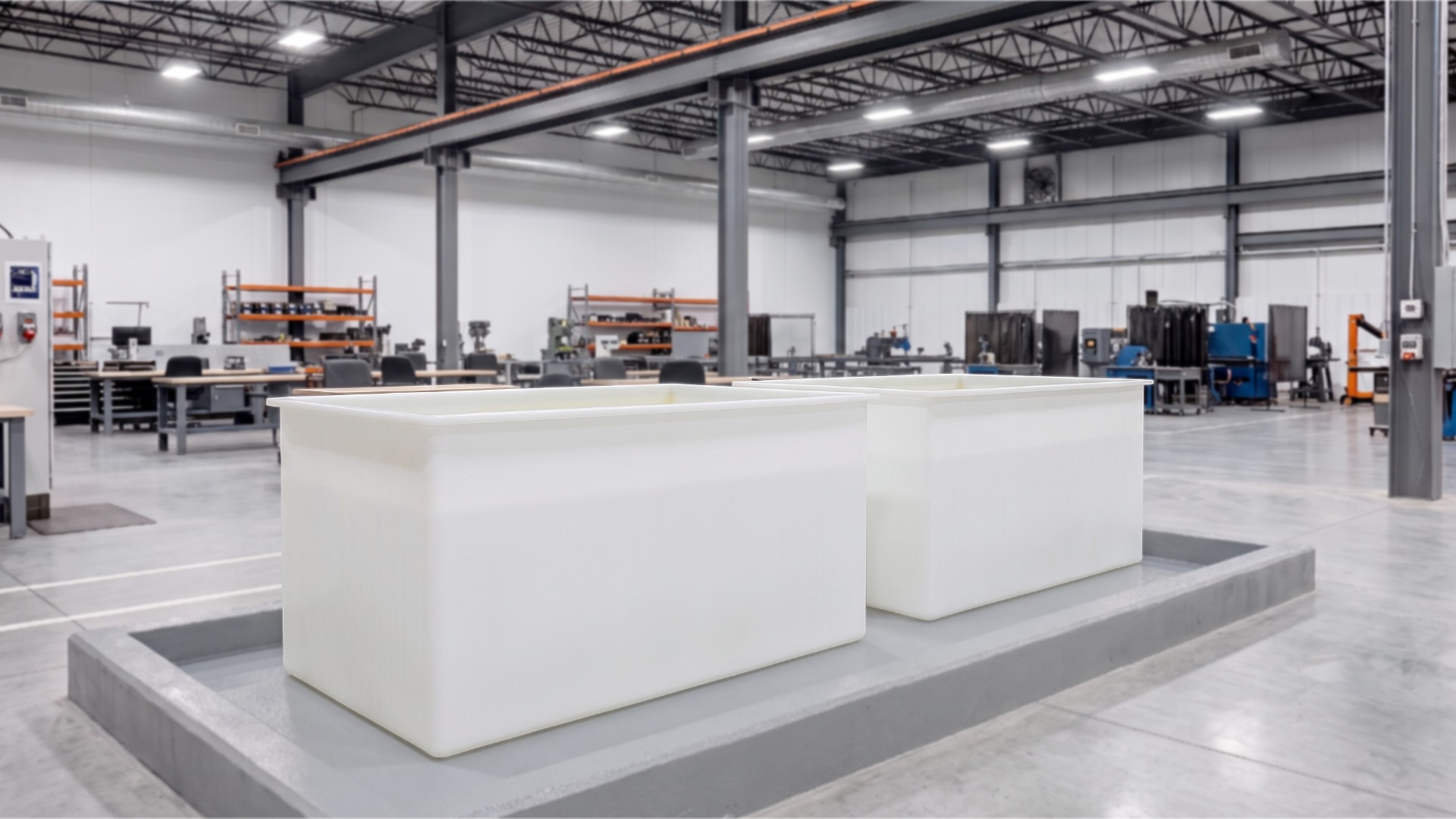
An image showing two custom made polypropylene tanks, one for chemical immersion stripping, one for follow up rinsing.
1–3 Day Response Nationwide Delivery Precision Welded PP–PVDF Materials for Your Solution Strip & Rinse Line Configs

Custom Chemical Stripping Tanks Built to Spec

Protank builds custom immersion strip tanks made to your specifications and the solution they will run. Commonly requested by platers and powder coaters, refinishers, MRO and remanufacturing operations, custom coaters, and aerospace depaint shops across the Gulf South and nationwide. Backed by 20+ years of custom tank fabrication experience.

Tanks are made-to-order to match the strip solution, its concentration and operating temperature, the parts and racks being stripped, and the equipment you are installing. Wall thickness and reinforcement are available when needed to match your solution’s specific gravity and thermal load parameters. Single strip tanks, strip-and-rinse pairs, and multi-tank lines are all options. Every tank is hydrostatically leak tested before it ships and arrives ready to integrate.

Typical Build Spec
Primary materialPolypropylene (PP-H)
Tank materialsPP-H/PP-C · PVC · CPVC · HDPE · PVDF
PP service temp180°F cont. / 212°F int.
Sheet thickness3/16″ – 1″
Service typesCaustic · Solvent · Acid
Standards supportedOSHA 1910.94(d) · RCRA
WeldingBead · Extrusion
ScaleTo several thousand gallons

Where Immersion Strip Tanks Fit in Your Line

Stripping is one step in a finishing line. A part is stripped, then rinsed, commonly in hot water, before it is recoated or put back to service. Most chemical stripping runs in a single tank or a strip-to-rinse setup.

01
Strip
Parts soak in the matched strip solution until the coating softens, dissolves, or lifts.
02
Rinse
A rinse, commonly hot water, carries off residual bath chemical and drag-out.
03
Recoat or Return
The bare part moves on to recoat, re-plate, or return to service.
Protank’s specialty is the container and the components built into it: the tank, its size, shape, slope and drainage, sumps, ports, bulkheads, gaskets, and valves, heating and agitation accessories, monitoring add-ons, fume and scrubber connections, and secondary containment. Metering and circulation pumps, heaters, filters, and instrumentation are client supplied if specialized equipment is needed beyond what we offer. You bring the details, and Protank provides the tank. We do not do design work or engineering calculations; we build to provided specifications. See also: Custom Overflow & Rinse Tanks.

Three Substrates, Three Services

The part material and coating set the solution, and the solution sets the service. Three service types cover nearly all strip work, and each type can require different tank build materials.

Caustic & alkaline strip
Ferrous · Caustic
SubstrateSteel, iron
RemovesPaint, powder, e-coat, CED
BathCaustic soda (NaOH)
Tanks: PP-H for heated service; HDPE or PP-C for ambient and unheated solutions. Caustic attacks aluminum, so these are ferrous-only services.
Caustic stripping tanks · powder coat removal tanks · rack stripping tanks · e-coat stripping tanks
Solvent strip
Aluminum · Aerospace
SubstrateAluminum, alloy
RemovesPaint, coatings
BathBenzyl-alcohol class
Tanks: PVDF, primary, or polypropylene where the specific solution confirms compatibility. Ideal for facilities transitioning away from regulated methylene chloride solutions.
Aircraft paint stripping tanks · aerospace depaint tanks · solvent stripping tanks
Acid de-coat & de-plate
Plated · Acid
SubstratePlated / coated
RemovesAnodize, Ni/Cr/Zn, conversion
BathNitric, sulfuric, phosphoric
Tanks: CPVC, PVC, or PVDF based on acid and temperature. Oxidizing acids move to PVDF. De-plate is not always acidic; alkaline or proprietary de-plate follows its own material.
Anodize stripping tanks · de-plating tanks · acid stripping tanks
Caustic · polypropylene Solvent · PVDF primary Acid · CPVC / PVC / PVDF
Compatibility & scope

For proprietary or altered solutions, compatibility must be confirmed through you and your chemical supplier. Protank builds to the confirmed material. Chemical stripping removes an applied coating, not the descaling of bare metal. For removal of mill scale, rust, and oxide ahead of finishing, see our Custom Pickling Tanks.

Have a solution to strip?Connect with us to discuss your application and get a free quote from Protank’s fabrication team.
Request a Quote

Built to Your Specs

Every custom strip tank is fabricated for the job. Below are tank material options, build details, and component options.

Materials

Tank body

PP-HPP-CPVCCPVCHDPEPVDFSteel (sourced)
PP-H (polypropylene homopolymer): Polypropylene dip tanks are standard for caustic and alkaline stripping. Resists caustic and alkaline solutions across a service range for heated stripping up to 180°F continuous. A continuous, near-boiling caustic bath is not a PP-H tank.
PP-C (polypropylene copolymer): For ambient and unheated caustic and alkaline stripping. Higher impact resistance than PP-H for cold solutions and harder mechanical handling.
HDPE: For ambient and mild heated strip solutions only. HDPE tank service tops out near 120°F. Heated and material-compatible strip solutions move to PP-H rather than HDPE.
CPVC: For acid de-coat and de-plate, including hot non-oxidizing and compatible oxidizing acid service, to 200°F continuous. CPVC is not used for caustic stripping. Its caustic ceiling matches PP-H at 180°F due to stress cracking. CPVC is unsuited to solvent solutions.
PVC: For ambient and mild heated acid de-coat only. PVC is temperature limited to 140°F and unsuited to hot acid service, where CPVC or PVDF should be used.
PVDF (Kynar): PVDF dip tanks for solvent stripping, aggressive, and high-temperature acid service, including benzyl-alcohols and strong oxidizing acids. PVDF is unsuited to hot caustic, which can attack it over time. Strong polar or ester solvents can swell or stress-crack PVDF, so always confirm solution-specific compatibility.
Steel (sourced, not fabricated): Near-boiling caustic above polypropylene’s continuous range. No available thermoplastic holds continuous caustic above 180°F due to either compatibility or temperature constraints. For these environments, Protank can source carbon or stainless steel vessels built to your provided engineering designs.

Fittings, seals & welding

Fittings & seals

PVDFPVCCPVCEPDMVitonPTFEFFKMTitanium

Sheet thickness

3/16″ – 1″

Welding

Bead (hot-gas)Extrusion
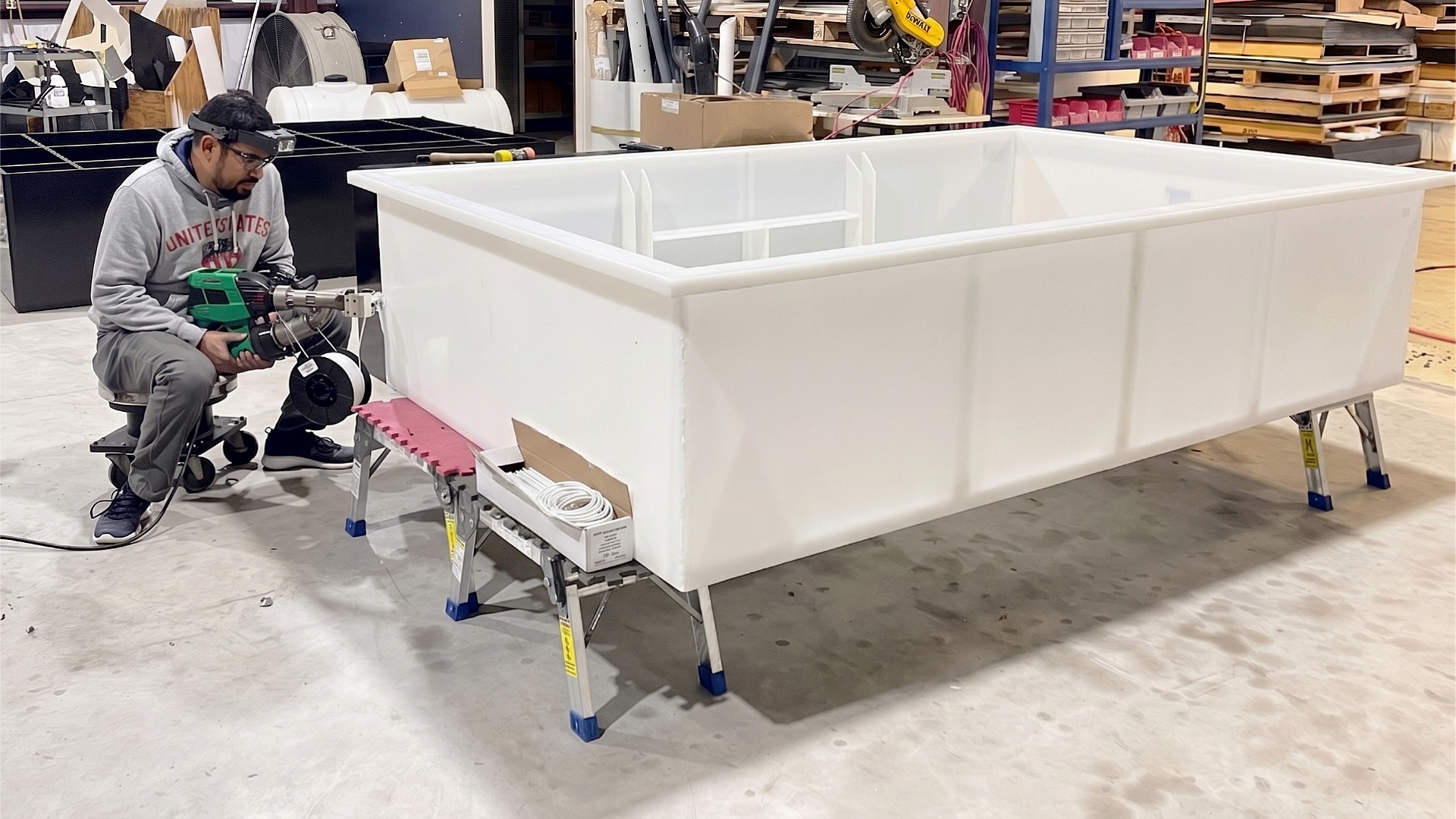
Weldable sheet from 3/16″ to 1″ thickness to match your solution’s specific gravity and thermal load requirements. Joined by hand and bead welding or extrusion welding depending on material, section thickness, and tank size. Radiused interior corners for drainage and cleanability as needed.
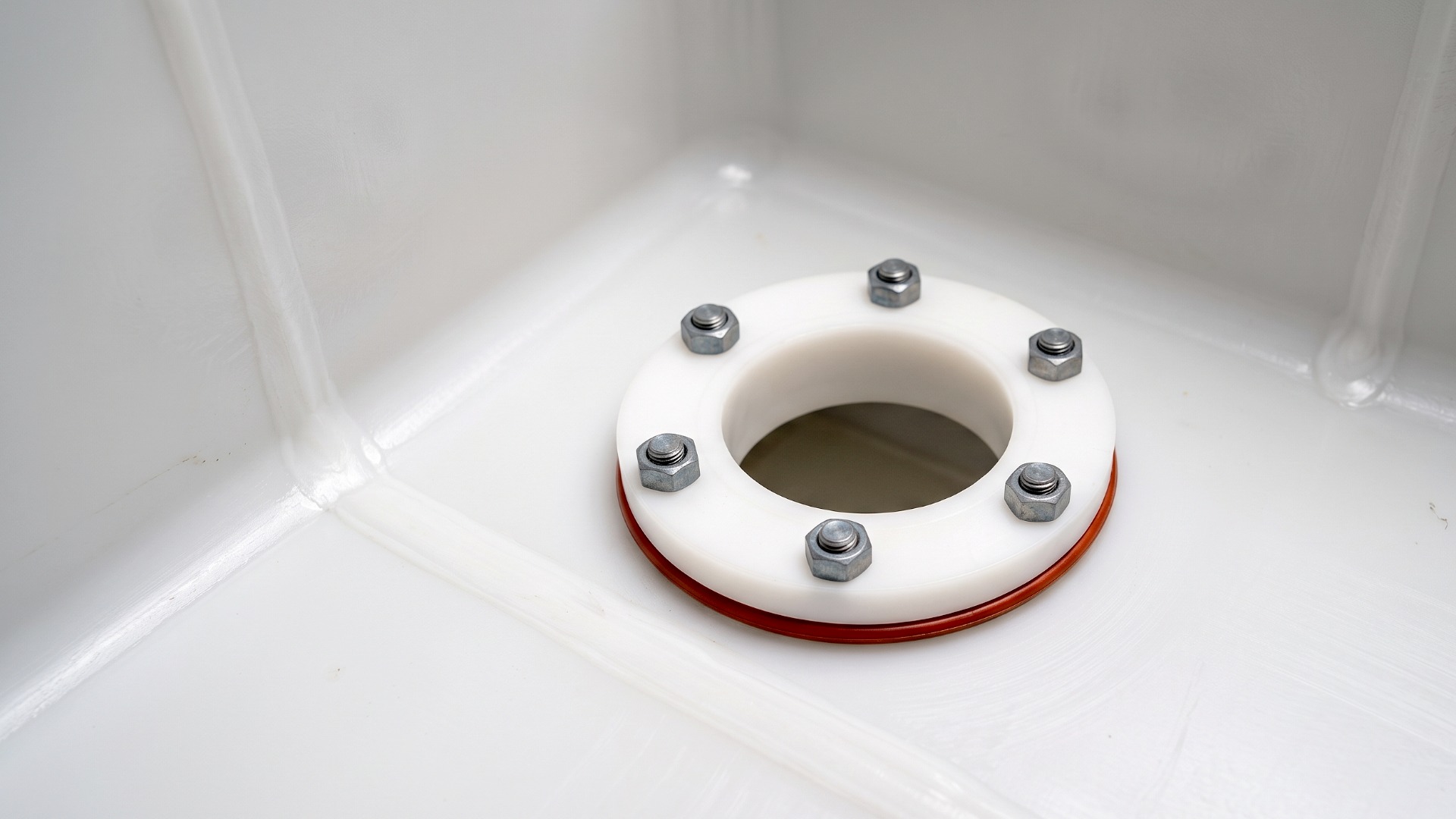
Seals for ports, valves, and lids in a full range of modern material options to match the solution: EPDM, Viton (FKM), PTFE, and FFKM for specialty resistance and thermal loads.
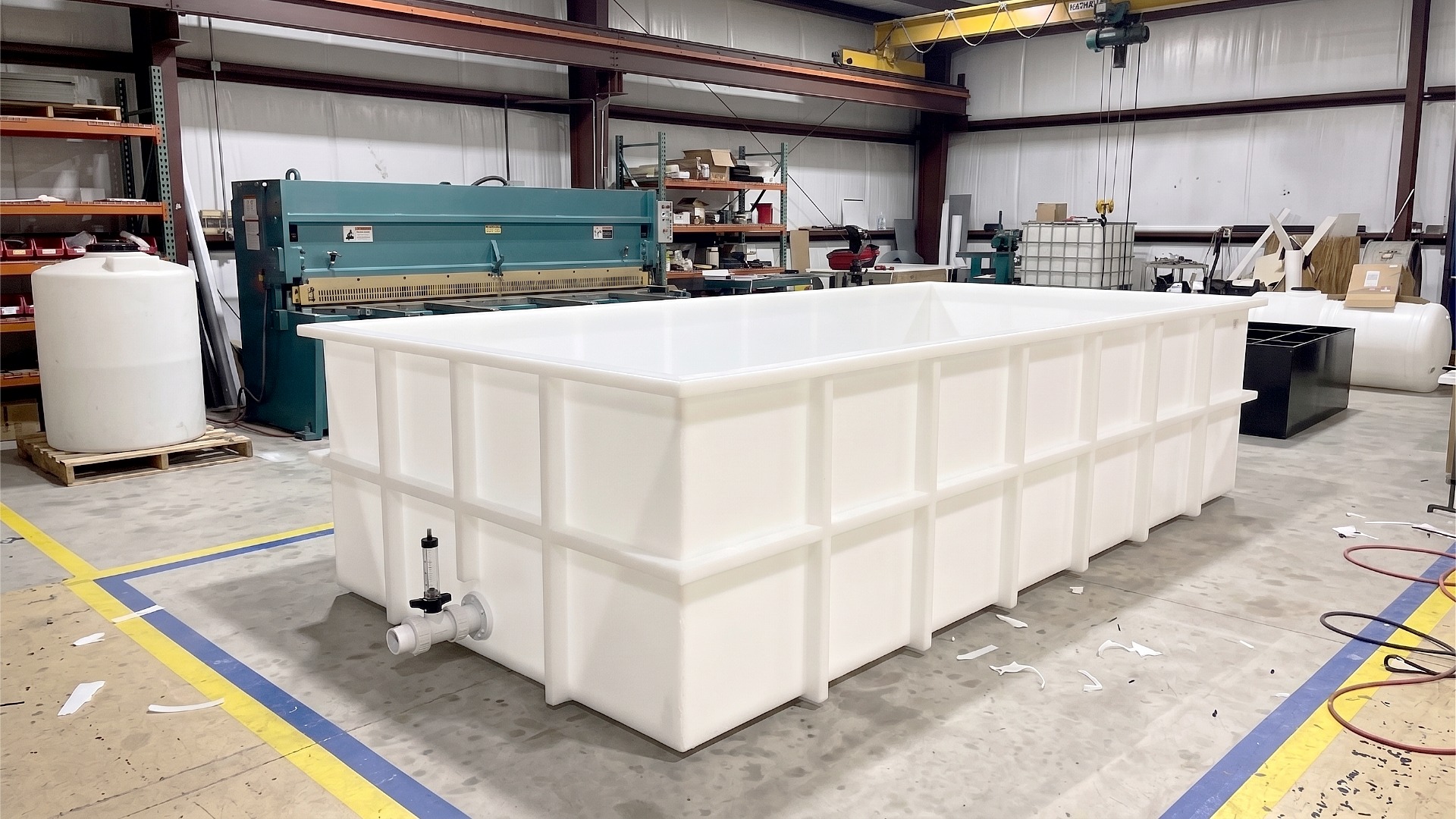
A long, rectangular, open top custom polypropylene chemical stripping tank with rib reinforcements and drain valve.
An image showing a tank fabrication specialist using extrusion welding to construct a custom PP dip tank.
A close up of a PVDF flange drain fitting with compatible steel hardware and Viton gasket.
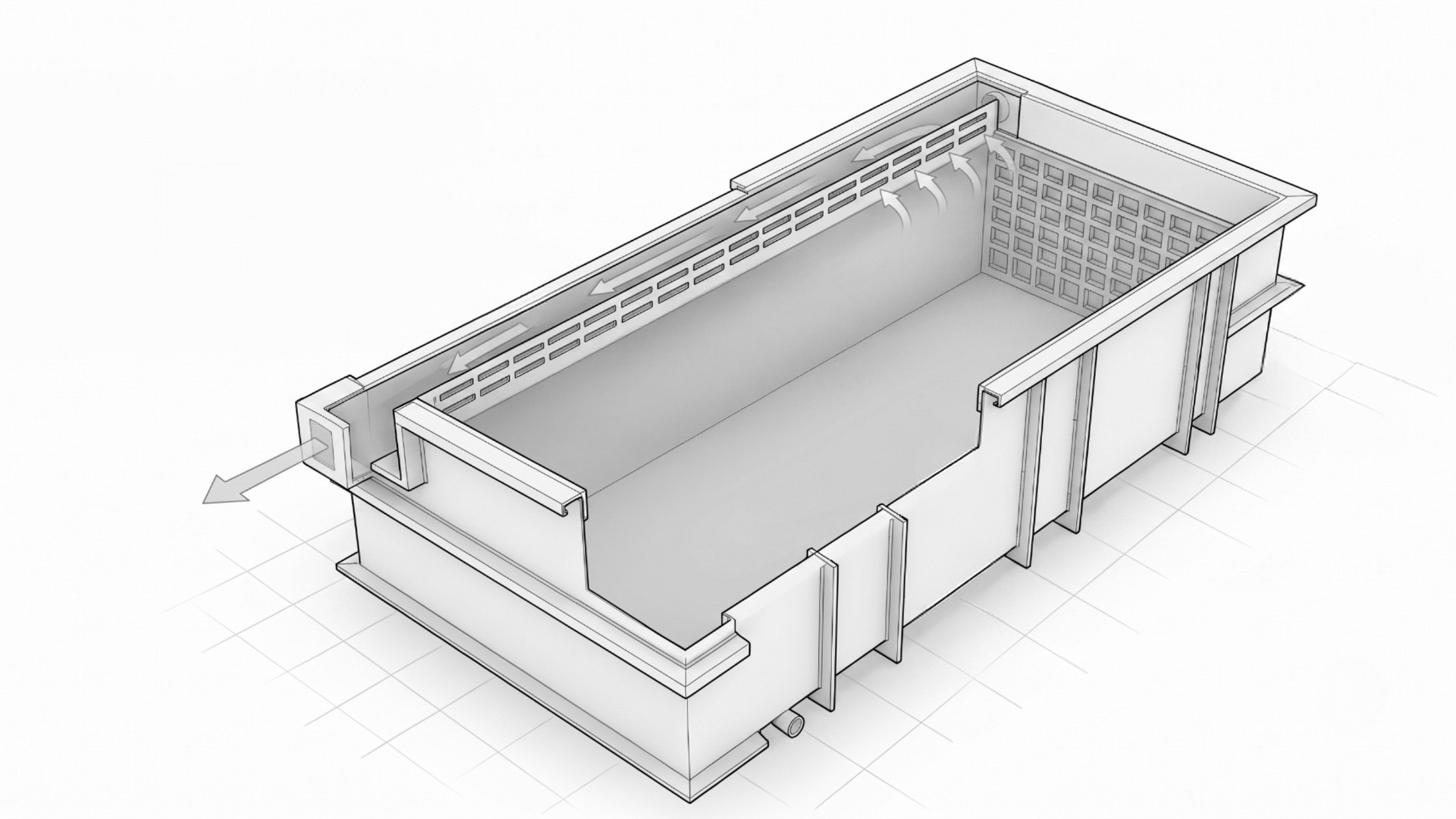
A spec diagram of a large chemical stripping tank with built in fume control channels for ventilation scrubber compliance.

Shape, bottom & solids

  • Rectangular shape standard for batch immersion, sized for rack and basket loading and overhead crane clearance, with dimensions to match the largest part stripped and freeboard for heated baths and fume capture.
  • Full-drain sump or sloped bottom so spent solution is fully removable, with rounded bottom corners and a full range of drain valves to match solution-rated drainage needs.
  • For powder and paint strip, sludge-collection sumps and connection points for in-line filtration and eductor circulation capture dislodged solids and extend solution life.

Heating, agitation & fume

  • Ports or connections for immersion heaters or external coils, with insulation and weatherproof mastic coating for heated baths; heaters are client supplied.
  • Pump inlet and outlet ports, air sparger connections, or piping manifolds for bath uniformity, with in-line filtration connections.
  • Vented lids, fume hood lip edges, and scrubber connection points for integration with your extraction or scrubber system. OSHA 29 CFR 1910.94(d) governs ventilation for open-surface tank operations, and tanks can be built to accommodate your operating ventilation. See also: Custom Fume Scrubber Systems.

Structural, seals & containment

  • Fittings in socket, threaded, or flanged in the types and construction material needed; for heated stripping solutions, account for thermal expansion in provided plumbing designs.
  • Lifting lugs for installation and relocation; external ribs, frame, or PP-encapsulated steel for large-volume tanks to meet your specified requirements and load calculations.
  • Secondary containment options: integrated containment bases, double-wall designs, or footprint sizing and drain placement for bermed installation. See also: Custom Containment Tanks.

Industries That Rely on Industrial Depaint & Stripping Tanks

Chemical stripping runs anywhere a coated part has to be brought back to bare metal, for rework, refurbishment, maintenance, or recurring line housekeeping. The applications and industries below all run immersion stripping in dip tanks.

Metal finishing, plating, and powder coating

Caustic · PP-H
The highest source of chemical stripping work. Racks, hooks, and fixtures accumulate coating with every cycle and have to be stripped back to bare metal for proper electrical contact and coating coverage, as well as rejected and reworked parts that have to be stripped before a recoat can be applied. Paint-line stripping, rack stripping, and powder coating removal tanks run daily here. Dip tanks are standing fixtures in these shops.

Aerospace and aviation

Solvent · PVDF
De-painting of aluminum and alloy parts on airframes and components, from skins and landing gear to engine hardware. Jobs typically run substrate-safe solvent solutions such as benzyl alcohols to protect the metal, and often carry tighter solution and documentation requirements.

Automotive, truck, and heavy equipment

Reman · rework
Component remanufacture and rework used to strip cured coatings from parts headed back into production or service. This includes off-highway and heavy-equipment rebuild lines where the same part may carry paint over a primer and over an e-coat.

Rail and transit

Large parts
Railcar and locomotive refurbishment is used to strip coatings from components and hardware ahead of recoat. These jobs often handle large parts that drive required tank size and immersion depths.

Military, defense, and firearms

Depaint · refinish
Chemical stripping of components, hardware, and small arms to remove paint or applied finishes before re-coating or a product overhaul. Jobs require precision, material protection, and thorough documentation.

MRO and remanufacturing

High-value parts
Maintenance, repair, and overhaul operations use industrial paint stripping tanks to remove coatings during component recovery, repurposing, and return-to-service work, where parts are often high value and cannot be damaged in the process.

Marine, energy, and industrial

Refurbishment
Hardware and component refurbishing across marine, oil and gas, power, and general industry, where coatings must be removed for inspection, re-plating, or re-coating in heavy-duty service environments.
Need a dip tank?Connect with us to discuss your application and get a free quote from Protank’s fabrication team.
Request a Quote

The Standards These Tanks Support

Commercial and industrial coating removal is subject to certain compliance obligations that the tank and its setup should support. Application-specific compliance is an operator’s responsibility, not the product provider’s. Protank provides the vessel and its connections, with solution-compatible materials, full drainage and containment for spent baths, and ventilation connections if applicable. The tank does not certify the solution or the process.

Spent Solution
Hazardous Waste — RCRA
Spent strip solutions are often regulated waste streams once a bath is exhausted. Spent caustic is typically corrosive, and spent solvent solutions carry their own waste profile. Tanks can be built with full-drain bottoms and secondary containment additions to accommodate the waste classification and disposal responsibilities of the generator.
RCRA · 40 CFR 264/265
Ventilation
Open Surface Tank Operations — OSHA
Open surface tank ventilation is governed by OSHA. Tanks can be built to accommodate the ventilation system an operator is required to run, with vented lids, fume hood lip edges, and scrubber connection ports. Fire suppression and electrical classification fall outside tank fabrication scope.
29 CFR 1910.94(d)
Aerospace Depaint
Substrate Qualification
Customers running aerospace depaint operate their strip solutions to qualification standards that confirm the solution will not embrittle high-strength steel or attack sensitive metals. These are solution standards, not tank standards. Protank can build dip tanks to the service those solutions run on and support the qualification requirements of the customer and the supplier.
Boeing D6-17487 · MIL-R-81294

Why We Build It Better

01

In-house fabrication

Every tank is built in the USA at Protank’s Gulf Coast facilities by our experienced fabrication team, which means direct quality control, consistent workmanship, and faster lead times than splitting a job across suppliers.

02

One source: full strip-and-rinse

Strip tanks, rinse tanks, and containment fabricated and assembled to your layout, built to one consistent spec, so companies can source work lines from one shop instead of splitting orders.

03

Built to your solution

Protank has the materials to hold your solution at its operating temperature, and the expertise to deliver; the result: service reliability and performance. The match is the product.

04

Material breadth

PP-H and PP-C, PVC, CPVC, HDPE, and PVDF for tanks; PVDF, PVC, CPVC, EPDM, Viton, PTFE, FFKM, and titanium for fittings and seals, all to match solution and temperature needs.

05

Retrofit and replacement

Protank builds matched replacements to drop into an existing line for aged tanks, tank liners, and new strip solutions needing a different tank construction material, not a full line replacement.

06

Nationwide delivery, 20+ years

Completed tanks ship across the continental US from Protank’s Gulf Coast facilities, backed by two decades of custom tank fabrication for finishing and chemical buyers.

Request Your Custom Chemical Stripping Tanks

The fastest quote comes from a drawing, STEP file, or tank spec. Protank builds to what you provide. If you are still defining the tank, these are the details that help us match and build:

  • Strip solution. Type and concentration, whether caustic, solvent, acid, or proprietary.
  • Parts and substrate. What you are stripping, the substrate (steel, aluminum, alloy), and the coating being removed.
  • Operating conditions. Bath temperature, ambient or heated, indoor or outdoor, freeze exposure.
  • Volume and footprint. Largest part or rack, immersion depth, and any worksite space constraints.
  • Connections and provisions. Fills, drains, vents, pump and filtration needs, heating, agitation, fume and scrubber connections, containment, level indication, and monitoring.

One to three business day response. Drawings, sketches, and engineered specifications are encouraged and, in some cases, required.

Contact