Onsite water storage for cooling makeup, emergency water storage, and Tier certification requirements for data centers. Standard and custom tanks, quoted to your project.
A data center that cools with water cannot certify or defend its uptime numbers if the municipal supply stops or experiences a service disruption. This is why emergency water storage tanks and backup water supplies are used: to ensure cooling can continue for a designated period of time.
For facilities using evaporative cooling, the widely adopted benchmark is the Uptime Institute Tier Standard, which calls for 12 hours of onsite makeup water storage. At Tier III, that storage must also be concurrently maintainable. In practice, this often means multiple tanks, not one. Onsite water storage is not only ideal for reclaimed water systems and sustainability, for a certified facility it is a condition of certification.
The uptime requirement, along with recycled water programs, humidification supply, additive mixing, and fire protection reserves, is why storage tanks are a part of nearly every data center mechanical plan. Protank supplies storage tanks made in the USA by the nation's top manufacturers. Tanks range from rotomolded poly vessels to fiberglass to high capacity bolted steel tanks assembled on site. Tell us the volume, the liquid, and the site, and we will quote a fit within one to three business days.
Data Center Makeup Water Storage: The 12 Hour Tier Requirement
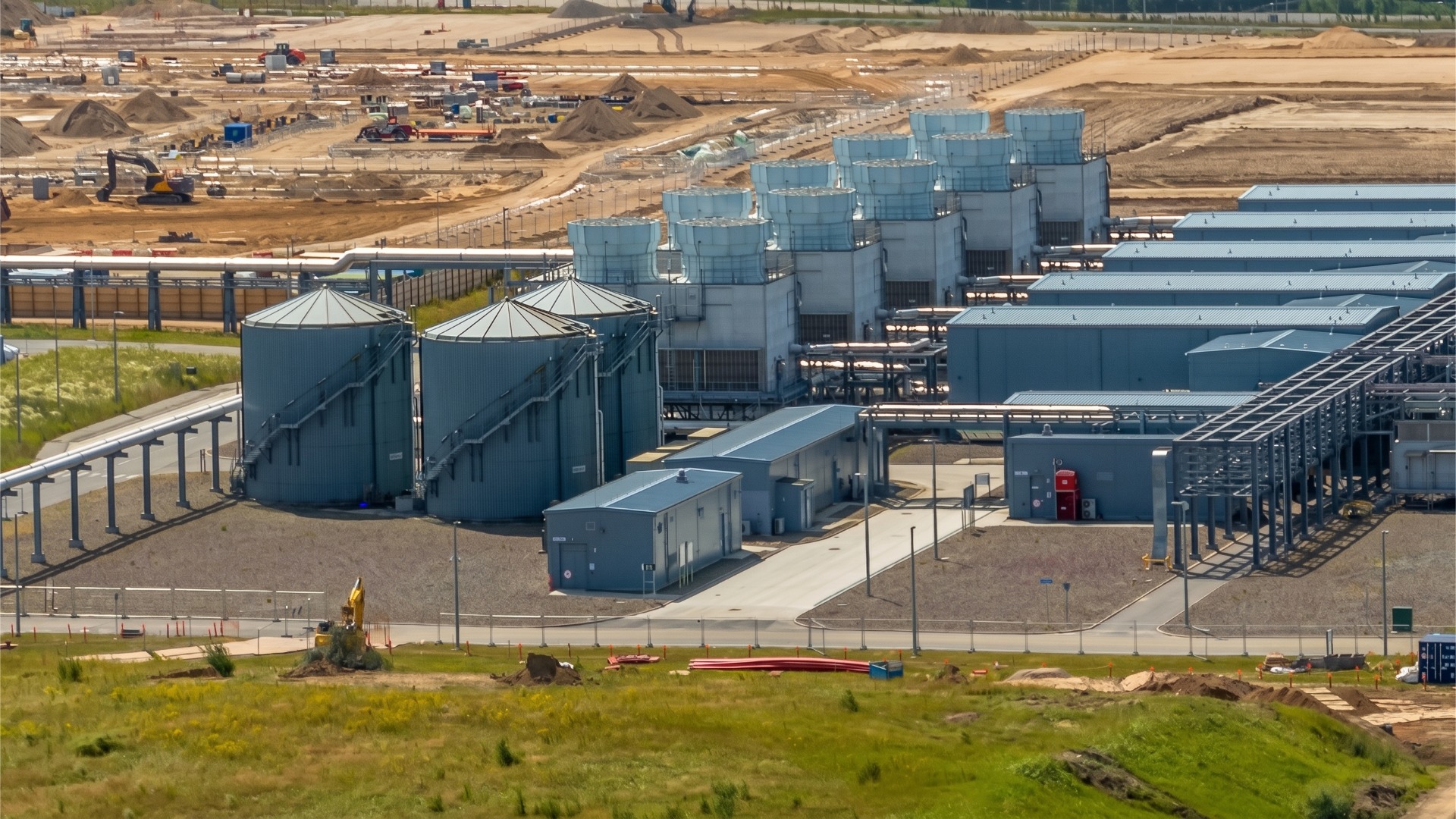
A data center running evaporative cooling loses water continuously to evaporation and blowdown, and most facilities replace it from the municipal supply. When that supply is interrupted by a main break or a drought restriction, cooling is on the clock. At an operating facility, a loss in cooling capacity becomes a thermal event within minutes. Onsite makeup water storage is the reserve that covers the gap, which is why a tank array is part of many data center plans.
The Uptime Institute Tier Standard puts water reserves on a scale of importance similar to generator fuel. For evaporative cooling systems, the data center should hold 12 hours of makeup water on the site. Standard Tier III requires concurrently maintainable water storage, meaning any tank can be taken out of service for cleaning or repair without interrupting the reserve or lowering the total capacity below the threshold. One large tank is often not sufficient. A concurrent reserve is a set of manifolded tanks with isolation valving when a vessel needs serviced or removed from the line. This is why multi-tank layouts are common in certified data center designs, and why Protank quotes reserves as tank arrays rather than single containers.
Data center makeup water storage volumes are large. A typical evaporative unit can consume around 400,000 gallons of water per megawatt annually. Consumption concentrates in the hottest weeks of the year and is the same timeframe that a 12 hour reserve matters most. Meeting the reserve sizing against the facility's load and redundancy target is where Protank helps specifiers pair their site specs to our tanks.
Reserve water has to be treated, monitored, and turned over as sitting water can foul or scale the equipment it is intended for. Sitting water can also introduce the Legionella risk the industry addresses under ASHRAE Standard 188. In a data center water management plan, reserve tanks belong fitted with connection points for treatment loops and recirculation and locations for level and monitoring instrumentation.
How Much Makeup Water Storage Does a Data Center Need?
To determine the emergency makeup water storage volumes a data center needs, a mechanical engineer is often used to establish the cooling system's peak water rate, which is evaporation plus blowdown at the cycles of concentration. Multiply that rate by 12 hours; that is the reserve volume, and distribute it across multiple tanks joined in parallel as needed to reach capacity while accounting for targeted redundancy and tank downtime.
A facility whose cooling plant draws a peak makeup rate of 100 gallons per minute needs 72,000 gallons to cover 12 hours. For concurrent maintainability, that might be an array of 20,000 gallon poly tanks or a set of lined galvanized steel tanks, sized so removing one for service still leaves the reserve intact.
A hyperscale plant that draws 1,000 gallons per minute at peak needs 720,000 gallons; these systems typically require bolted steel tanks that are assembled on site.
Storage Tank Types for Data Center Service
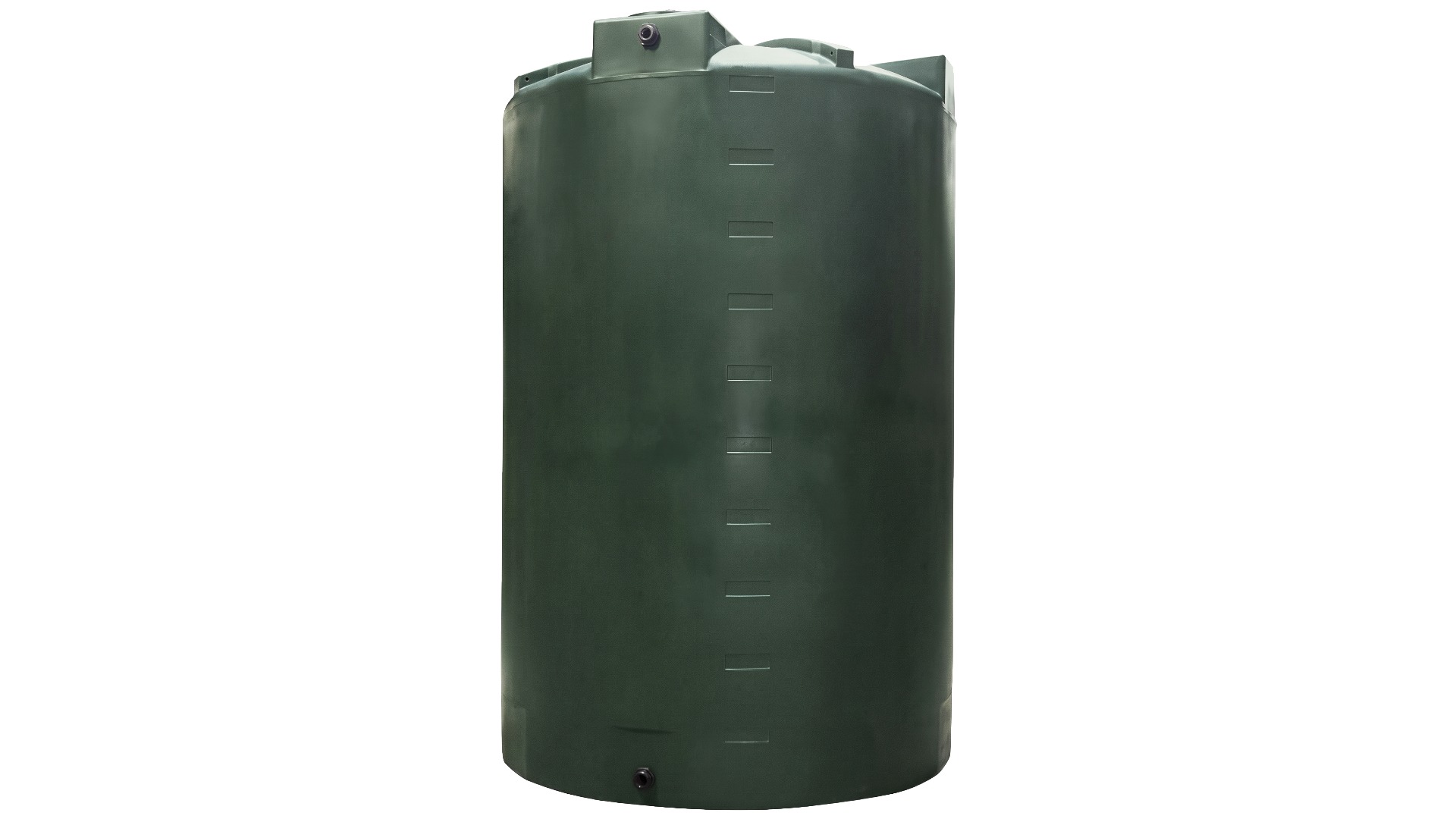
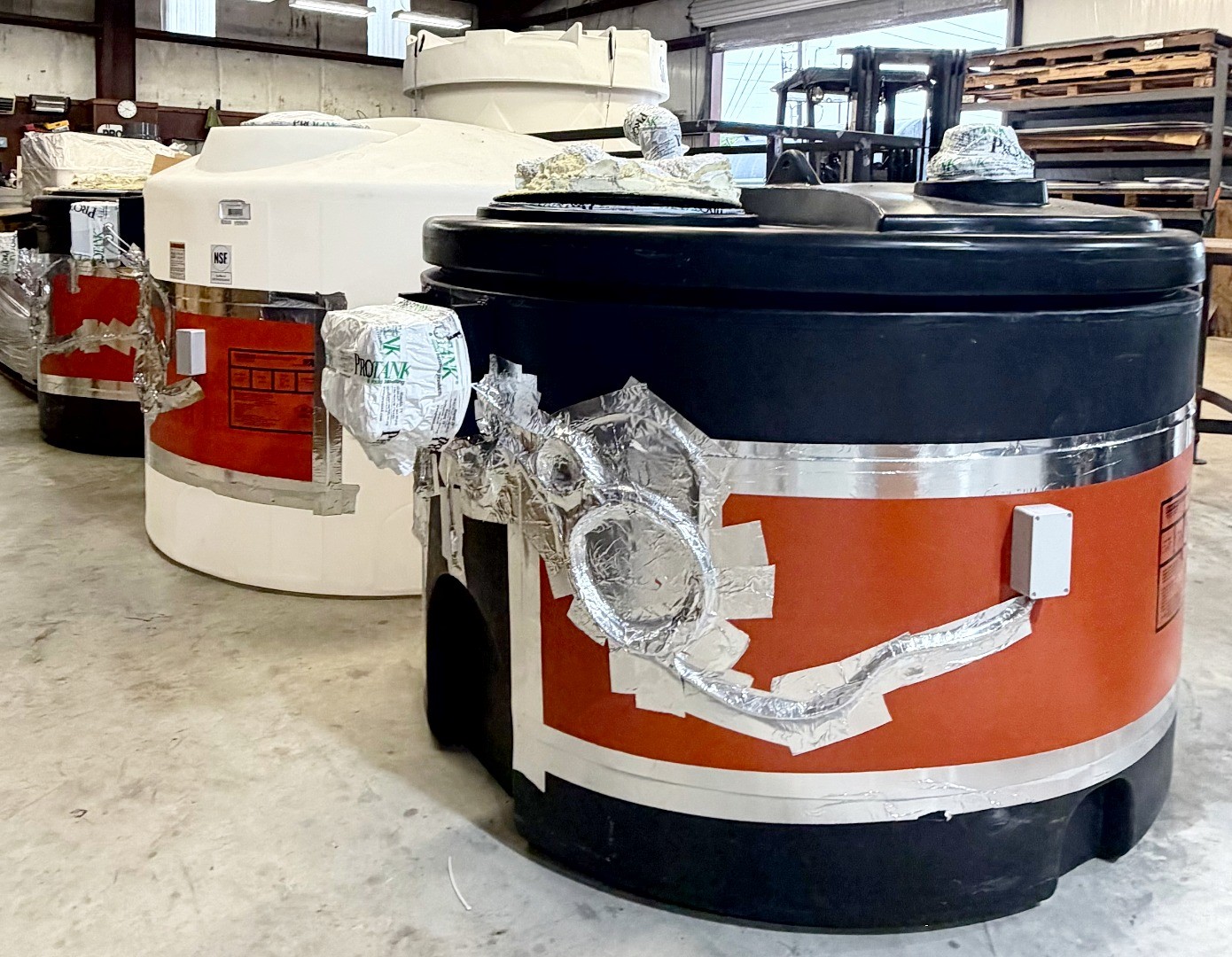
Rotationally molded from high density polyethylene, these one piece vertical tanks are common solutions for small and mid volume water storage. They are manufactured to ASTM D1998-21 from resins that comply with FDA 21 CFR 177.1520 for food contact and UV stabilized for outdoor service. Many models are NSF certified for potable water systems. HDPE water tanks are lightweight and can be placed without heavy equipment. They are resistant to corrosion from treated water and common cooling additives. The poly water tank is ideal for facilities that need reliable reserve volume without extensive onsite assembly.
Polyethylene tanks have a high coefficient of thermal expansion relative to steel, so outdoor HDPE tanks move dimensionally as temperatures cycle. External piping must be independently supported and have flexible connections at tank fittings.
- Makeup water reserve arrays for smaller facilities, plumbed in parallel for concurrent maintainability.
- Humidification water storage for ultrasonic and steam systems.
- Additive mixing and storage: glycol, biocides, corrosion inhibitors.
- Break tanks for mandatory air gap and backflow prevention.
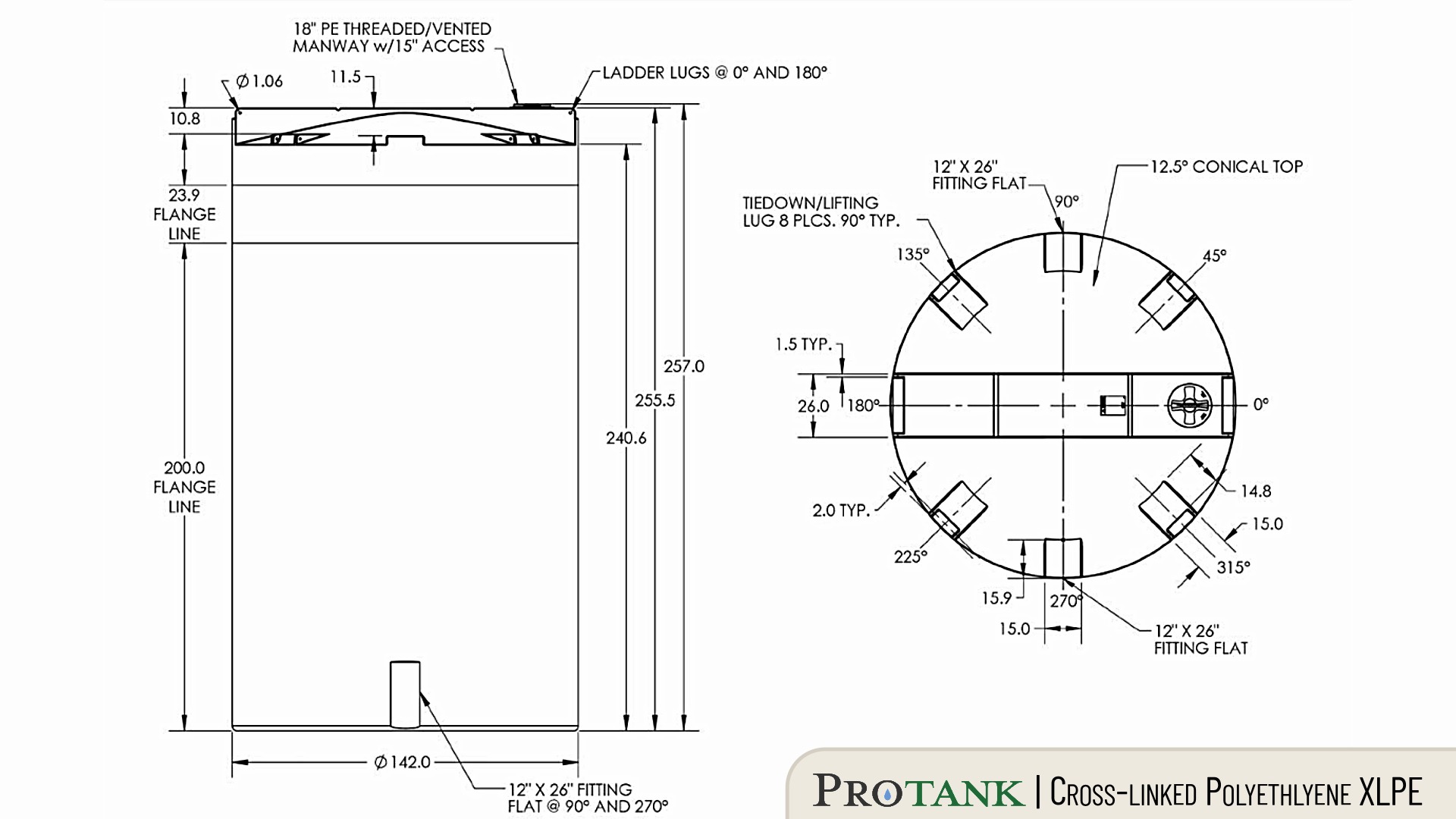
Cross linked polyethylene tanks have a higher cost than HDPE tanks but offer, in general, greater impact strength and environmental stress crack resistance (ESCR). The cross linked structure resists crazing and cracking, making them ideal for certain aggressive additives and concentrated treatment chemicals. XLPE tanks are seamless rotomolded vessels manufactured to ASTM D1998-21. XLPE is not typically approved for potable water contact without a liner. For these applications, specify HDPE or a lined XLPE tank when potable certification is required.
- Glycol-water mixture storage for cooling loops.
- Concentrated water treatment chemical storage: biocides, scale and corrosion inhibitors, pH adjustment chemicals.
- Non-potable process water not directly connected to municipal supply.
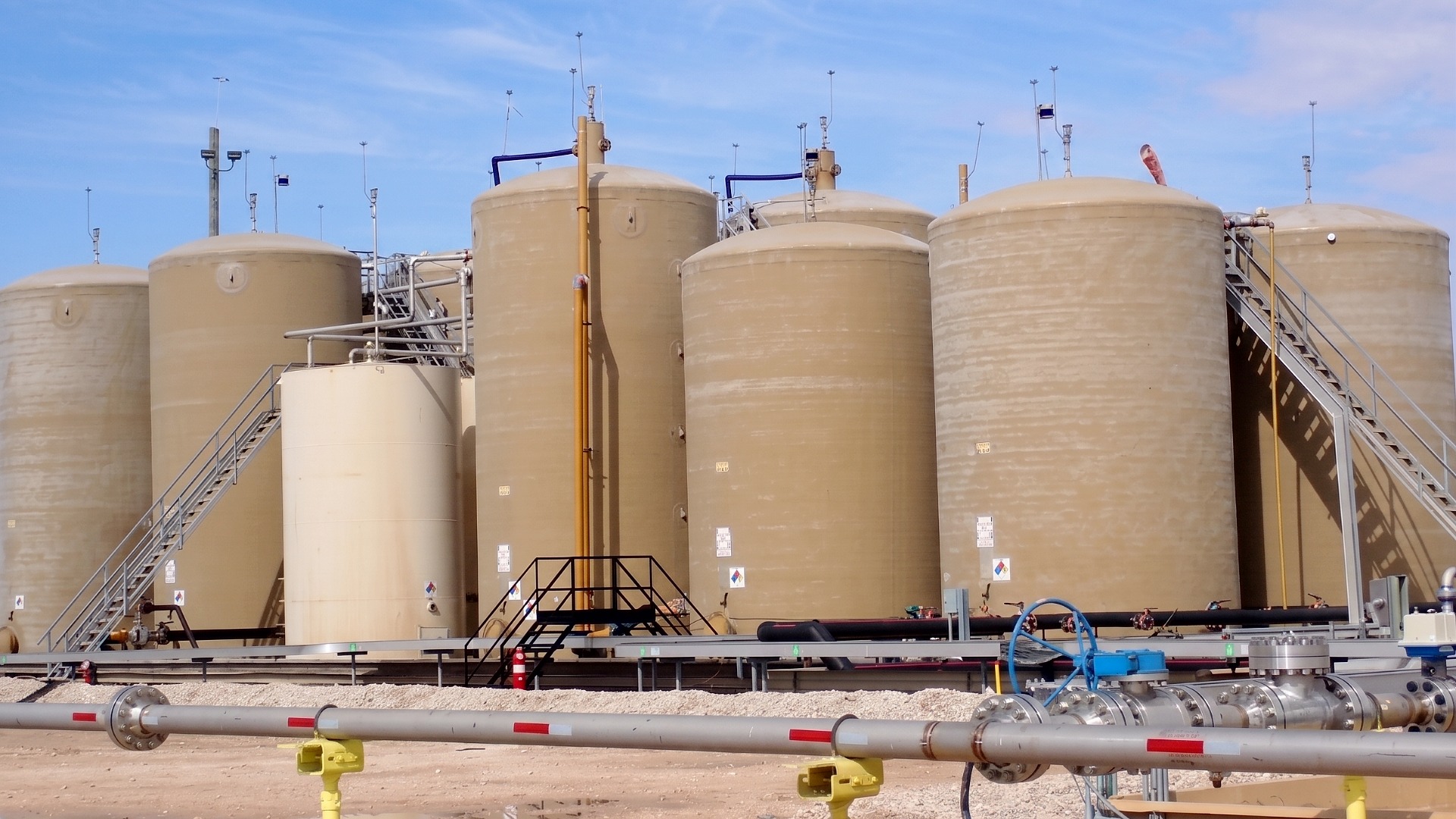
Fiberglass reinforced plastic tanks have a volume range between rotomolded poly and steel. Contact molded laminates conform to ASTM D4097 and filament wound to ASTM D3299. FRP water tanks are built to AWWA and NSF 61 standards, with potable service tanks using premium grade resin and a Nexus veil liner. FDA grade and fire retardant resins are available.
FRP tanks are suitable for corrosive applications due to their corrosion barrier. A resin rich veil liner keeps stored liquid off the structural glass to prevent weeping and wicking that can degrade a tank from the inside. Exterior resins include UV inhibitors.
Configurations include vertical flat bottom and vertical leg with open, dome, dished, or conical tops, horizontal on glassed-in cradles, and multi-piece sectional tanks erected on site. Both above ground and underground fiberglass tanks are available. Buried FRP resists infiltration and exfiltration without degrading.
- Bulk treatment chemical storage: sodium hypochlorite, sodium hydroxide, ferric chloride, alum.
- Reclaimed water, rainwater, and stormwater storage for reuse and permit compliance.
- Fire protection standby.
- Cooling tower makeup water reserves.
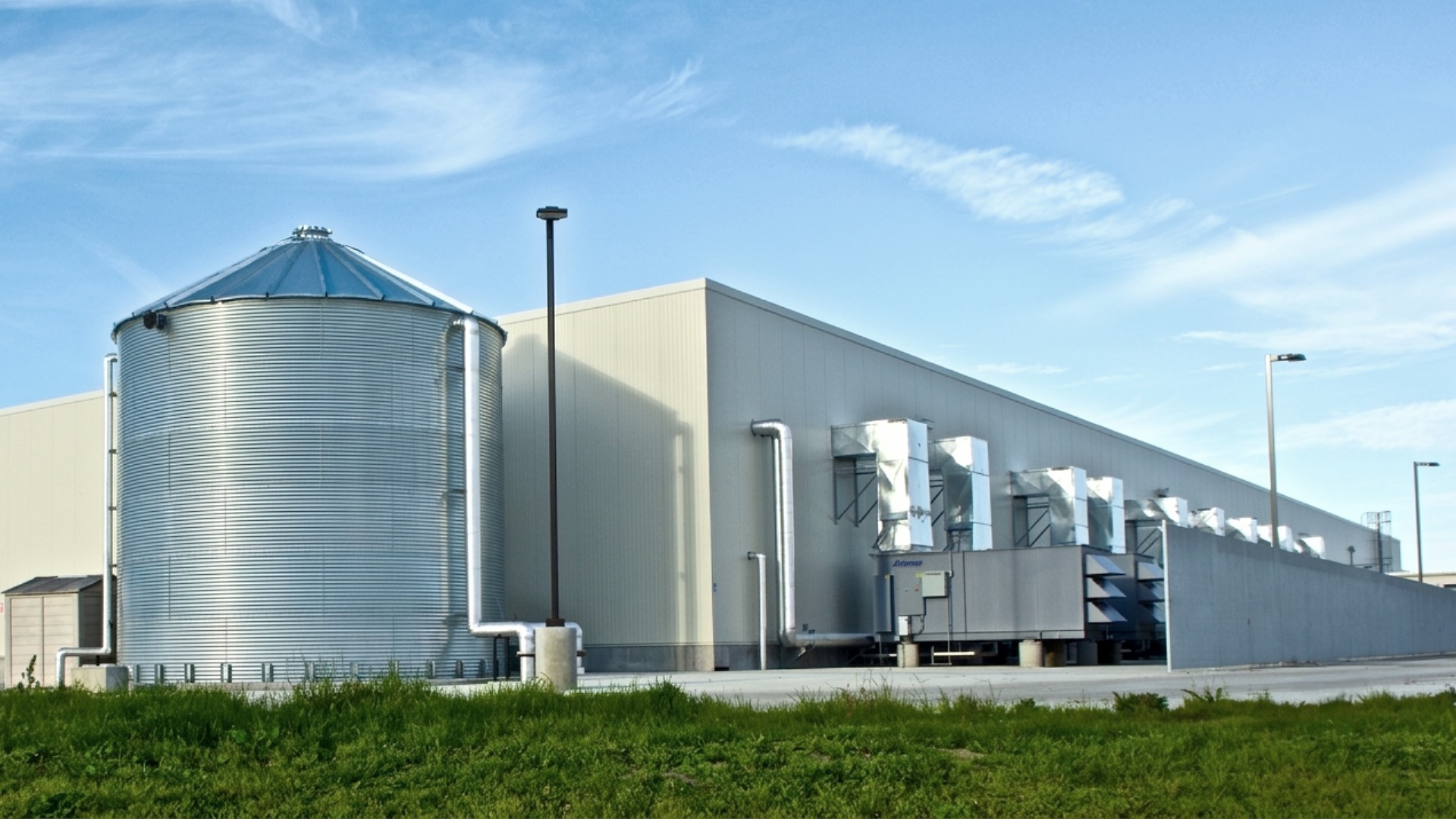
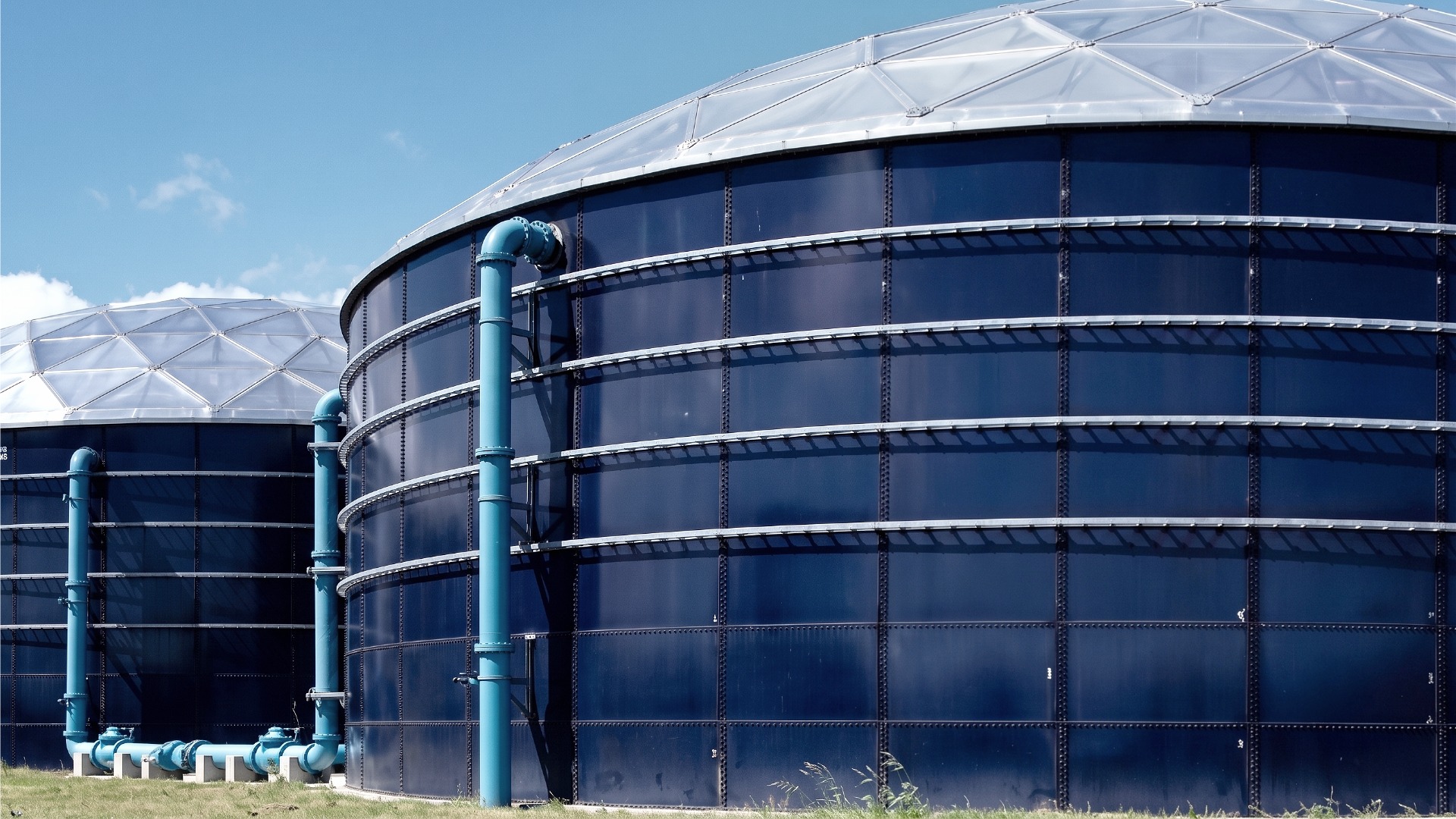
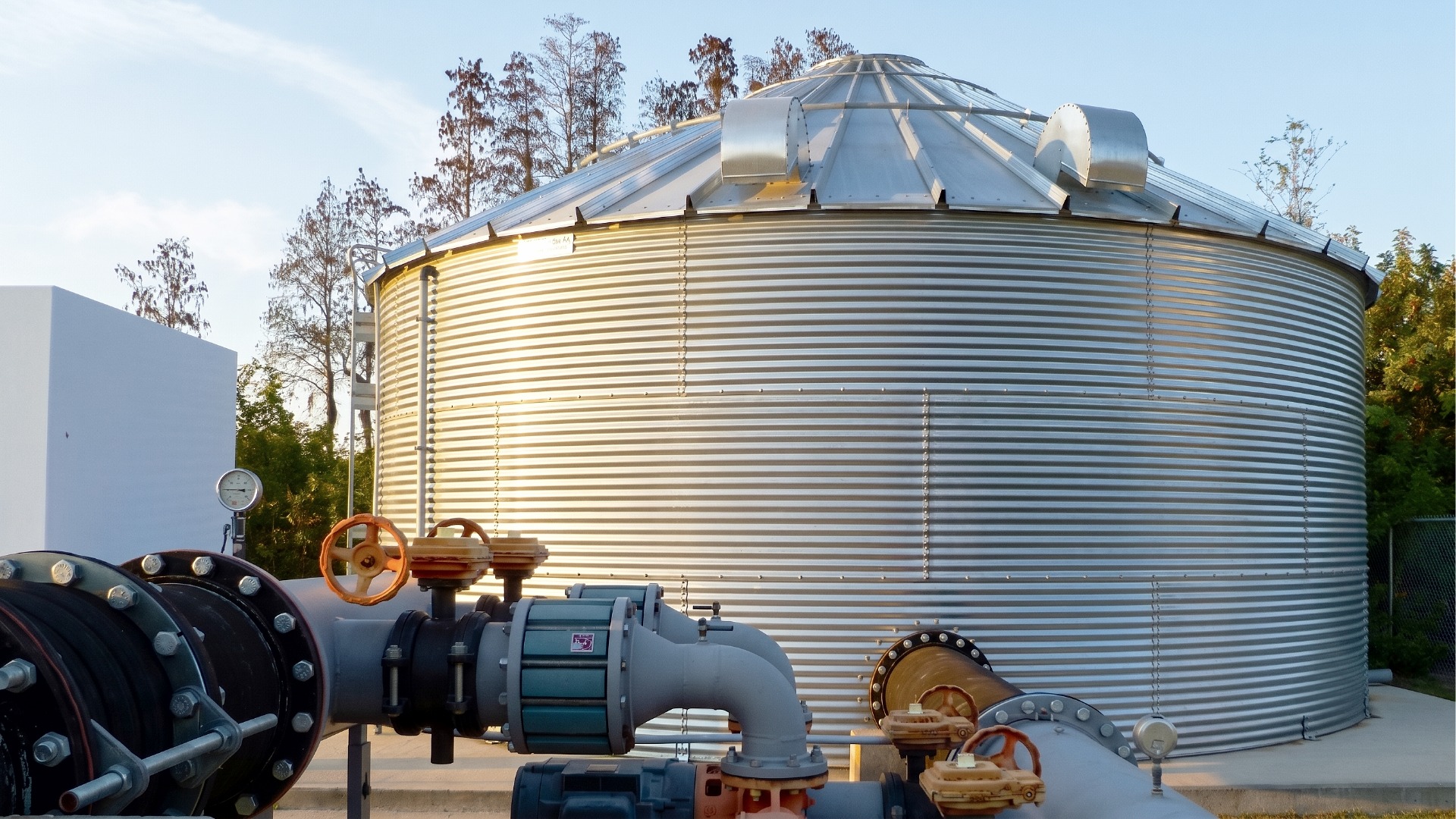
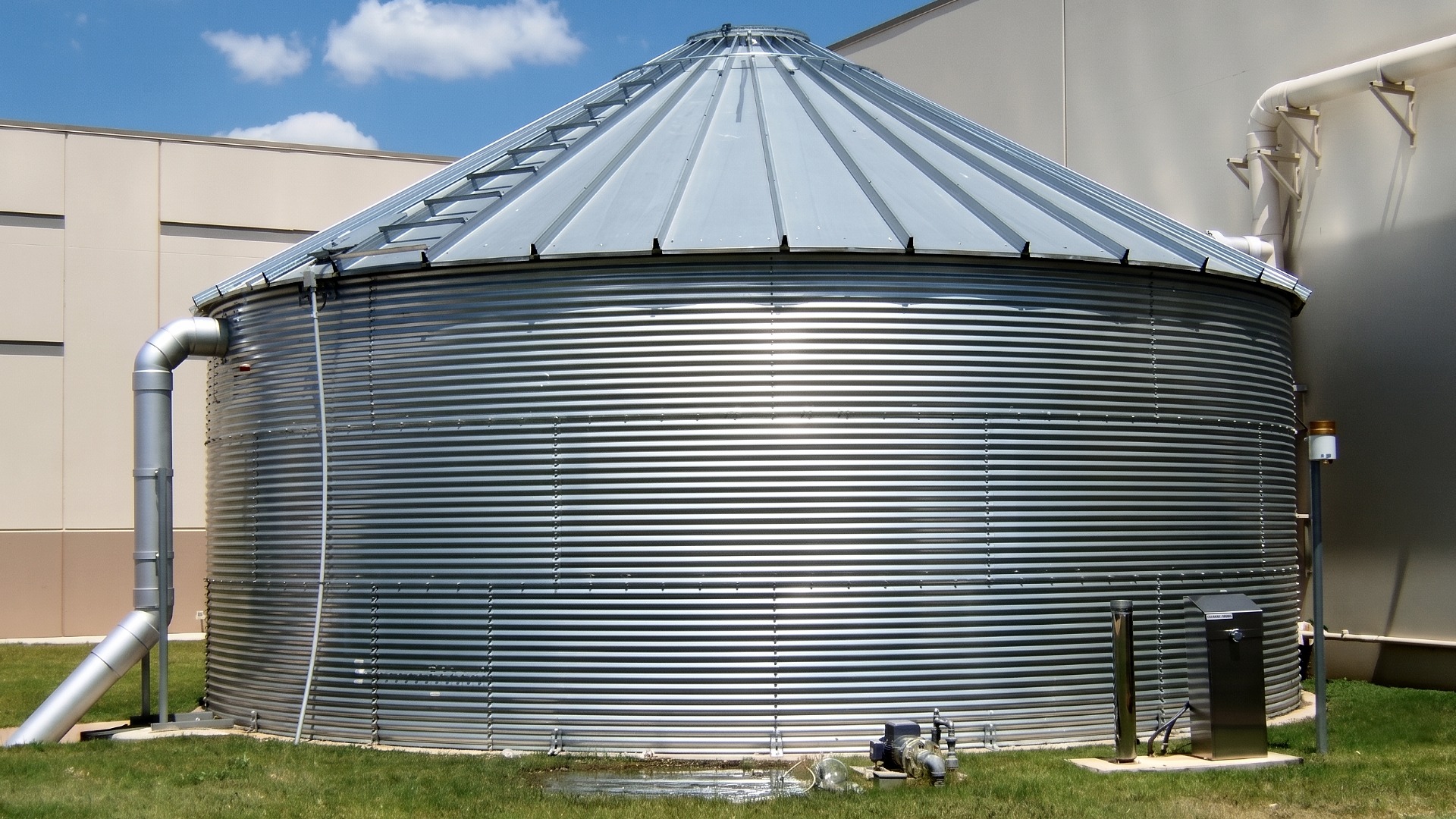
Corrugated galvanized steel tanks provide large volume storage at a low cost per gallon. The tanks are made from hot dipped galvanized steel with a G-115 or G-145 coating, weighing 1.15 to 1.45 ounces per square foot, in 20 to 23 gauge sidewalls with 24 to 26 gauge roof panels. Water contact is handled by the liner, available in either 20 mil polyethylene or 24 mil PVC. Virgin resins meet FDA and NSF/ANSI 61 requirements for potable systems.
Tank materials meet NFPA 22 fire codes. Standard structural ratings cover wind speeds of 115 to 150 mph and 20 PSF snow load. Zinc coatings weather more quickly under coastal chloride exposure or in heavy industrial zones. Match coating weight and any supplemental exterior finish to suit the site.
Roof options run from 30 degree flat seam and high rib through inverted, flat, corrugated flat, and membrane cover, with open top available. Accessories include rainwater gutter systems that use the tank roof as a collection surface, external level indicators, OSHA compliant side and roof ladders with safety rings, and 20 to 30 inch lockable hinged manways.
- Large scale makeup water reserve for evaporative cooling plants.
- Emergency and fire protection water storage.
- Recycled water storage feeding cooling towers.
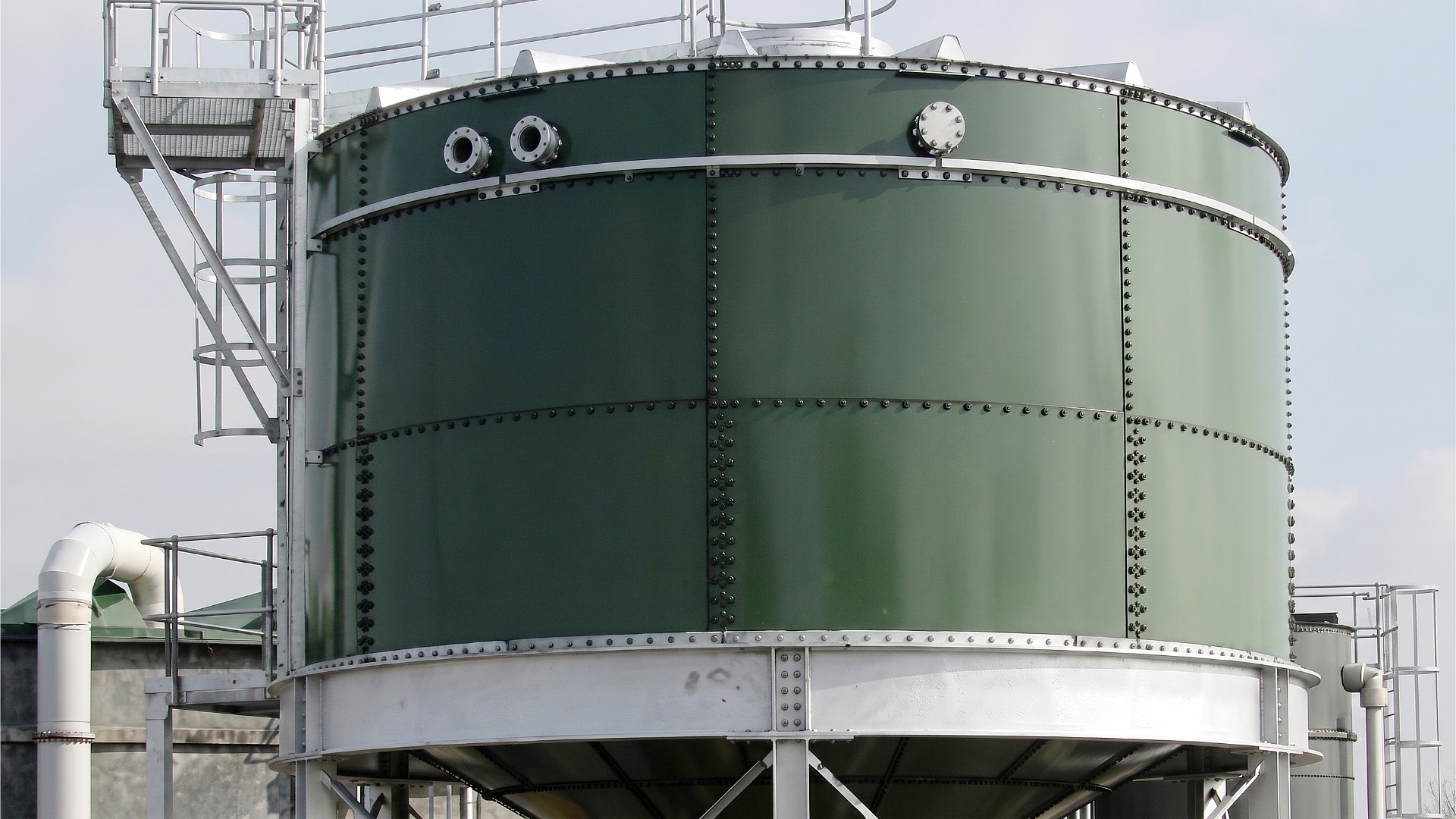
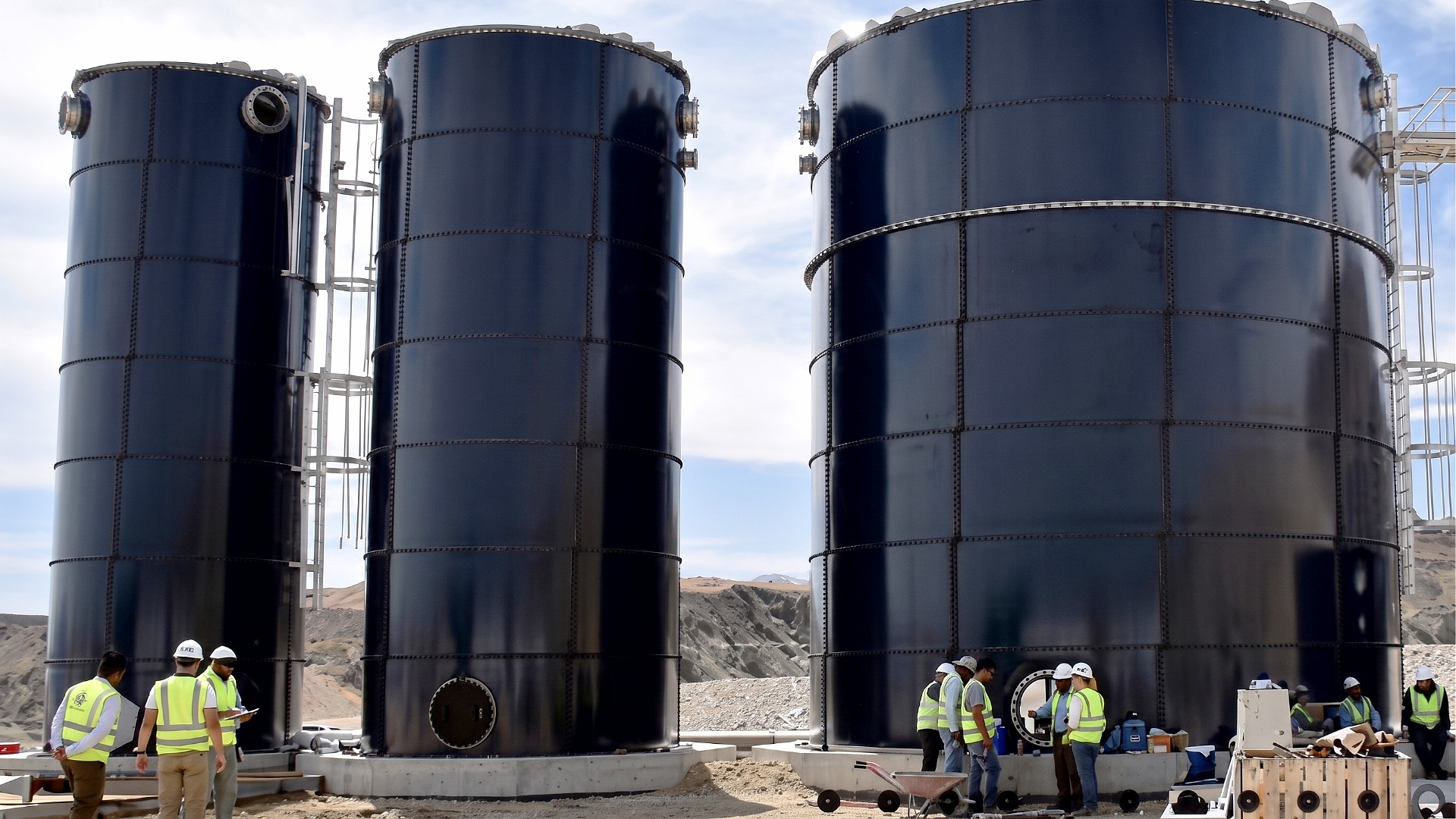
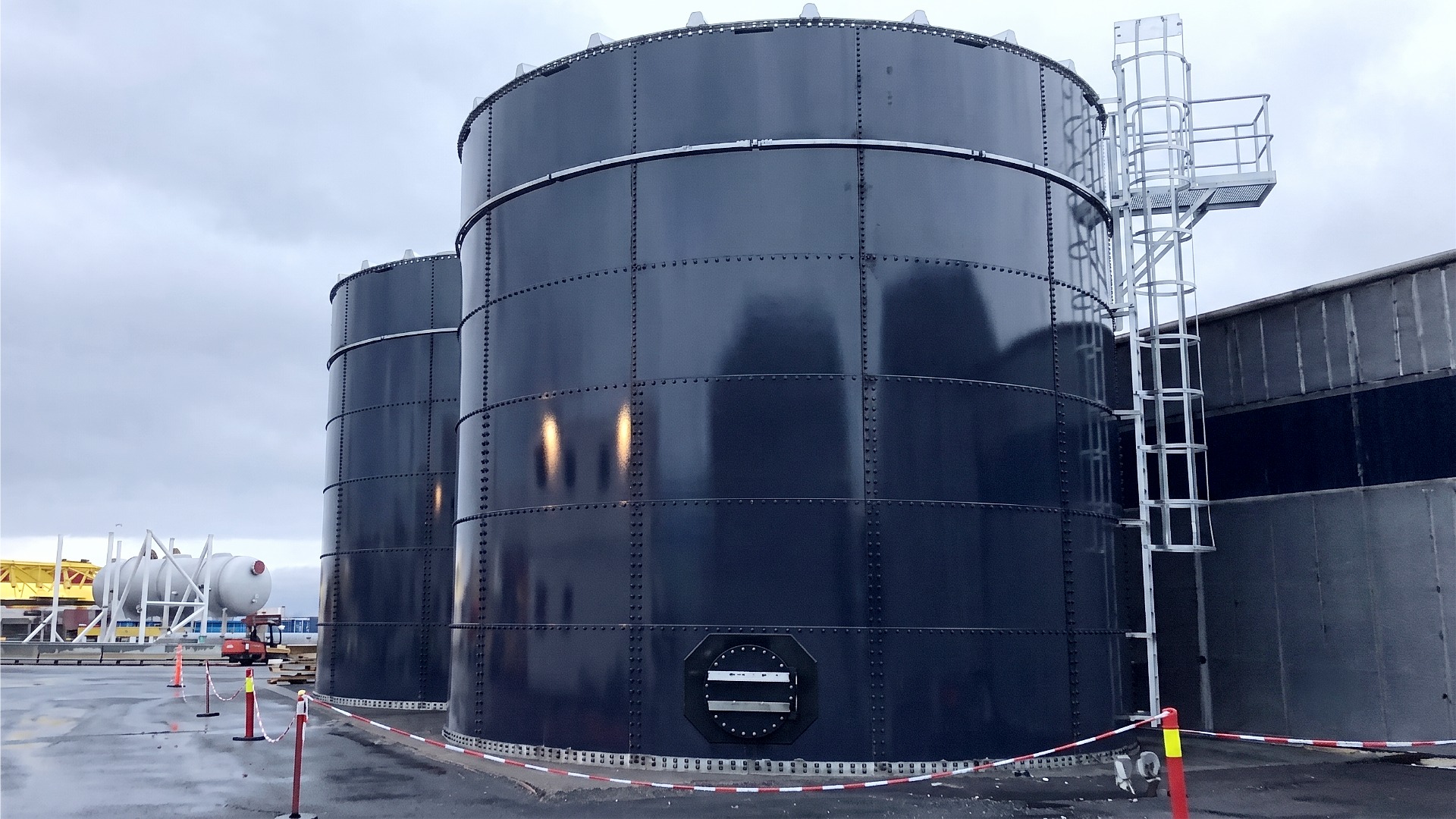
Bolted steel tanks are Protank's highest volume product line with tanks built-to-size up to 700,000 gallons. Factory finished panels ship as an unassembled package and are erected on site, which keeps freight practical at volumes no single shipped vessel can reach. The bolted construction also means a tank can be unbolted and relocated rather than counted a loss, ideal for leased or phased sites.
Finishes include glass fused, epoxy coated, powder coated, and weathered. Liner options include PVC, EPDM, and butyl, with or without NSF 61 potable certification. PVC liners are protected by polyester geotextile matting on the floor and walls. Bolted steel tank certifications span AWWA D103, NSF/ANSI/CAN 61, NFPA 22, FM Global approval, TCEQ, and the EN and ASTM material standards.
Tanks can be adapted for use with insulation kits, immersion heaters, and other accessories. Installation requires a site specific structural design calculation package certified by a licensed engineer in your state. Accessories include rainwater gutter systems, external water level indication, and OSHA compliant ladders.
- Hyperscale makeup water reserves at 12 hour volumes.
- Combined emergency and fire protection water storage.
- Phased builds where reserve capacity can grow with the facility.
- Hybrid break tank and emergency makeup water storage (EMWS).
- Break tanks for hydraulic decoupling, surge buffering, and pump feed.
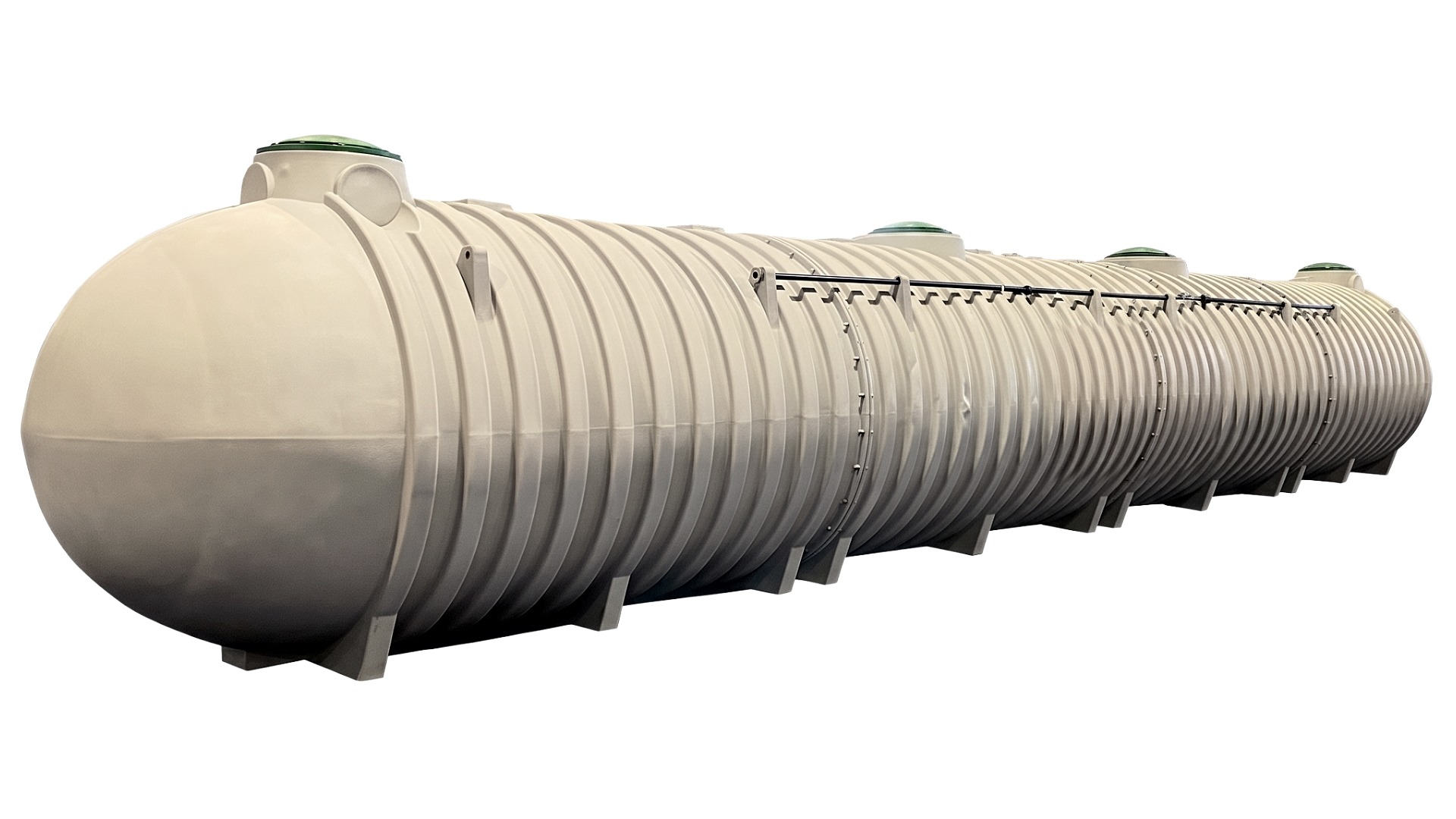
Rotationally molded from HDPE, FDA 21 CFR 177.1520 compliant resins, underground poly tanks put reserve volume below grade when surface area is constrained or specified for use. Burial safeguards stored water from temperature swings and freeze conditions. Installation is governed by the manufacturer's burial specifications, including depth limits, backfill requirements, water table conditions, and traffic loading. Confirm site conditions against the tank's installation documents before specifying.
- Emergency water reserves when yard space is committed to generators and switchgear.
- Stormwater detention to support site permit requirements.
- Recycled water storage for reuse programs.