
Your browser is not supported. For the best experience, you should upgrade to a modern browser with improved speed and security.

Rainwater Collection Tanks
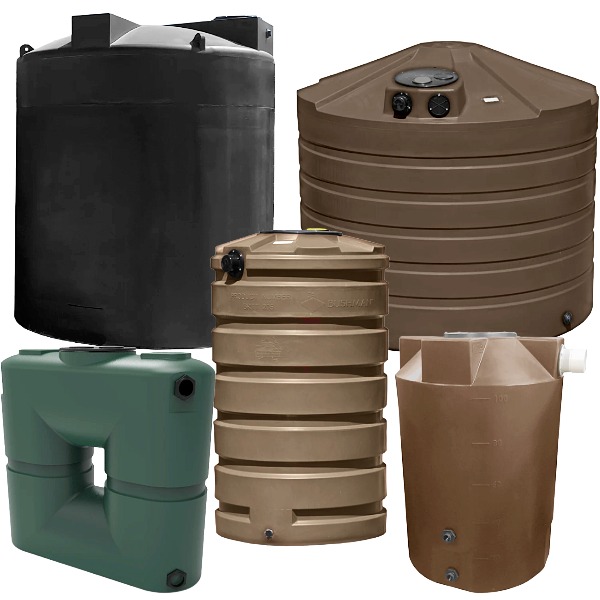
Protank Rainwater Collection Tanks

Rainwater collection tanks are above ground polyethylene tanks used to capture and store rainwater runoff from roofs and other catchment surfaces. Each tank is rotationally molded for durability and fitted for rain harvesting with an inlet strainer basket, a screened overflow, and lower outlet fittings. They are also known as rain capture tanks, rainwater harvesting tanks, rain tanks, rainwater storage tanks, and rain cisterns. These tanks are used in landscaping and garden irrigation, nursery and greenhouse water systems, livestock water supply, commercial site irrigation and non-potable reuse, stormwater runoff reduction, washdown, and emergency and fire reserve water.

Choosing a rainwater collection tank depends on five working details:

  1. The tank shape
  2. Tank size based on roof yield and water demand
  3. Tank weight and site suitability
  4. Intended use, potable or non-potable
  5. Outlets, overflow, and connecting tanks

Protank offers rainwater collection tanks in sizes ranging from 100 to 5,050 gallons and in round and slimline models. For high capacity rainwater harvesting systems, see our galvanized steel water tanks or contact us.

How to Choose a Rainwater Collection Tank

1. Tank Shape: Round or Slimline

The rainwater collection tank model determines:

  • its available capacity range
  • how much ground or wall space it will occupy
  • how it is supported or secured on site
  • how its weight when full sits on the base

Round rainwater tanks

Round poly rainwater tanks have the most size options available between 100 to 5,050 gallons, with diameter widths ranging from 30" up to 129". They come in two mold types:

  • Smooth wall tanks: feature a smooth, uniform exterior surface.
  • Ribbed wall tanks: feature horizontal ribbing that breaks up the surface and increases rigidity.

The wall style determines shipping origin, freight costs, and general aesthetics. For rainwater harvesting, the polyethylene wall-mold style does not affect general tank performance or selection. All round tanks are designed to sit freestanding on a prepared, level ground surface area or constructed base.

Common uses: landscape and site irrigation supply; livestock water provision; nursery and greenhouse storage; linked multi-tank setups.

Round rainwater tanks are the right choice when there is open ground space available for the size, or when the job needs the most storage in a single tank.

Slimline rainwater tanks

Slimline rainwater tanks come in 130, 265, and 530 gallon sizes and measure 17" to 25" wide. They are designed to stand along building walls, side yard, walkways, and under roof eaves. Slimline tanks have holes molded through the body that function as structural ties connecting the front and back walls to help keep the tank from bulging when full. These tanks are to be secured to a permanent structure, such as with water heater strapping to the building wall.

Common uses: side yards and narrow lots; downspout collection against a building wall; tight commercial and urban sites.

Slimline rainwater tanks are the right choice when space from a wall is limited and height is not or when overall space wants to be conserved.

2. Tank Size, Roof Yield, and Water Demand

A rainwater collection tank should be sized to hold the water that the roof can deliver and the job will use between rains.

Roof yield

  • One inch of rain captured from one square foot of roof results in about 0.623 gallons of water.
  • A 1,000 square feet of roof area yields about 623 gallons for every inch of rain, meaning a 5,050 gallon tank can be filled from about 8 inches of rainfall.
  • Roof area is measured as the footprint the roof covers and that will actively be used for rainwater collection, not the whole roof or the slope’s surface area.
  • Actual collection is typically lower once accounting for losses from any first flush diversion, spillover splashes, and evaporation.

Water demand

  • The tank should hold enough water to match the planned use, such as irrigation, livestock, or washdown, according to rainfall estimates and dry stretches between rain events.
  • The right tank size will match whichever is smaller: what the roof can collect, or what the job needs between rains.
  • Choosing a size larger than what the roof can fill may sit largely empty, while a size smaller than the job’s demand may become empty during use.

Usable Capacity and Overflow Height

Rain tanks store water up to the mounted overflow port and fitting, not the top. The screened overflow location is the high water line and the bottom outlet will leave some water beneath it, making tank usable storage lower than its rated, nominal capacity.

When a single tank cannot hold the volume needed, additional tanks can be connected in series. For high volume commercial and agricultural storage beyond the range of poly rain tanks, or when one large tank is preferred over multiple connected, see our Galvanized Steel Water Tanks.

Include your roof area, intended use, and expected usage volumes on your quote, and we can help point you to the right tank.

3. Full Load Weight and Site Preparation

A full rain tank places its entire weight load onto its placement surface. Rainwater weighs 8.34 lbs per gallon, meaning a full 1,000 gallon tank will weigh around 8,500 pounds when also adding in the weight of the tank; a full 5,050 gallon tank, about 42,800 pounds. Taller tanks concentrate more weight on each square foot of its base than wider tanks of similar capacity.

General base guidance for rainwater collection tanks:

  • Level, solid base: set every rainwater tank on a flat, solid surface; make constructed bases slightly larger than the tank.
  • Base material: a bed 3" to 4" thick of crushed 3/4" drainage rock is the recommended base; concrete slabs and pavers can also be used.
  • Large tanks: confirm base design against site conditions and, when needed, with an engineer.

Slimline tanks carry their load on a much narrower footprint than round tanks, which is why they are secured to a permanent structure.

Poly rain tanks are for above ground use only and cannot be buried. For underground rainwater storage, see our Underground Water Tanks.

Wind and Empty Tank Uplift

An empty or partially filled rainwater tank is light for its overall size and can potentially be moved or tipped in high winds. For example, a 2,500 gallon tank weighs around 360 lbs empty and is 96" wide by 95" tall. State and local building departments commonly require bulk above ground storage tanks to be anchored against wind and floatation. Confirm local installation requirements before installing in high wind or flood prone locations.

Permitting and other rules can also apply; see Permits, Setbacks, and Plumbing Connections.

4. Rain Harvesting or Potable Configuration

The same tank molds are made and provided in two configurations:

  • Rain harvesting option: inlet strainer basket and cover, screened overflow, and a lower outlet or outlets, plus an accessory port on many models.
  • Water storage option: vented manway lid, often with one upper and one lower bulkhead. Certified to NSF/ANSI 61 for potable water storage by the manufacturer.

NSF/ANSI 61 certification is set by part number and production plant. Select rain harvesting models molded in California list an NSF sticker as available on request.

Rain harvesting tanks store roof runoff, most often for non-potable use. Whether collected rainwater can be used for drinking depends on treatment and local approval, not on the tank alone.

For NSF/ANSI 61 certified potable storage, request a water storage option or an NSF rain harvesting tank on your quote, or see our Water Tanks.

5. Outlets, Overflow, and Connecting Tanks

Outlets. Rainwater tanks ship with one to two nominal pipe thread (NPT) bulkhead fittings at the base. Size, position, and quantity depend on the tank type and rated capacity. One outlet is commonly used to draw from or drain the tank, and the other often used to connect to another tank or a pump.

Overflow. The screened overflow is 3" on most sizes and 4" on larger sizes, and accepts standard Schedule 40 PVC pipe. Rain tank overflows should be plumbed with enough piping to discharge excess water away from the tank base and from building foundations. A one-way flap valve is often used at the pipe end to keep out animals and insects.

Connecting Tanks in Series

Rainwater tanks can be connected together to increase the total storage volume beyond that provided by a single tank. This allows for more collection capacity, multiple tanks to be filled from a single collection point, and individual tanks to be dedicated to specific uses. Rain tanks are commonly connected by:

  • Top linking: first tank overflow feeds into the next through the overflow or an added bulkhead for pipe connections. In this setup, tanks fill in sequence from a single downspout. Tanks that differ in height may have the tall tank overflow feed into the shorter tank inlet. Keep an open overflow in the last tank to discharge excess water.
  • Bottom linking: tanks are connected at their lower outlets using the present bulkhead fittings and piping. In this setup, tanks fill and draw down in unison. Isolation valves are often installed between tanks to prevent a single tank leak or open hose from draining the entire system.

Linking tanks of different sizes or heights should be properly planned before cutting or modifying a tank to ensure good connections and pipe runs.

Gravity Feed or Pump

Rainwater tanks at ground level discharge water by gravity at about 0.43 psi for every foot of water above the outlet. A full 65" tall tank provides about 2 psi at its base outlet, and pressure drops with water level. Raising the tank adds the same 0.43 psi per foot of additional height; e.g., a 6' stand adds about 2.6 psi. Pressurized irrigation systems fed by a rain tank will need a pump.

The options and common uses:

  • By gravity: garden hose, flood irrigating, livestock troughs, filling buckets or watering cans.
  • With a pump: most drip irrigation and sprinkler systems, hose nozzles and sprayers, any filtration or treatment equipment.

Stands must be built to carry the tank's full load weight; even a small 100 gallon rain tank weighs over 800 lbs when filled.

Fittings and Connections

External rigid piping (e.g., PVC pipe) should be supported independently of the tank and not freely hang from the bulkhead fittings. Flexible connections (e.g., couplings, hoses) at the bulkheads eases tank movement as it fills and drains and as temperatures fluctuate. A tank connected directly to a municipal or well supply to match volume usage needs in dedicated systems will require backflow protection.

Include in your quote request how the tank will be filled and drawn and the number of tanks to be linked, if any. We can help match outlets, fittings, and accessories. See our Fittings & Accessories.

Rainwater Collection Tank Specifications


Round Rainwater Tank Dimensions
Capacity Dimensions (Diameter × H) Wall Empty weight Full load, water Part #
100 gal 30" × 42" Smooth 38 lbs 834 lbs RWP100
730 gal 74" × 56" Ribbed 180 lbs 6,088 lbs RWB730
1,000 gal 75" × 65" Smooth 160 lbs 8,340 lbs RWP1000
1,320 gal 82" × 72" Ribbed 286 lbs 11,009 lbs RWB1320
2,500 gal 96" × 95" Smooth 360 lbs 20,850 lbs RWP2500
3,000 gal 102" × 97.5" Ribbed 413 lbs 25,020 lbs RWB3000
5,000 gal, tall 102" × 161" Smooth 800 lbs 41,700 lbs RWP5000
5,050 gal 129" × 96" Ribbed 700 lbs 42,117 lbs RWB5050


Slimline Rainwater Tank Dimensions
Capacity Dimensions (L × W × H) Empty weight Full load, water Part #
130 gal 49" × 18" × 50" 127 lbs 1,084 lbs RWB130
265 gal 59" × 25" × 64" 174 lbs 2,210 lbs RWB265
530 gal 86" × 25" × 78" 257 lbs 4,420 lbs RWB530

Full load is water weight only (8.34 lbs/gal). Sizes shown representative of popular tank models; see product listings for all sizes.


Rainwater Collection Tank Materials, Standards & Compliance

Polyethylene Construction and Temperature

Rainwater collection tanks are one piece rotationally molded from polyethylene for a strong container without structural seams and weak points. They are made from food grade, FDA compliant high density polyethylene (HDPE) resin. Tanks have UV stabilizers added during fabrication for polyethylene sunlight protection and outdoor service. They are molded opaque to limit light infiltration and slow algae growth inside the tank.

Polyethylene rainwater tanks are designed for atmospheric service only. They are not engineered as pressure vessels and cannot withstand internal pressurization or vacuum conditions. The strainer basket and screened overflow function as a vent for the tank as it fills and drains, keeping pressure balanced when used with a pump. Pumps drawing from a rain tank that is sealed or has a blocked inlet can create a vacuum inside the tank.

Freezing temperatures can cause captured rainwater to expand during ice formation, which can cause damage to the tank threads and fittings. Before hard freezes, drain the tank completely or enough to accommodate the ~ 9% ice expansion volume and ensure any fittings, valves, pipes, or hoses attached to the tank are drained. Freeze damage is not covered under warranty.

Drinking Water Use

Rainwater collection tanks come in three levels of material approval and certification:

  • Food grade resin: the raw polyethylene used in tank manufacture meets the FDA’s requirements (21 CFR 177.1520) for food and water contact.
  • NSF/ANSI 61 certified resin: the resin meets NSF standards; material level certification.
  • NSF marked tank: the tank is manufactured in a certified facility and carries an NSF marking or sticker indicating tank certification.

Food grade resin or certification alone does not make collected rainwater safe to drink. Roof runoff water can carry debris, animal waste, bacteria, and material from roofing. Potable rainwater use requires treatment (e.g., filtration, chemical or UV treatment) and, if used for distribution into buildings or fixtures, approval from the local health or plumbing authority.

Include your intended use on your quote, and we can help confirm the water storage option or provide a certified tank from our Water Tanks that can be client-modified for rain harvesting.

Rainwater Collection Rules by State

Some states have limitations on residential rainwater collection by volume or by use. Some states require permits or registration for systems exceeding certain sizes. Primary states include: Colorado and Utah. For residential use, local zoning regulations or HOA restrictions may limit rain tank use. Some states and municipalities encourage rainwater harvesting through rebate programs or tax incentives.

Confirm any collection rules with the state agency that has jurisdiction before sizing a tank. Spec sheets for rebate applications can be provided on request for rain tanks purchased from Protank.

Permits, Setbacks, and Plumbing Connections

Rainwater tank building permits and plumbing rules are set locally and vary by jurisdiction. Common thresholds:

  • Capacity: building codes may exempt at grade water tanks up to 5,000 gallons from permits. Tanks above this capacity, e.g., the 5,050 gallon tank, exceed that limit and may require a permitting and review process.
  • Height to width ratio: some local codes may require a permit based on the tank’s height versus its diameter or width; e.g., 2:1 and others 1.5:1, meaning the tank is 1.5 to 2 times taller than wide. Slimline tanks may fall in this rule due to their design.
  • Setbacks and placement: local zoning and HOA rules may specify certain distances from property lines or other features that a tank must maintain.

Confirm any permit and placement requirements with your local building department or governance board.

Backflow and Plumbing Connections

A rainwater tank can be set up to be refilled from a municipal or well supply by creating a cross-connection between the supply and the tank. An air gap or backflow prevention device is typically required, and often specified by the local plumbing authority, to prevent potential contaminants in the rain tank from moving into the main. Indoor non-potable uses, such as toilet flushing and cooling tower makeup, fall under the rainwater provisions of local plumbing codes and often require treatment, labeled piping, and permits.

Compliance Note for Commercial Projects

Commercial, institutional, and stormwater credit projects are often designed to rainwater system standards such as CSA B805/ICC 805 or ARCSA/ASPE 63. Some specifications also list IAPMO Z1002 as the standard for rainwater harvesting tanks. Note any standard or listing your job requires on your quote request, and we can help confirm what is available.

Standards That Do Not Apply

  • ASTM D1998: the standard for upright polyethylene storage tanks. Rainwater collection tanks are not built or specified to ASTM D1998. If ASTM D1998 is required, see our Engineered Polyethylene Tanks.
  • NFPA 22: a rainwater tank used for fire reserve water does not automatically qualify as an NFPA 22 fire protection tank. Fire water storage requirements should be confirmed with your local fire authority.

Rainwater Collection Tank Features → Applications

Strainer Basket Inlet

Every rain harvesting tank features a 12" or 16" strainer basket at the manway opening on top of the tank that functions as the inlet for collecting water as it rains. The basket is lined with stainless steel 20×20 mesh. Select models include a screen cover that functions as a lid with knockouts for accepting a downspout or pipe. The strainer basket catches leaves and other roof debris that may be carried from the catchment surface while also keeping mosquitoes and other insects out of the tank.

Ideal for: downspout fed tanks; residential and commercial roof catchment; tanks feeding irrigation and pump systems where debris could cause clogs or damage.

De-risk: keep the screen cover in place. Clean the basket after heavy storms and seasonally. Add a first flush diverter upstream to potentially remove fine debris for pump and drip irrigation systems, reduce general silt accumulation, and improve overall water quality.

Screened Overflow

The screened overflow is used for discharging excess rainwater once the tank is full to prevent water release and spillover from the tank top and inlet. The stainless steel mesh in the overflow port restricts insect and pest access. In a series of tanks linked at the top, the overflow can be modified to feed excess rainwater into the next tank.

Ideal for: heavy storm events; multiple connected tanks filled from one downspout; sites where runoff must be directed away from buildings.

De-risk: run overflow pipes away from building foundations and the base of the tank(s). Install flap valves at pipe ends. In joined tanks, ensure the last tank has an open and functioning overflow.

Dual Lower Outlets

Rain tanks with two bulkhead fittings at the base allow one outlet to be used for direct water supply from a spigot or feeding a pump and the other for joining another tank or draining the tank.

Ideal for: pump feed and gravity draw from one tank; bottom connected tanks; full drains before freezing weather, tank maintenance, cleaning, and relocating.

De-risk: install isolation valves in the piping between bottom joined tanks. Support external rigid pipes independently of the bulkheads they are fitted to.

Slimline Hole Molds

Slimline tanks are molded with holes through the tank body. The holes help to keep the narrow tank shape from bulging under full load weight, break up the tank’s thin, long profile for wind pass-through, and can serve as strapping points.

Ideal for: side yards and narrow lots; tank placement and rain collection under overhangs; installation alongside building walls; wind exposure.

De-risk: secure slimline rain tanks to a permanent structure; e.g., with water heater strapping anchored to the building wall.

Opaque Color Options

Rainwater collection tanks feature colored, opaque walls to block sunlight and slow the growth of algae in stored water. Tanks are available in black, mocha, light brown, dark brown, and dark green to match buildings and landscaping. Darker colors are best at limiting light penetration through the plastic tank walls.

Ideal for: long term water storage; installations with high sun exposure; residential, commercial, and institutional sites with appearance requirements.

De-risk: water levels cannot be read through opaque tanks; add a level gauge or sensor to easily track current rainwater volumes.

Flat Bottom, Above Ground Design

Rainwater collection tanks have a flat bottom designed to sit directly on prepared earth or a constructed base. The tanks have outlets installed low on the tank for drawing off water in use or draining.

Ideal for: gravel, slab, or paver bases; solid, level ground; seasonal draining; sites where below ground tanks are not practical.

De-risk: set the tank on a level base slightly larger than the tank. Anchor against wind when required or when high wind exposure is a likely concern. Do not bury the tank; for underground systems, see our Underground Water Tanks.

Routine Maintenance

Rainwater tanks work best when kept on short maintenance cycles:

  • Clear the strainer basket, gutters, and downspout screens of plant material and debris seasonally and after heavy storms.
  • Drain accumulated sediment through the lowest outlet.
  • Keep the overflow and any attached pipe clear.
  • Drain the tank, sufficiently or fully, before freezing weather.
Rainwater Collection Tank Applications
Application Typical tank What drives selection
Residential and landscape irrigation Round; slimline Roof yield and water demand; available space; pump for pressurized uses
Nurseries and greenhouses Large round; linked tanks Water per irrigation cycle; pump sizing; first flush; overflow to the next tank
Orchards, vineyards, and market farms Large round, linked tanks Dry season storage; delivery and offload access
Livestock and ranch water Round Daily demand; freeze protection; gravity feed to troughs
Commercial site irrigation and green building reuse Linked round Specified standards (CSA B805, IAPMO Z1002); drawings for submittals
Stormwater management and runoff reduction Large round; linked tanks Local stormwater program; engineered sizing; overflow discharge routing
Indoor non-potable reuse Round Plumbing code; backflow protection; treatment
Washdown and dust control Round Pump flow and pressure
Emergency, off grid, and fire reserve water Round Treatment for potable use; local fire authority for fire reserve
High volume commercial and agricultural storage Galvanized Steel Water Tanks Volume beyond the poly tank range; one cistern vs a linked bank

The applications above are common use cases and should not be taken as an approval or guarantee. Local collection rules, permits, and plumbing connections should be confirmed for installation and use case.

A rainwater tank reduces stormwater runoff only when it has sufficient volume for the next storm. Tanks used for runoff reduction are often drawn down between rains or fitted with a slow release outlet. Sizing for stormwater credit or a detention requirement is often set by local stormwater programs and its engineer.

Rainwater Tank Accessories & System Components

A rainwater collection tank is a single part of a system that moves water from the roof to the tank to its point of use. Most system components are sized to the downspout, the overflow, or the tank’s outlet and plumbing.

First flush diverters. First flush diverters capture and discard the first runoff of each storm that typically carries the most roof debris to keep it from reaching the tank. They are installed in the downspout inline before the tank inlet.

Gutter and downspout screens. Leaf screens and downspout filters keep debris out of the system before it can reach a first flush diverter or the strainer basket.

Overflow kits and flap valves. Overflow kits come in 3" and 4" sizes to match the tank’s overflow port. A flap valve is added at the overflow pipe end to keep pests from entering into the plumbing or tank.

Pump kits. Pumps supply the water pressure needed for drip irrigation, sprinkler systems, spray nozzles, washdown, and interior uses, where gravity flow is often insufficient. Pumps come in many sizes and power ratings and should be matched to the required flow rate, pressure, and plumbing limits.

Level gauges and sensors. Level gauges and sensors report how much water is currently available in an opaque tank without having to open the lid or use a ladder to look inside tall tanks.

Valves. Pipe valves allow flow to be turned off and on, controlling supply. Without a valve, the rain tank will continuously drain water if tapped or unplugged. Ball valves and garden hose spigot adapters are common. Ball valves are also often used as isolation valves to allow bottom-linked tanks to be shut off from the rest.

Fittings, pipes, and hoses. Bulkhead fittings, pipes, and hoses connect the tank to irrigation lines, valves, pumps, and end use points. See our Fittings & Accessories.

List the system components your setup needs on your quote, and we can help match them to your selected tank model and availability.

Rainwater Collection Tank Freight & Delivery Logistics

Rainwater collection tanks ship from one of our stocked warehouse locations or factory direct. Most poly rain tanks ship from either Texas or California. Shipping origin, lead time, and color availability vary by product number.

Most rainwater tanks ship less-than-truckload (LTL) freight. The largest diameter tanks, up to 129" across, ship via flatbed and will need a forklift or other equipment on site for unloading. Request liftgate service if a dock or forklift will not be present for delivery. Liftgate availability varies by tank dimensions and carrier network and can be confirmed on quote.

Multiple tank and contractor orders can ship full truckload, depending on size and quantity. The strainer basket, overflow, and outlet fittings are factory fitted on most models. Inspect the tank and any attached fittings at delivery, and note any damage on the bill of lading before the driver leaves.

Ready to Choose a Rainwater Collection Tank?

Request a quote or call us to talk with one of our rainwater tank team members. Tell us: roof area and how the water will be used (irrigation, livestock, reuse, or runoff reduction), needed capacity and number of tanks, whether a round or slimline tank is a better fit for the site, and any dimension limits, necessary NSF/ANSI 61 certification, tank color, pump or gravity feed system, rain system accessories needed, whether equipment will be on site for unloading, and your delivery ZIP code.

We can help match rainwater tanks by shape, size, system input, design setup, and closest FOB shipping point.


Frequently Asked Questions About Rainwater Collection Tanks

They differ in how the tank is fitted and how it is certified. A rainwater harvesting tank comes with an inlet strainer basket, a screened overflow, and one or two lower outlets for using captured rainfall and making connections. A water storage tank made from the same mold has a vented manway lid and often comes with one upper and one lower bulkhead. Many models are certified to NSF/ANSI 61 for potable water storage. Select rain harvesting models are available with an NSF sticker on request. Rainwater harvesting tanks are most often used for non-potable water applications.

Not without treatment and not without local approval when the water will be distributed into buildings or fixtures. Roof runoff can carry debris, animal waste, bacteria, and fine roofing materials. NSF/ANSI 61 certification and FDA compliant resin approves the quality of the container, not the water stored within it if from an unclean or unsafe source. Potable rainwater use requires treatment, such as filtration with chemical or UV disinfection. For certified potable storage, request a water storage tank option or an NSF listed rain harvesting tank on your quote.

The right size depends on the roof area that feeds into the tank, local rainfall, and how much water will be used between rain events. Measure roof area as the length times width of the roof footprint that drains to the downspout(s) leading to the tank. Each inch of rain yields about 0.623 gallons of water per square foot of catchment area. For example, a 500 square foot footprint yields about 312 gallons per inch of rain. A garden using 150 gallons a week through a 4 week dry period needs about 600 gallons stored, so a 730 to 1,000 gallon tank and a few inches of rain may be sufficient in this example.

Yes, rainwater tanks can be connected at the top or at the bottom.

  • Top linked: tanks fill in sequence, with the first tank's overflow feeding the next, and the last tank keeping an open overflow. When heights differ, taller tanks can feed into the shorter one.
  • Bottom linked: tanks connect at their lower outlets and fill and draw down together, with valves installed in the piping between tanks.

Plan pipe runs and connection points before cutting or modifying a tank.

By gravity alone, a rainwater tank has enough pressure for simple garden hoses, flood irrigation, bucket or watering can filling, and refilling livestock troughs, but not enough pressure for most drip or sprinkler systems. A ground level tank delivers about 0.43 psi for every foot of water above the outlet where the water is tapped. This means even a 65" tall, 1,000 gallon tank only provides about 2 psi when it’s full. Raising the tank on a stand adds only a small amount of pressure. Pressurized irrigation, spray nozzles, and treatment equipment need a pump.

It depends on the local building code and the tank's capacity and shape. Many codes exempt above ground water tanks up to 5,000 gallons when tank height stays within a set ratio to its diameter or width, commonly 2:1 or 1.5:1. The 5,050 gallon tank exceeds the common capacity limit. Slimline and tall round tanks may exceed the height ratio limit. Connections to indoor plumbing or a municipal supply generally need plumbing permits and backflow protection. Confirm with your local building department before ordering.

Rules vary by state, but in most cases, rainwater harvesting is legal across the United States. Some states limit residential collection by volume or by use, and some require permits or registration above set system sizes. For example, Colorado allows a household no more than two rain barrels totaling 110 gallons and for outdoor non-potable use only. Other states and municipalities encourage collection through rebate programs. Confirm rules with your state agency before sizing a tank.

A rainwater tank needs a flat, solid, level base slightly larger than the tank. The manufacturer recommends a bed of crushed 3/4" drainage rock set 3" to 4" deep; concrete slabs and pavers can also be used. Full rain tanks range from about 840 lbs (100 gallons) up to 42,000 lbs (5,050 gallons), and the base must carry the full load without settling or shifting that can displace the tank. Empty tanks may need anchoring against wind or flotation when required by local codes. Slimline tanks are to be secured to a permanent structure. Polyethylene plastic rain tanks are for above ground use only; for tanks that can be buried, see our Underground Water Tanks.

Rainwater tanks come with screens at both openings. The inlet features a strainer basket with a stainless steel mesh that catches leaves and roof debris while keeping mosquitoes and other insects out. The overflow also features a screened mesh. A flap valve can be added to the overflow pipe end to keep pests out of attached piping. A first flush diverter can be installed upstream to remove the dirtiest runoff before it reaches the tank. Keep the screen cover in place and clean the basket seasonally and after heavy storms.

It is recommended to drain the tank completely before freezing weather and leave the bottom outlets open. Drain any linked pipes, hoses, valves, and pumps as well. Water expands in volume about 9% as it freezes, which can damage fittings, threads, and equipment. Freeze damage to the tank is not covered by warranty.

Rainwater collection tanks carry a 3 year manufacturer's warranty. The warranty covers manufacturing defects in a tank installed and used to the manufacturer's instructions.

The largest single poly rainwater tank offered is the 5,050 gallon round tank, measuring 129" in diameter and 96" tall. The tall 5,000 gallon tank holds a similar volume on a smaller 102" footprint. Larger storage can be reached by connecting multiple tanks together. For high volume commercial and agricultural storage, see our Galvanized Steel Water Tanks.


Related Products

Name Length Width Height Size Part
100 Gallon Rain Harvesting Tank 30" 30" 42" 30 L
30 W
42 H
RWP100
125 Gallon Rain Harvesting Tank 30" 30" 50" 30 L
30 W
50 H
RWP125
130 Gallon Slimline Rain Harvesting Tank 49" 18" 50" 49 L
18 W
50 H
RWB130
150 Gallon Rain Harvesting Tank 30" 30" 58" 30 L
30 W
58 H
RWP150
200 Gallon Rain Harvesting Tank 36" 36" 56" 36 L
36 W
56 H
RWP200
205 Gallon Rain Harvesting Tank 35" 35" 60" 35 L
35 W
60 H
RWB205
250 Gallon Rain Harvesting Tank 36" 36" 66" 36 L
36 W
66 H
RWP250
265 Gallon Slimline Rain Harvesting Tank 59" 25" 64" 59 L
25 W
64 H
RWB265
420 Gallon Rain Harvesting Tank " 47" 64" L
47 W
64 H
RWB420
500 Gallon Rain Harvesting Tank 48" 48" 71" 48 L
48 W
71 H
RWP500
530 Gallon Slimline Rain Harvesting Tank 86" 25" 78" 86 L
25 W
78 H
RWB530
730 Gallon Rain Harvesting Tank 74" 74" 56" 74 L
74 W
56 H
RWB730
865 Gallon Green Rain Harvesting Tank 61" 61" 75" 61 L
61 W
75 H
RWB865
1000 Gallon Rain Harvesting Tank 75" 75" 65" 75 L
75 W
65 H
RWP1000
1150 Gallon Rain Harvesting Tank 63" 63" 90" 63 L
63 W
90 H
RWP1150
1320 Gallon Rain Harvesting Tank 82" 82" 72" 82 L
82 W
72 H
RWB1320
1500 Gallon Rain Harvesting Tank 93" 93" 63" 93 L
93 W
63 H
RWP1500
2500 Gallon Rain Harvesting Tank 96" 96" 95" 96 L
96 W
95 H
RWP2500
2650 Gallon Rain Harvesting Tank 102" 102" 80" 102 L
102 W
80 H
RWB2650
3000 Gallon Rain Harvesting Tank 102" 102" 97.5" 102 L
102 W
97.5 H
RWB3000
4050 Gallon Rain Harvesting Tank " 101" 129" L
101 W
129 H
RWB4050
4995 Gallon Rain Harvesting Tank " 129" 96" L
129 W
96 H
RWB4995
5000 Gallon Rain Harvesting Tank 102" 102" 161" 102 L
102 W
161 H
RWP5000
5050 Gallon Rain Harvesting Tank 129" 129" 96" 129 L
129 W
96 H
RWB5050